

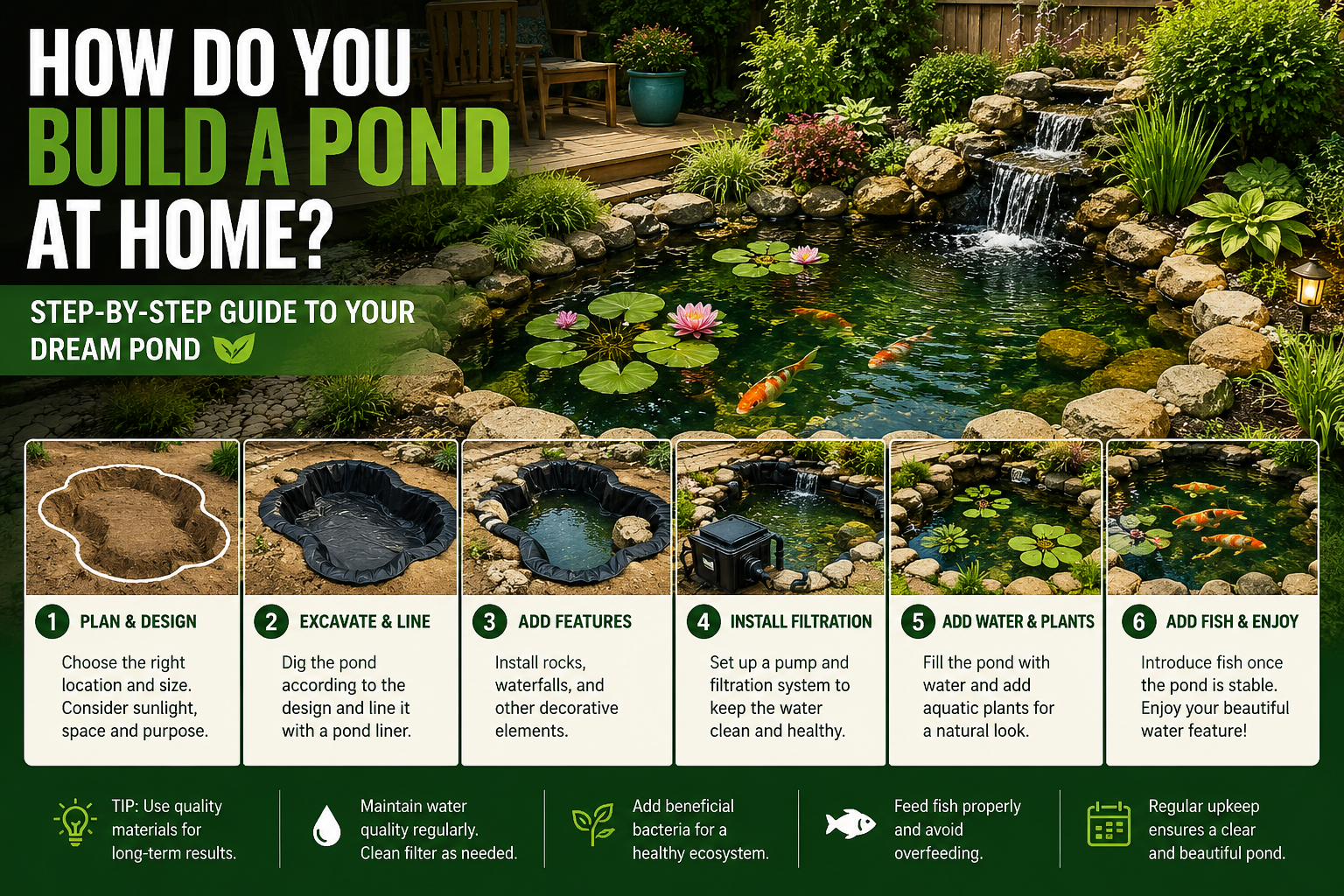
How Do You Build a Pond at Home?
Building a pond at home is one of the most rewarding ways to transform your outdoor space. A well-designed pond creates a peaceful atmosphere, enhances your landscape, and provides a thriving environment for fish and aquatic plants. Whether you want a simple decorative water feature or a premium koi pond, proper planning and construction are essential for long-term success.
Many homeowners ask, “How do you build a pond at home?” The answer lies in choosing the right location, using quality materials, installing efficient filtration systems, and creating a balanced ecosystem.
At Green Fin, we help homeowners design and build beautiful ponds that combine aesthetics, functionality, and sustainability. From pond planning to equipment installation, our experts guide you through every step of the process.
This complete beginner’s guide will explain exactly how do you build a pond at home and what you need to create a healthy, long-lasting pond.
Why Build a Pond at Home?
A pond is much more than a decorative feature. It creates a natural ecosystem and provides numerous benefits for your home and well-being.
Benefits of Building a Pond at Home
- Creates a peaceful and relaxing outdoor environment
- Enhances landscape aesthetics
- Increases property value
- Provides a habitat for fish and aquatic plants
- Encourages biodiversity
- Promotes stress relief and relaxation
- Becomes a beautiful focal point in your garden
A properly designed pond can completely transform an ordinary backyard into a stunning outdoor retreat.
Step 1: Plan Your Pond Carefully
The first step in understanding how do you build a pond at home is proper planning.
Before beginning construction, ask yourself:
- What is the purpose of the pond?
- Will you keep koi fish or goldfish?
- Do you want a decorative pond or a natural water garden?
- How much space do you have available?
- What is your budget?
Answering these questions will help determine the ideal pond size, depth, equipment requirements, and overall design.
Choose the Type of Pond You Want
Decorative Garden Pond
Decorative ponds are designed primarily for beauty and relaxation.
Ideal for:
- Water lilies and lotus plants
- Small waterfalls
- Modern landscape designs
- Relaxation areas
Koi Pond
Koi ponds are specifically designed to keep koi fish healthy.
Ideal for:
- Keeping premium koi fish
- Larger garden spaces
- Advanced filtration systems
- Long-term fish keeping
Natural Wildlife Pond
Natural ponds focus on supporting local ecosystems.
Ideal for:
- Aquatic plants
- Birds and butterflies
- Eco-friendly landscaping
- Minimal maintenance
At Green Fin, we design customized ponds based on your available space, lifestyle, and long-term maintenance preferences.
Step 2: Choose the Perfect Location
Location is one of the most important factors in pond construction.
The Best Location for a Pond
Choose an area that:
✔ Receives partial sunlight
✔ Has access to electricity and water
✔ Is visible from your home or patio
✔ Has stable ground conditions
✔ Allows easy maintenance access
Avoid These Locations
✘ Under large trees
✘ Areas that flood during rain
✘ Locations exposed to full-day sunlight
✘ Areas with excessive leaf fall
Too much sunlight often causes algae growth and poor water quality.
Green Fin carefully evaluates your outdoor space and recommends the ideal location for long-term pond health and easy maintenance.
Step 3: Decide the Pond Size and Depth
Many beginners believe smaller ponds are easier to maintain. In reality, larger ponds often provide better water stability.
Small Garden Pond
Recommended size:
1,000 to 3,000 litres
Suitable for:
- Decorative water gardens
- Small fish species
- Compact outdoor spaces
Medium Pond
Recommended size:
3,000 to 8,000 litres
Suitable for:
- Goldfish
- Aquatic plants
- Small waterfalls
Koi Pond
Recommended size:
8,000 litres and above
Suitable for:
- Koi fish
- Premium landscaping
- Advanced filtration systems
Recommended Pond Depth
Decorative Pond:
45-60 cm
Goldfish Pond:
60-90 cm
Koi Pond:
90-150 cm
Greater depth provides:
- Stable water temperatures
- Better fish health
- Improved filtration performance
- Reduced maintenance problems
Step 4: Mark the Pond Shape
After selecting the location and dimensions, outline the shape of the pond.
Popular pond designs include:
Formal Pond
Features:
- Geometric shape
- Modern appearance
- Ideal for contemporary homes
Natural Pond
Features:
- Irregular shape
- Natural appearance
- Blends beautifully into landscapes
Raised Pond
Features:
- Elevated design
- Better visibility
- Easier maintenance
Use a rope, garden hose, or sand to mark the pond outline before digging.
At Green Fin, our pond designers create custom pond shapes that complement your landscape and maximize visual appeal.
Step 5: Dig the Pond
Once the design is finalized, begin excavation.
Professional pond construction typically includes different depth zones.
Shallow Zone
Depth:
20-30 cm
Suitable for:
- Marginal plants
- Decorative edges
Medium Zone
Depth:
45-60 cm
Suitable for:
- Aquatic plants
- Small fish
Deep Zone
Depth:
90 cm or more
Suitable for:
- Koi fish
- Stable water temperatures
- Winter protection
Multiple depth levels create a healthier and more visually appealing pond ecosystem.
Step 6: Install Pond Underlay and Liner
The pond liner prevents water loss and protects the structure.
PVC Pond Liners
Benefits:
- Affordable
- Easy installation
Limitations:
- Shorter lifespan
EPDM Rubber Liners
Benefits:
- Highly durable
- Flexible installation
- Long lifespan
- Excellent puncture resistance
For premium ponds and koi ponds, Green Fin generally recommends high-quality EPDM liners because they offer excellent durability and long-term performance.
Step 7: Install the Pond Filtration System
One of the most important answers to how do you build a pond at home is proper filtration.
Filtration is the heart of every healthy pond.
A quality filtration system:
- Removes waste
- Maintains water clarity
- Supports beneficial bacteria
- Improves fish health
- Controls algae growth
Mechanical Filtration
Removes:
- Fish waste
- Leaves
- Debris
- Uneaten food
Biological Filtration
Supports beneficial bacteria that convert harmful waste into safer compounds.
Benefits include:
- Improved water quality
- Healthier fish
- Stable pond ecosystem
UV Clarification
UV systems help:
- Control green water
- Reduce algae growth
- Improve water clarity
At Green Fin, we carefully select filtration systems according to pond size, fish population, and maintenance requirements.
Step 8: Install the Pond Pump
A pond pump circulates water throughout the system.
Benefits include:
- Better oxygen levels
- Efficient filtration
- Healthier fish
- Reduced stagnant areas
As a general guideline, the entire pond volume should circulate at least once every hour.
Choosing the correct pump size is essential for maintaining healthy water conditions.
Step 9: Add Waterfalls and Decorative Features
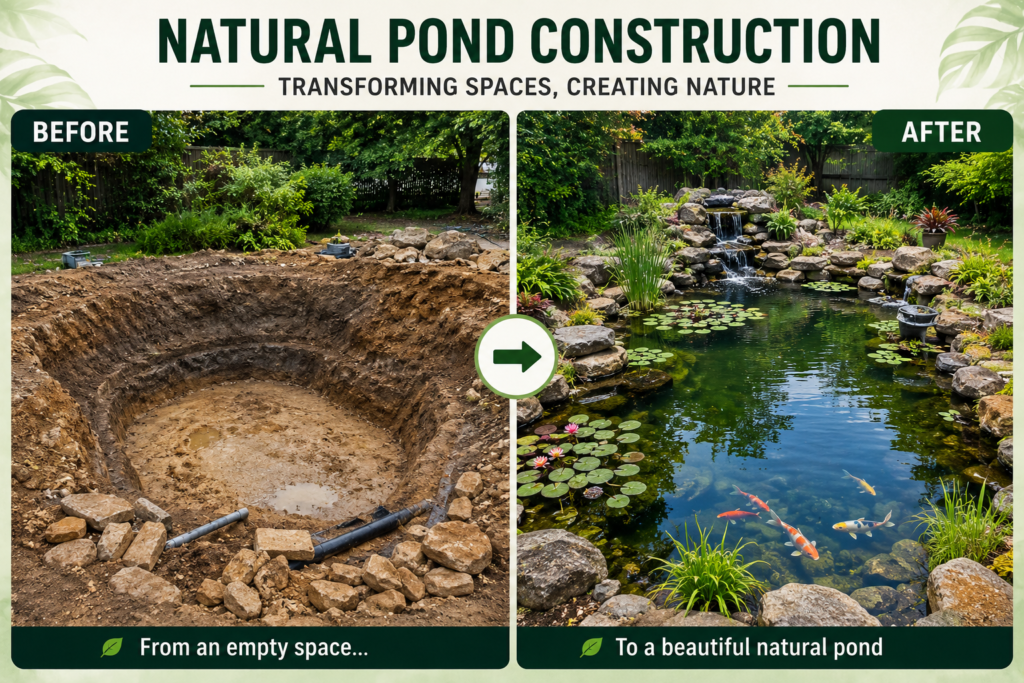
Decorative elements transform an ordinary pond into a spectacular landscape feature.
Popular additions include:
Waterfalls
Benefits:
- Increase oxygen levels
- Improve water movement
- Create relaxing sounds
Natural Rocks
Benefits:
- Realistic appearance
- Shelter for fish
- Improved aesthetics
Decorative Gravel
Benefits:
- Professional finish
- Supports plants
- Enhances natural appearance
Green Fin specializes in custom waterfalls, rock formations, and premium landscape features that make every pond unique.
Step 10: Add Aquatic Plants
Plants are essential for creating a balanced pond ecosystem.
Benefits of pond plants:
- Produce oxygen
- Absorb excess nutrients
- Reduce algae growth
- Provide shade and shelter
- Improve visual appeal
Floating Plants
Examples:
- Water Lettuce
- Water Hyacinth
Benefits:
- Shade the water surface
- Limit algae growth
Marginal Plants
Examples:
- Iris
- Papyrus
Benefits:
- Natural appearance
- Habitat for beneficial organisms
Deep Water Plants
Examples:
- Water Lilies
- Lotus
Benefits:
- Beautiful flowers
- Fish protection
- Temperature regulation
Step 11: Fill the Pond Slowly
After construction is complete:
- Remove debris.
- Position decorations.
- Arrange plants.
- Fill the pond gradually.
Filling slowly prevents liner movement and allows adjustments if necessary.
Step 12: Cycle the Pond Before Adding Fish
One of the most overlooked steps in how do you build a pond at home is cycling the pond.
Cycling allows beneficial bacteria to establish naturally.
Benefits include:
- Stable water chemistry
- Reduced ammonia levels
- Healthier fish environment
- Improved biological filtration
Most ponds require several weeks before introducing fish.
Step 13: Add Fish Gradually
Avoid overcrowding.
Introduce fish slowly and monitor water conditions.
Suitable beginner pond fish include:
Goldfish
Benefits:
- Hardy species
- Easy maintenance
- Attractive colors
Koi Fish
Benefits:
- Long lifespan
- Intelligent behavior
- Stunning appearance
At Green Fin, we help pond owners select compatible fish species and recommend appropriate stocking levels to maintain excellent water quality.
Essential Equipment Needed to Build a Pond at Home
Using quality equipment reduces maintenance problems and improves the long-term health of your pond.
Common Mistakes to Avoid
Building the Pond Too Small
Small ponds experience rapid water quality changes.
Ignoring Filtration
Poor filtration causes algae problems and unhealthy fish.
Adding Too Many Fish
Overcrowding quickly affects water quality.
Placing the Pond Under Trees
Falling leaves increase maintenance requirements.
Skipping Pond Cycling
Uncycled ponds often experience water quality problems.
Avoiding these mistakes makes pond ownership far more enjoyable.
Why Choose Green Fin for Pond Construction?
Building a pond requires experience, careful planning, and quality equipment.
Green Fin specializes in:
- Custom pond design and planning
- Koi pond construction
- Decorative water gardens
- Premium pond filtration systems
- Pond pumps and aeration systems
- Waterfalls and landscape features
- Aquatic plant installation
- Pond maintenance and upgrades
Whether you are planning a small decorative pond or a luxury koi pond, Green Fin helps build ponds that are beautiful, easy to maintain, and designed to last for years.
Conclussion
If you have been asking, How do you build a pond at home?, the process begins with careful planning and the right equipment. Choosing the ideal location, determining the correct size and depth, installing proper filtration, and creating a balanced ecosystem are all essential steps.
A well-designed pond becomes more than a water feature—it becomes a peaceful retreat where fish, plants, and nature thrive together.
And if you want professional assistance, Green Fin is here to help you design and build the perfect pond for your home. From concept to completion, we create stunning ponds that bring beauty, tranquility, and nature closer to you.