

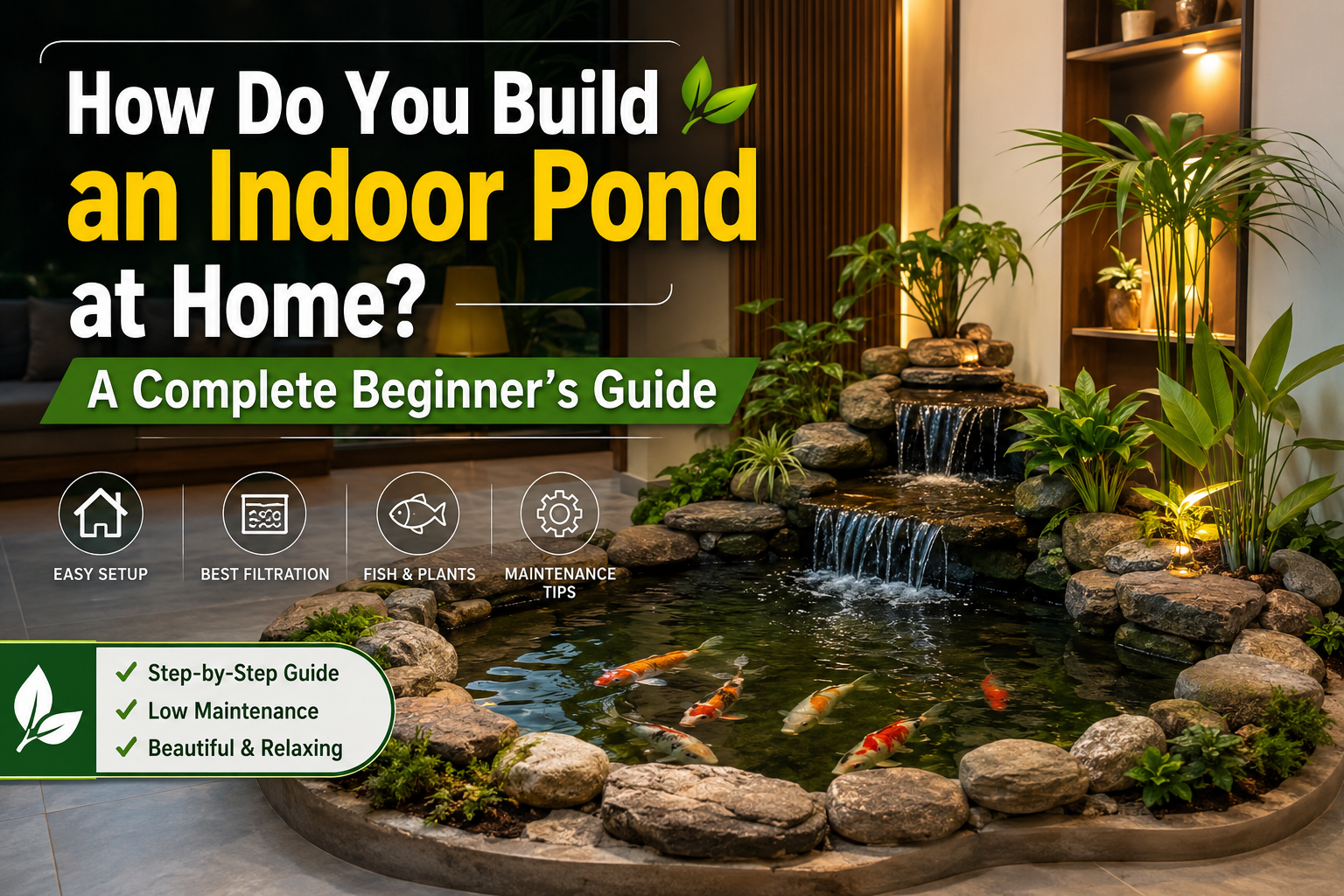
Indoor ponds are becoming increasingly popular among homeowners who want to bring a touch of nature indoors. The soothing sound of flowing water, the beauty of ornamental fish, and the calming presence of aquatic plants can completely transform your living space. Whether you have a spacious living room, an indoor garden, or a dedicated relaxation area, an indoor pond can become the centerpiece of your home.
If you have ever asked yourself, how do you build an indoor pond at home, the answer lies in careful planning, choosing the right materials, and maintaining a balanced aquatic environment. Building an indoor pond may seem complicated, but with the right approach, it can be an enjoyable and rewarding project.
At Green Fin – The Pond Studio, we specialize in designing and creating beautiful indoor ponds that combine aesthetics, functionality, and nature. Whether you are looking for a modern indoor koi pond or a relaxing water feature for your home, our team can help turn your dream pond into reality.
This guide covers everything you need to know about creating and maintaining an indoor pond at home.
Why Build an Indoor Pond at Home?
An indoor pond offers several benefits that go beyond decoration. It creates a peaceful atmosphere by introducing the soothing sound of moving water into your home. Indoor ponds can also become a beautiful centerpiece that enhances modern and traditional interior designs alike.
Another major advantage is the opportunity to keep ornamental fish and aquatic plants in a controlled environment. Since the pond is located indoors, it is protected from harsh weather conditions, making it easier to maintain stable water temperatures and overall pond health.
Understanding these benefits helps answer the question, how do you build an indoor pond at home, because the purpose of the pond often determines its design and size.
Things to Consider Before Building an Indoor Pond
Proper planning is essential before starting your indoor pond project.
Choose the Right Location
Select a location that has sufficient space and easy access for maintenance. Common areas include living rooms, indoor gardens, office spaces, and enclosed courtyards.
Avoid placing the pond in direct sunlight because excessive sunlight can encourage algae growth and increase water temperatures.
Check Floor Strength
Water is extremely heavy. Before building an indoor pond, make sure the floor can support the combined weight of the water, decorative materials, equipment, and pond structure.
Ensure Electrical Access
Most indoor ponds require electrical outlets for equipment such as:
- Pond pumps
- Filtration systems
- Air pumps
- LED lighting
Planning these requirements beforehand makes the installation process much smoother.
Materials Required to Build an Indoor Pond at Home
When asking, how do you build an indoor pond at home, selecting the right materials is one of the most important steps.
Pond Container
The pond structure can be created using:
- Preformed fiberglass ponds
- Concrete structures
- Wooden frames with pond liners
- Custom-built indoor pond tanks
Pond Liner
A high-quality pond liner prevents water leakage and increases the lifespan of the pond.
Pond Pump
The pump circulates water and prevents stagnant conditions.
Filtration System
A pond filter removes waste and maintains water clarity.
Aeration Equipment
Air pumps improve oxygen levels and support beneficial bacteria.
Decorative Materials
Popular decorative additions include:
- Natural stones
- Driftwood
- Waterfalls
- Decorative lighting
How Do You Build an Indoor Pond at Home?
Building an indoor pond can be divided into several manageable steps.
Step 1: Select the Perfect Location
The first step in understanding how do you build an indoor pond at home is selecting the right location.
Choose an area that:
- Receives indirect natural light
- Has access to electricity
- Allows easy maintenance
- Provides enough room for future upgrades
A carefully selected location contributes significantly to the long-term success of your indoor pond.
Step 2: Determine the Pond Size
The size of the pond depends on several factors:
- Available space
- Type of fish
- Budget
- Desired appearance
Small indoor ponds work well for decorative plants and small fish species, while larger ponds can accommodate koi and more advanced filtration systems.
Step 3: Build the Pond Structure
The next stage of how do you build an indoor pond at home involves constructing the pond itself.
Preformed Pond
Preformed ponds are easy to install and suitable for beginners.
Wooden Frame Pond
Wooden frame ponds offer flexibility and can be customized to fit your interior design.
Concrete Pond
Concrete ponds are durable and ideal for larger indoor water features.
Regardless of the structure you choose, ensure that all surfaces are waterproof and secure.
Step 4: Install the Pond Liner
If your pond requires a liner, install it carefully.
Make sure to:
- Remove sharp objects
- Smooth all surfaces
- Leave extra liner around the edges
- Secure corners properly
A properly installed liner prevents future leakage problems.
Step 5: Install Filtration and Water Circulation Equipment
Filtration is one of the most important aspects of any pond.
Install:
The filtration system removes waste and helps maintain a healthy environment for fish and plants.
When considering how do you build an indoor pond at home, never underestimate the importance of proper filtration.
Step 6: Add Decorative Features
Decorative elements transform a simple water container into an attractive indoor feature.
Popular additions include:
- River stones
- Waterfalls
- Driftwood
- Underwater lighting
- Decorative sculptures
Adding decorative materials allows you to personalize your indoor pond according to your preferences.
Step 7: Fill the Pond with Water
Fill the pond slowly to avoid disturbing the liner and decorative elements.
Before adding fish:
- Dechlorinate tap water
- Test water quality
- Ensure all equipment operates correctly
- Allow the system to run for several days
This process helps stabilize the pond ecosystem.
Step 8: Add Aquatic Plants
Plants are essential for maintaining a balanced pond environment.
Suitable plants include:
- Water lilies
- Anubias
- Java fern
- Water lettuce
- Lucky bamboo
Aquatic plants improve water quality by absorbing excess nutrients and producing oxygen.
Step 9: Introduce Fish Gradually
After cycling the pond and stabilizing the water parameters, you can introduce fish.
Popular indoor pond fish include:
- Goldfish
- Koi fish
- Guppies
- Mollies
Introduce fish slowly to minimize stress and avoid sudden changes in water conditions.
At this stage, you will fully understand how do you build an indoor pond at home and create a healthy aquatic environment.
How to Maintain an Indoor Pond
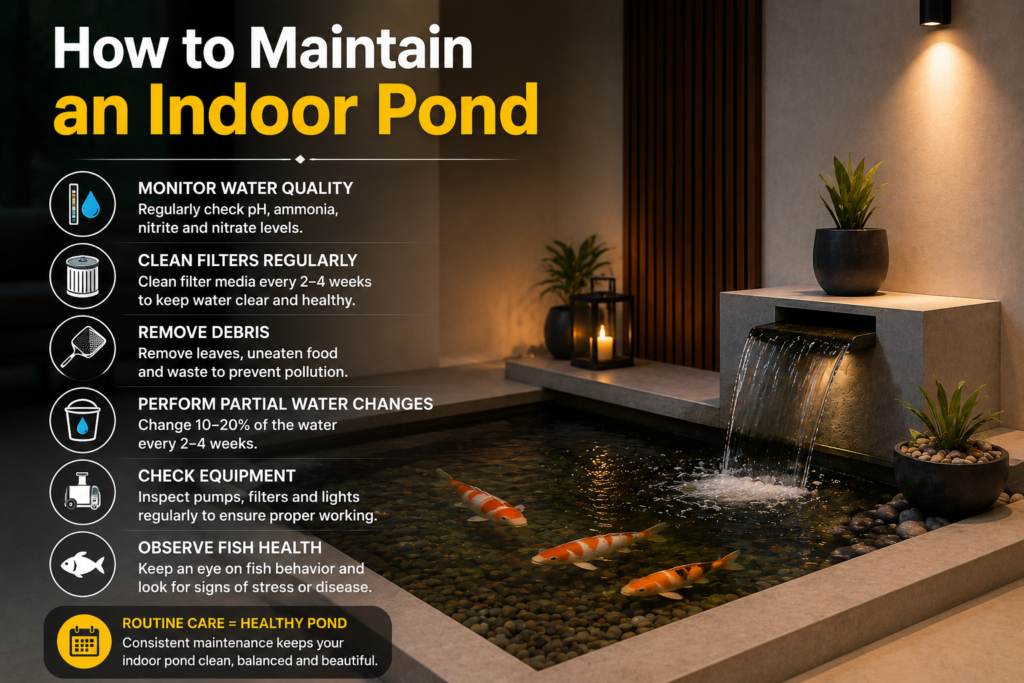
Building the pond is only the beginning. Regular maintenance ensures that your indoor pond remains beautiful and healthy.
Monitor Water Quality
Test water regularly for:
- pH
- Ammonia
- Nitrite
- Nitrate
Stable water conditions are essential for fish health.
Clean Filters
Filters should be inspected and cleaned periodically to maintain maximum efficiency.
Remove Organic Debris
Remove:
- Dead leaves
- Uneaten food
- Excess plant material
This prevents the accumulation of harmful substances.
Perform Partial Water Changes
Replacing a small percentage of water every few weeks helps maintain excellent water quality.
Inspect Equipment
Regularly check:
- Pond pumps
- Filters
- Air pumps
- Lighting systems
Early detection of equipment issues can prevent major problems later.
Common Mistakes to Avoid When Building an Indoor Pond
Even after learning how do you build an indoor pond at home, beginners often make avoidable mistakes.
Overstocking Fish
Too many fish create excessive waste and can quickly degrade water quality.
Skipping Filtration
An inadequate filtration system leads to poor water conditions and unhealthy fish.
Overfeeding Fish
Excess food decomposes and contributes to ammonia buildup.
Excessive Sunlight
Direct sunlight promotes algae growth and may cause temperature fluctuations.
Ignoring Water Testing
Regular water testing helps identify problems before they become serious.
Avoiding these mistakes makes maintaining an indoor pond much easier.
Frequently Asked Questions
Can koi fish live in an indoor pond?
Yes. Koi fish can live in indoor ponds provided there is enough space and proper filtration.
Do indoor ponds need filtration?
Yes. Filtration is essential for maintaining clear and healthy water conditions.
Are indoor ponds difficult to maintain?
No. With proper planning and routine maintenance, indoor ponds are relatively easy to care for.
How often should I clean an indoor pond?
Basic maintenance should be performed weekly, while filter maintenance and partial water changes can be completed regularly as needed.
Conclussion
Building an indoor pond is a rewarding project that brings the beauty and tranquility of nature into your home. If you’ve been wondering how do you build an indoor pond at home, the key is to choose the right location, install proper filtration, add suitable plants and fish, and follow a regular maintenance routine. With careful planning and the right equipment, an indoor pond can become a stunning centerpiece that provides years of enjoyment.
Whether you dream of a modern indoor koi pond, a peaceful water garden, or a large decorative pond, Green Fin can help turn your vision into reality. From premium pond pumps and filtration systems to expert guidance and high-quality pond accessories, Green Fin helps you create your dream pond—both indoor and outdoor. Start your pond journey today and build a beautiful aquatic space that perfectly complements your home and lifestyle.