

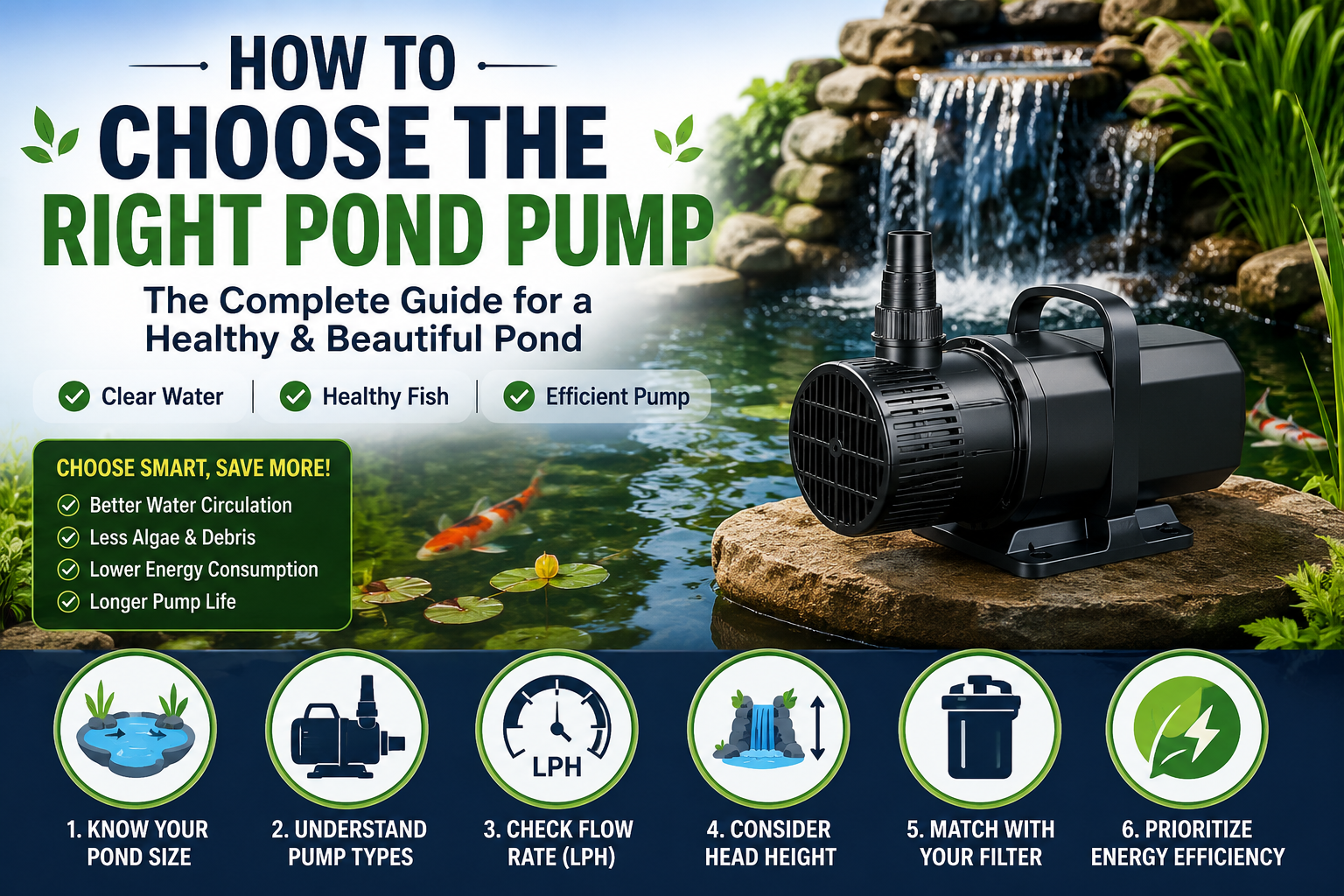
How to Choose the Right Pond Pump
A pond pump is the heart of every healthy pond. Whether you have a small ornamental water feature, a koi pond, or a large garden pond, selecting the correct pump ensures proper water circulation, effective filtration, and a thriving aquatic ecosystem. If you’ve ever wondered how to choose the right pond pump, you’re not alone. Many pond owners struggle to understand flow rates, pump sizes, head height, and energy efficiency.
Choosing the wrong pump can lead to poor water quality, increased algae growth, stressed fish, and higher electricity bills. On the other hand, investing in the right pump keeps your pond crystal clear while supporting healthy fish and aquatic plants.
This comprehensive guide explains how to choose the right pond pump step by step, helping beginners and experienced pond owners make an informed decision.
Why Choosing the Right Pond Pump Matters
A pond pump does much more than move water. It continuously circulates water through your pond’s filtration system, helping remove debris, maintain oxygen levels, and create a balanced environment for aquatic life.
When learning how to choose the right pond pump, it’s important to understand that every pond has unique requirements based on its size, depth, fish population, and water features.
A properly selected pond pump offers several benefits:
- Maintains continuous water circulation
- Supports biological and mechanical filtration
- Increases dissolved oxygen levels
- Prevents stagnant water and foul odors
- Reduces algae growth
- Keeps fish healthy and active
- Powers waterfalls, fountains, and streams
- Improves the overall appearance of your pond
Without proper circulation, harmful waste and debris can accumulate, creating unhealthy conditions for fish and plants.
What Does a Pond Pump Do?
Before deciding how to choose the right pond pump, it’s helpful to understand how it works.
A pond pump continuously draws water from the pond and pushes it through equipment such as:
- Pond filters
- UV clarifiers
- Waterfalls
- Fountains
- Streams
- Decorative water features
After filtration, clean and oxygen-rich water returns to the pond. This circulation process keeps the water fresh while supporting beneficial bacteria that naturally break down fish waste and organic matter.
Without a pump, water remains stagnant, allowing harmful bacteria and algae to thrive.
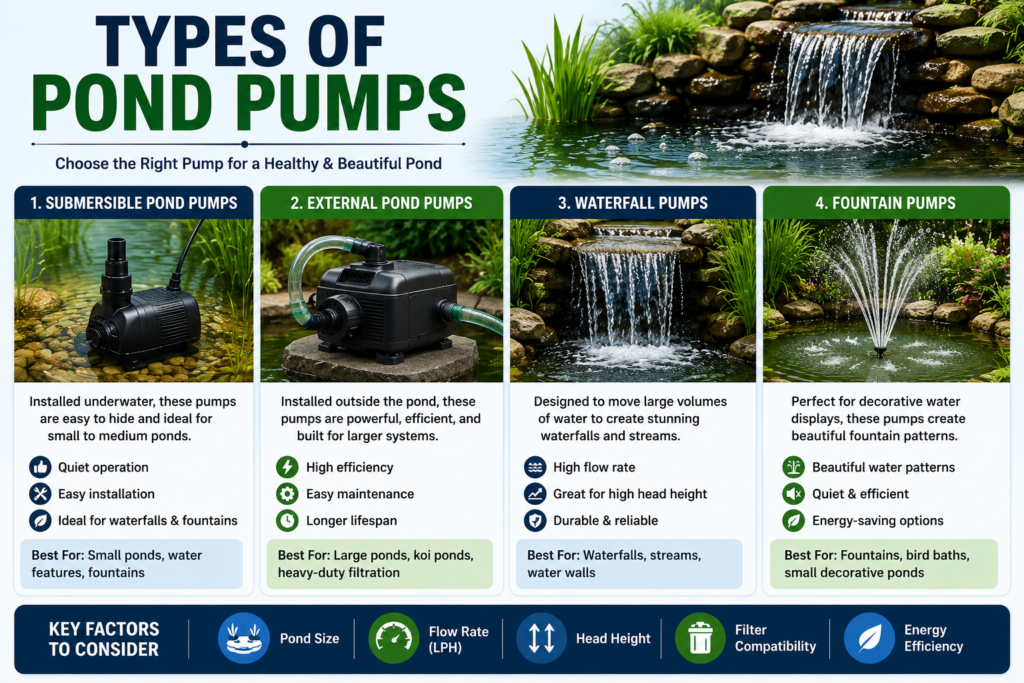
Types of Pond Pumps
Understanding the different pump types is the first step in learning how to choose the right pond pump.
1. Submersible Pond Pumps
Submersible pumps are installed directly inside the pond below the water surface. They are one of the most popular choices for homeowners because they are compact, easy to install, and require minimal plumbing.
Best For
- Small ponds
- Medium-sized ponds
- Decorative garden ponds
- Waterfalls
- Fountains
Advantages
- Simple installation
- Quiet operation
- Affordable pricing
- Compact design
- Low maintenance for smaller systems
Limitations
- Less efficient for very large ponds
- Requires occasional cleaning to remove debris
2. External Pond Pumps
External pumps are installed outside the pond and connected through plumbing. They are commonly used for larger ponds and professional pond systems because they provide higher flow rates with better energy efficiency.
Best For
- Large garden ponds
- Koi ponds
- Commercial water features
- High-flow filtration systems
- Large waterfalls
Advantages
- Higher pumping capacity
- Excellent energy efficiency
- Longer service life
- Easier maintenance
- Better for continuous heavy-duty operation
Limitations
- Higher installation cost
- Requires plumbing and proper placement
- More complex setup than submersible pumps
Factors That Affect Pond Pump Selection
If you’re researching how to choose the right pond pump, avoid choosing a model based solely on price. Consider these important factors before making a purchase:
- Total pond water volume
- Desired water circulation rate
- Pond depth
- Number of fish
- Waterfall or fountain height
- Filtration system requirements
- Energy consumption
- Pump durability
- Ease of maintenance
- Future pond expansion
Selecting a pump based on these factors will help ensure reliable performance and healthier water conditions.
Understanding Head Height
When learning how to choose the right pond pump, many people focus only on the flow rate. However, another equally important factor is head height.
Head height refers to the maximum vertical distance a pump can push water from the pump’s location to the highest outlet point, such as a waterfall, fountain, or filter.
For example:
- If your waterfall is 1 metre above the pond, your pump must have a head height greater than 1 metre.
- If water travels through long pipes with several bends, additional pressure is required because friction reduces the flow rate.
Always choose a pump with a maximum head height that exceeds your actual installation height. This ensures the pump delivers enough water to your feature without overworking the motor.
Tips for Choosing the Right Head Height
- Measure the vertical distance from the pump to the outlet.
- Add extra allowance for pipe bends and fittings.
- Check the manufacturer’s flow chart to see how much water the pump delivers at different heights.
- Avoid selecting a pump that operates at its maximum head height continuously, as this reduces efficiency and lifespan.
How to Match Your Pond Pump with the Filtration System
A pond pump and pond filter work together as a complete water management system. Even the best filter cannot perform effectively if the pump does not provide the correct flow rate.
Mechanical Filters
Mechanical filters remove:
- Leaves
- Fish waste
- Uneaten food
- Floating debris
Choose a pump that supplies the recommended flow rate for your filter without exceeding its capacity.
Biological Filters
Biological filters contain beneficial bacteria that break down harmful ammonia and nitrites produced by fish waste.
If water flows too quickly, these bacteria may not have enough contact time to effectively clean the water.
UV Clarifiers
UV clarifiers kill free-floating algae that cause green water.
Most UV clarifiers require a specific water flow rate for maximum effectiveness. Always ensure your pond pump is compatible with your UV unit’s recommended flow.
Choosing the Right Pond Pump for Different Pond Types
Different ponds have different circulation requirements. Here’s how to choose the right pond pump based on your pond type.
Garden Ponds
Garden ponds usually feature ornamental plants, small fish, and decorative elements.
Recommended features:
- Quiet operation
- Moderate flow rate
- Energy efficiency
- Easy maintenance
Submersible pumps are often the best choice for these ponds.
Koi Ponds
Koi produce significantly more waste than most pond fish. They require excellent filtration and continuous circulation.
Look for a pond pump that offers:
- High flow rate
- Reliable 24/7 operation
- Compatibility with biological filters
- Large debris handling capability
- Low energy consumption
For heavily stocked koi ponds, the entire pond volume should circulate every hour—or even faster if recommended by your filtration system.
Wildlife Ponds
Wildlife ponds are designed to support frogs, insects, birds, and aquatic plants.
Many wildlife ponds require only gentle water movement.
Choose:
- Low-flow pumps
- Energy-efficient models
- Pumps that won’t disturb aquatic habitats
Waterfall Ponds
Waterfalls require stronger pumps because water must be lifted vertically.
Approximate recommendations:
| Waterfall Width | Suggested Flow Rate |
|---|---|
| 30 cm | 2,000–3,000 LPH |
| 60 cm | 4,000–6,000 LPH |
| 90 cm | 7,000–10,000 LPH |
| 120 cm | 10,000+ LPH |
Always account for head height when choosing a waterfall pump.
Energy Efficiency Matters
A pond pump often runs 24 hours a day, 365 days a year. Even a small difference in power consumption can significantly affect your electricity bill.
Modern energy-efficient pond pumps offer:
- Lower operating costs
- Reduced environmental impact
- Longer motor life
- Improved reliability
- Variable speed settings
Features to Look For
- Brushless motor technology
- Adjustable flow control
- Low wattage
- High efficiency impeller
- Automatic overload protection
Although premium pumps may cost more initially, they often save money over the long term through reduced electricity consumption and lower maintenance costs.
Common Mistakes When Buying a Pond Pump
Avoid these common mistakes when learning how to choose the right pond pump.
1. Buying the Cheapest Pump
Budget pumps may have:
- Shorter lifespan
- Higher power consumption
- Poor build quality
- Limited warranty
Investing in a reliable pump usually provides better long-term value.
2. Ignoring Pond Size
A pump that’s too small won’t circulate enough water, while an oversized pump wastes energy and may create excessive water movement.
Always calculate your pond’s water volume before purchasing.
3. Forgetting About Head Height
Many buyers compare only flow rate and overlook lift height.
A pump with an impressive flow rate may deliver much less water once it has to lift water through pipes and waterfalls.
4. Choosing an Incompatible Filter
Your pump should match your filtration system’s recommended flow rate.
Too much flow can reduce filter efficiency, while too little flow limits water circulation.
5. Neglecting Maintenance Requirements
Every pond pump requires routine cleaning.
Ignoring maintenance can lead to:
- Reduced water flow
- Motor damage
- Increased energy consumption
- Premature pump failure
Pond Pump Maintenance Tips
Proper maintenance keeps your pond pump operating efficiently and extends its lifespan.
Weekly Maintenance
- Remove leaves and debris
- Check water flow
- Inspect power cables
- Ensure the pump remains fully submerged (for submersible models)
Monthly Maintenance
- Clean the pump intake
- Rinse the impeller housing
- Remove sludge buildup
- Check for unusual noises
Every Six Months
- Deep clean all components
- Inspect seals and O-rings
- Replace worn impellers if needed
- Check pipe connections
Routine maintenance reduces repair costs and helps maintain consistent water circulation.
Signs Your Pond Pump Needs Replacement
Even high-quality pumps eventually wear out.
Watch for these warning signs:
- Reduced water circulation
- Frequent clogging
- Unusual vibrations
- Grinding noises
- Overheating
- Increased electricity usage
- Water leaks around the motor
- Inconsistent performance
Replacing an ageing pump before complete failure helps protect fish and filtration equipment.
Frequently Asked Questions
How do I choose the right pond pump?
Calculate your pond’s water volume, determine the required flow rate, consider head height, and choose a pump compatible with your filter and water features.
What size pond pump do I need?
As a general rule, your pump should circulate the pond’s total water volume at least once every hour. Larger ponds with waterfalls or koi may require higher flow rates.
Is a bigger pond pump always better?
No. An oversized pump may waste electricity, overwhelm your filter, and create excessive water movement that can stress fish.
Should a pond pump run continuously?
Yes. Most pond pumps are designed to operate continuously to maintain water circulation, filtration, and oxygen levels.
How long does a pond pump last?
A quality pond pump can last 5–10 years or more, depending on maintenance, operating conditions, and build quality.
Key Takeaways
Before purchasing a pond pump, remember these essential points:
- Calculate your pond’s total water volume.
- Match the pump flow rate to your pond size.
- Consider head height for waterfalls and fountains.
- Choose a pump compatible with your filtration system.
- Invest in an energy-efficient model.
- Perform regular maintenance to extend pump life.
- Avoid choosing a pump based on price alone.
Conclusion
Understanding how to choose the right pond pump is one of the most important steps in creating a healthy and beautiful pond. The right pump ensures proper water circulation, supports effective filtration, improves oxygen levels, and keeps fish and aquatic plants thriving.
When selecting a pond pump, don’t focus solely on litres per hour. Consider your pond size, head height, filter compatibility, fish population, and long-term energy efficiency. A carefully chosen pump will reduce maintenance, lower operating costs, and provide years of dependable performance.
Whether you’re building a new garden pond, upgrading a koi pond, or installing a stunning waterfall, investing in the right pond pump is the foundation of a successful pond system.
Why Choose Green Fin Pond Studio?
At Green Fin Pond Studio, we offer premium-quality pond pumps designed for residential gardens, koi ponds, waterfalls, and commercial water features. Our team can help you select the ideal pump based on your pond’s size, filtration requirements, and water feature design.
Whether you’re looking for energy-efficient submersible pumps, high-performance external pumps, or complete pond solutions, we’re here to help you build a cleaner, healthier, and more beautiful pond.
Contact Green Fin Pond Studio today for expert advice and the best pond pump solutions tailored to your needs.