

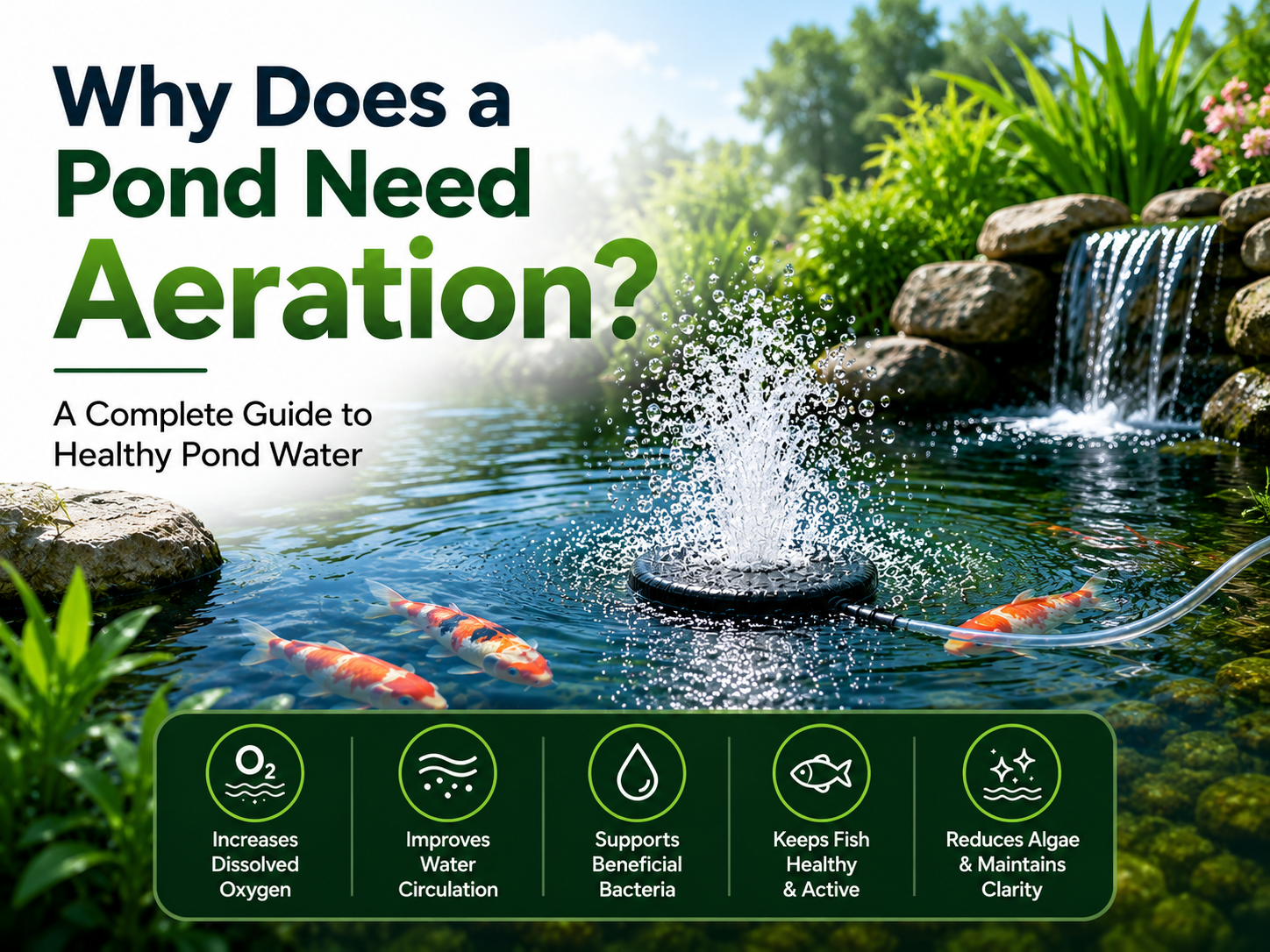
A beautiful pond is more than just a water feature—it is a living ecosystem that supports fish, aquatic plants, and beneficial microorganisms. One of the most important factors in maintaining a healthy pond is ensuring there is enough oxygen in the water. This is where pond aeration becomes essential.
If you’ve ever wondered, why does a pond need aeration?, the answer is simple: aeration increases dissolved oxygen levels, improves water circulation, reduces algae growth, and creates a healthier environment for fish and beneficial bacteria. Whether you own a backyard pond, a koi pond, or a large ornamental water garden, proper aeration helps keep the water clean, clear, and balanced.
In this guide, you’ll learn how pond aeration works, why it’s important, and the many benefits it offers for maintaining a thriving pond ecosystem.
What Is Pond Aeration?
Pond aeration is the process of adding oxygen to pond water while improving water circulation. Oxygen is essential for every living organism in a pond, including fish, aquatic plants, and beneficial bacteria that naturally break down organic waste.
In natural lakes and rivers, flowing water and wind continuously introduce oxygen. However, many garden ponds have limited water movement, making it difficult for oxygen to reach every part of the pond. Without adequate oxygen, water quality begins to decline, leading to algae growth, unpleasant odors, and unhealthy conditions for aquatic life.
Installing a pond aeration system helps restore this balance by circulating water and increasing dissolved oxygen throughout the pond.
Understanding How Pond Aeration Works
A pond aerator introduces air into the water using an air pump, diffuser, fountain, or waterfall. Tiny air bubbles rise from the bottom of the pond, creating movement that allows oxygen to dissolve into the water.
At the same time, this circulation helps move oxygen-rich surface water toward the bottom while bringing oxygen-poor water upward. This continuous mixing prevents stagnant conditions and creates a healthier environment throughout the pond.
Healthy oxygen levels also support beneficial bacteria that naturally break down fish waste, fallen leaves, and other organic debris. As a result, pond water stays cleaner with less sludge accumulation.
Natural vs. Mechanical Pond Aeration
Ponds receive oxygen naturally through wind, rain, waterfalls, and aquatic plants during daylight hours. However, natural aeration is often not enough, especially in ponds with a large fish population or warm temperatures.
Mechanical pond aeration provides a more reliable solution. Common systems include:
- Air pumps with diffusers
- Surface aerators
- Pond fountains
- Waterfalls and cascading streams
These systems continuously improve oxygen levels and water movement, making them ideal for maintaining a healthy pond throughout the year.
Why Does a Pond Need Aeration?
If you’re asking why does a pond need aeration?, it’s because oxygen is the foundation of a healthy aquatic ecosystem. Every living organism in a pond depends on dissolved oxygen to survive. Without sufficient oxygen, water quality quickly deteriorates, affecting fish, plants, and beneficial bacteria.
Here are the key reasons why pond aeration is essential.
Increases Dissolved Oxygen Levels
Dissolved oxygen is one of the most important indicators of pond health. Fish breathe oxygen directly from the water, while beneficial bacteria require oxygen to decompose organic waste.
When oxygen levels drop, fish become stressed, bacteria become less effective, and harmful microorganisms may begin to dominate.
A pond aeration system continuously replenishes oxygen, ensuring healthy conditions throughout the pond.
Supports Healthy Fish and Aquatic Life
Healthy fish require stable oxygen levels to grow, feed, and resist disease. Low oxygen levels can cause fish to gasp at the surface, become inactive, or even die during extreme conditions.
Koi, goldfish, and other ornamental fish especially benefit from proper aeration because they produce waste that increases the pond’s oxygen demand.
Adequate aeration also supports frogs, beneficial insects, snails, and other aquatic organisms that contribute to a balanced ecosystem.
Prevents Water Stratification
In deeper ponds, warm water often stays near the surface while cooler water settles at the bottom. This separation is called water stratification.
The bottom layer gradually loses oxygen because very little water movement occurs there. Organic matter begins decomposing without enough oxygen, producing harmful gases and poor water quality.
Aeration continuously mixes the water, preventing stratification and ensuring oxygen reaches every depth of the pond.
Reduces Algae Growth
Excess nutrients combined with stagnant water create ideal conditions for algae blooms. While aeration does not directly kill algae, it helps reduce the conditions that allow algae to thrive.
Improved water circulation supports beneficial bacteria that naturally consume excess nutrients before algae can use them.
As nutrient levels decrease, algae growth becomes easier to control, resulting in cleaner and clearer pond water.
Improves Beneficial Bacteria Activity
Beneficial bacteria play an important role in breaking down fish waste, uneaten food, leaves, and other organic materials.
These bacteria require oxygen to function efficiently. Without adequate aeration, their activity slows down, allowing sludge to build up at the bottom of the pond.
A well-aerated pond encourages these helpful bacteria to thrive, reducing maintenance while naturally improving water quality.
Minimizes Bad Odors
Stagnant ponds often develop unpleasant odors caused by decaying organic matter and oxygen-poor conditions.
Aeration increases oxygen throughout the pond, allowing beneficial bacteria to break down waste more efficiently. This process reduces foul-smelling gases and keeps pond water fresh.
Keeps Pond Water Clear
Cloudy water is often a sign of poor circulation and low oxygen levels. Aeration improves water movement, supports filtration, and helps beneficial bacteria remove suspended organic particles.
The result is healthier, clearer water that enhances the appearance of your pond.
Enhances the Overall Pond Ecosystem
Every component of a pond depends on oxygen—from fish and aquatic plants to microorganisms living beneath the surface.
Proper pond aeration creates a balanced ecosystem where beneficial bacteria flourish, fish remain healthy, water stays cleaner, and maintenance becomes easier. Whether you have a decorative pond or a koi pond, aeration is one of the best long-term investments for maintaining a beautiful and thriving water feature.
Signs Your Pond Needs More Aeration
A healthy pond should have clear water, active fish, and balanced oxygen levels. However, when oxygen becomes limited, your pond will begin showing warning signs. Identifying these symptoms early can help prevent poor water quality, fish stress, and expensive maintenance.
Fish Gasping at the Surface
One of the most obvious signs of low oxygen is fish gathering near the water’s surface and gasping for air. This behavior usually occurs during hot weather, early mornings, or after heavy rainfall when dissolved oxygen levels are at their lowest.
If your fish frequently stay near waterfalls, fountains, or air stones, it’s a strong indication that your pond needs additional aeration.
Green or Cloudy Water
Murky or green water often signals an imbalance in the pond ecosystem. Excess nutrients, poor circulation, and low oxygen levels encourage algae and suspended organic particles to accumulate.
While filtration removes debris, proper aeration improves water movement and supports beneficial bacteria that naturally keep the water cleaner and clearer.
Excessive Algae Growth
Algae thrive in ponds with stagnant water and high nutrient levels. If your pond experiences frequent algae blooms, oxygen deficiency may be contributing to the problem.
A pond aeration system helps circulate the water, allowing beneficial bacteria to consume excess nutrients before algae can use them. Although aeration is not an algae treatment on its own, it plays a significant role in long-term algae prevention.
Foul-Smelling Water
A healthy pond should have little to no unpleasant odor. If your pond smells like rotten eggs or decaying vegetation, it usually indicates oxygen-poor conditions at the bottom of the pond.
Without sufficient oxygen, organic matter decomposes anaerobically, releasing gases that create strong odors. Proper aeration restores oxygen levels and encourages aerobic bacteria to break down waste more efficiently.
Sludge Accumulation
Leaves, fish waste, uneaten food, and plant debris naturally settle at the bottom of the pond. When oxygen levels are low, beneficial bacteria cannot decompose this organic material efficiently.
Over time, thick sludge forms, reducing water quality and increasing maintenance requirements. Aeration helps beneficial bacteria work effectively, minimizing sludge buildup and keeping the pond healthier.
Stagnant Water with Little Movement
Still water may appear peaceful, but it often lacks adequate oxygen circulation. Ponds without fountains, waterfalls, or aerators are more likely to develop stagnant areas where oxygen becomes depleted.
Adding an aeration system improves water movement throughout the pond, reducing stagnant zones and creating a healthier environment for aquatic life.
Benefits of Installing a Pond Aeration System
Installing a pond aeration system is one of the most effective ways to improve overall pond health. Beyond increasing oxygen levels, aeration offers several long-term advantages that benefit both your pond and its inhabitants.
Better Water Quality
Oxygen-rich water supports beneficial bacteria that naturally break down organic waste and excess nutrients. This biological process helps reduce ammonia, nitrites, and other harmful substances that can negatively affect fish health.
As water quality improves, your pond becomes more stable and easier to maintain.
Healthier Fish
Fish rely on dissolved oxygen for breathing, digestion, and overall health. Proper aeration reduces stress, improves appetite, and supports healthy growth.
Well-oxygenated ponds also lower the risk of disease outbreaks, allowing koi, goldfish, and other ornamental fish to thrive throughout the year.
Reduced Pond Maintenance
Poorly oxygenated ponds often require frequent cleaning due to sludge accumulation, algae growth, and cloudy water.
By supporting beneficial bacteria and improving circulation, aeration naturally reduces organic waste buildup. This means less manual cleaning, fewer chemical treatments, and lower maintenance costs over time.
Longer Equipment Life
Good water circulation helps filtration systems operate more efficiently. When organic waste is broken down naturally, filters are less likely to become clogged or overloaded.
As a result, pumps, filters, and UV clarifiers experience less strain, potentially extending their lifespan and reducing repair expenses.
Improved Water Circulation
Water movement is essential for maintaining a balanced pond ecosystem. Aeration continuously circulates water, preventing stagnant areas where oxygen levels can decline.
Improved circulation also distributes nutrients more evenly, supports aquatic plants, and ensures oxygen reaches every part of the pond.
Different Types of Pond Aeration Systems
Choosing the right pond aeration system depends on your pond’s size, depth, fish population, and maintenance goals. Understanding the different options will help you select the most effective solution for your pond.
Air Pumps
Air pumps are one of the most popular and affordable aeration solutions for garden ponds and koi ponds.
These systems push air through flexible tubing to air stones or diffusers placed at the bottom of the pond. The rising bubbles increase oxygen levels while creating gentle water circulation.
Air pumps are ideal for small to medium-sized ponds and can operate continuously with minimal energy consumption.
Diffused Aeration Systems
Diffused aeration systems are designed for deeper ponds where oxygen distribution is more challenging.
A powerful air compressor sends air through underwater diffusers, producing thousands of tiny bubbles. As these bubbles rise, they circulate water from the bottom to the surface, preventing stratification and maintaining consistent oxygen levels throughout the pond.
These systems are highly effective for larger ornamental ponds and heavily stocked koi ponds.
Pond Fountains
Pond fountains combine decorative appeal with practical aeration benefits.
As water is sprayed into the air, it absorbs oxygen before returning to the pond. This continuous movement increases surface aeration while enhancing the visual appearance of your water feature.
Fountains work best in medium to large ponds where aesthetics are as important as water quality.
Waterfalls and Streams
Waterfalls naturally oxygenate pond water by continuously breaking the water’s surface and increasing water movement.
In addition to improving dissolved oxygen levels, waterfalls create a soothing sound and enhance the pond’s overall landscape design.
When combined with biological filtration, waterfalls provide an effective and attractive aeration solution for residential ponds.
Surface Aerators
Surface aerators use rotating paddles or propellers to agitate the pond’s surface, allowing more oxygen to dissolve into the water.
These systems are commonly used in larger ponds where rapid oxygen transfer is needed. Surface aerators are especially useful during hot summer months when oxygen levels naturally decline.
Selecting the right aeration system ensures your pond maintains healthy oxygen levels, supports aquatic life, and remains clear and beautiful throughout the year.
How to Choose the Right Pond Aeration System
Choosing the right pond aeration system depends on several factors, including pond size, depth, fish population, and your long-term maintenance goals. Investing in the correct system ensures your pond receives enough oxygen while operating efficiently.
Pond Size
The size of your pond plays a major role in selecting an aeration system. Small decorative ponds may only require a compact air pump, while larger ponds often need multiple diffusers or a high-capacity aerator to circulate water effectively.
Pond Depth
Shallow ponds generally require less powerful aeration systems because oxygen can circulate more easily. Deeper ponds benefit from diffused aeration systems that move oxygen-rich water from the surface to the bottom, preventing stagnant zones and water stratification.
Fish Population
The more fish your pond contains, the greater the demand for dissolved oxygen. Koi ponds and heavily stocked ornamental ponds require stronger aeration systems to maintain healthy oxygen levels throughout the day and night.
Climate and Weather Conditions
Warm temperatures naturally reduce the amount of oxygen water can hold. If you live in a region with hot summers, installing a reliable pond aerator becomes even more important for protecting fish and maintaining water quality.
Power Consumption
Modern pond aerators are designed to operate continuously while using relatively little electricity. Choosing an energy-efficient model can reduce operating costs without compromising pond health.
Maintenance Requirements
Select an aeration system that is easy to inspect, clean, and maintain. Regular maintenance helps extend equipment life and ensures consistent performance throughout the year.
How to Install a Pond Aerator
Installing a pond aerator is a straightforward process, but proper placement is essential for maximum efficiency.
Planning the Installation
Begin by determining the best location for the air pump and diffuser. The air pump should be installed in a dry, well-ventilated area above the water level whenever possible.
Positioning the Air Diffuser
Place the diffuser near the deepest part of the pond to maximize water circulation. Avoid placing it directly beneath floating plants or delicate aquatic vegetation that may be disturbed by continuous bubbling.
Connecting the Air Pump
Connect the airline tubing securely between the pump and diffuser. Ensure all connections are tight to prevent air leaks that can reduce performance.
Testing the System
Turn on the aerator and observe the bubble pattern. A steady stream of fine bubbles indicates the system is operating correctly. Monitor fish behavior and water movement over the following days to confirm improved oxygen circulation.
Common Pond Aeration Mistakes to Avoid
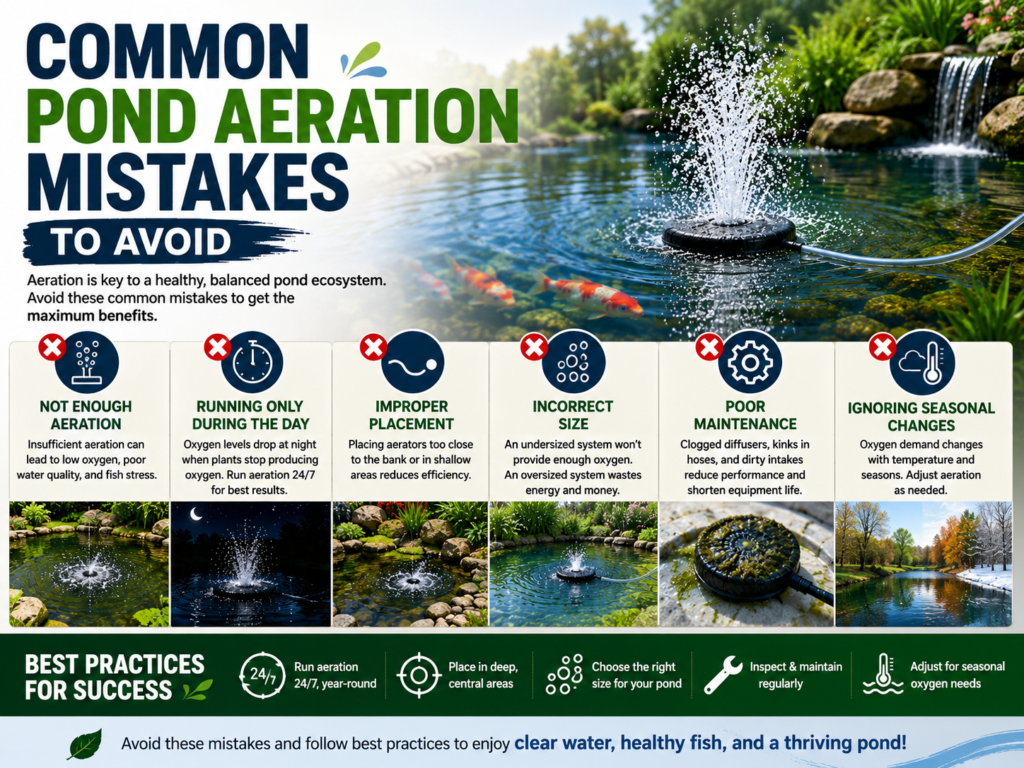
Even the best equipment cannot perform effectively if it is installed or maintained incorrectly.
Choosing an Undersized Air Pump
Using an air pump that is too small for your pond limits oxygen transfer and reduces circulation. Always choose equipment designed for your pond’s volume.
Poor Placement of Diffusers
Installing diffusers in shallow areas or near the pond edge reduces circulation efficiency. Proper placement allows oxygen-rich water to circulate throughout the entire pond.
Ignoring Routine Maintenance
Dirty air stones, clogged tubing, and worn diaphragms decrease aerator performance. Regular inspections help keep the system operating efficiently.
Running the System Incorrectly
Many pond owners only operate aerators occasionally. For most ponds, especially those with fish, continuous operation provides the most consistent oxygen levels and healthier water conditions.
Pond Aeration Maintenance Tips
Regular maintenance keeps your aeration system operating efficiently and extends its lifespan.
Clean Air Stones Regularly
Mineral deposits and debris can clog air stones, reducing airflow. Clean or replace them according to the manufacturer’s recommendations.
Inspect Airline Tubing
Check tubing for cracks, leaks, or blockages that could reduce airflow. Replace damaged tubing promptly to maintain maximum efficiency.
Replace Worn Components
Air pump diaphragms, filters, and diffusers naturally wear over time. Replacing these components before they fail helps prevent unexpected equipment downtime.
Monitor Oxygen Levels
Observe fish behavior and overall pond conditions regularly. Fish that remain active, healthy, and feed normally are often a good indication that oxygen levels are adequate.
Prepare for Seasonal Changes
During summer, oxygen demand increases due to higher water temperatures. In winter, adjust your aeration system to maintain oxygen exchange without excessively disturbing warmer water at the bottom of the pond, particularly in colder climates.
Frequently Asked Questions
Can a pond survive without aeration?
Some small ponds with light fish populations and abundant aquatic plants may survive without mechanical aeration. However, most ornamental and koi ponds benefit greatly from additional aeration to maintain stable oxygen levels and better water quality.
Do all ponds need aeration?
Not every pond requires mechanical aeration, but most garden ponds, koi ponds, and heavily stocked ponds perform better with an aeration system, especially during warm weather.
Should a pond aerator run all day?
Yes. Running a pond aerator continuously provides stable oxygen levels, improves water circulation, and supports beneficial bacteria that naturally maintain water quality.
Is a pond pump the same as an aerator?
No. A pond pump primarily circulates water through filters or waterfalls, while an aerator is specifically designed to increase dissolved oxygen levels. Many healthy ponds use both systems together.
What size aerator do I need for my pond?
The ideal aerator depends on your pond’s volume, depth, and fish population. Always choose equipment that is rated for your pond size to ensure effective oxygen distribution.
Can aeration reduce algae naturally?
Yes. Aeration helps beneficial bacteria break down excess nutrients that algae feed on. While it is not a direct algae treatment, it significantly reduces the conditions that promote algae growth.
Conclusion
If you’ve been asking why does a pond need aeration?, the answer is simple: every healthy pond depends on adequate oxygen levels to support fish, aquatic plants, and beneficial bacteria. Why does a pond need aeration? Because it increases dissolved oxygen, improves water circulation, reduces algae growth, and creates a balanced ecosystem that keeps your pond clean and healthy throughout the year.
Whether you own a small backyard pond, a decorative water garden, or a large koi pond, understanding why does a pond need aeration can help you make better decisions about pond care. A quality pond aeration system improves water quality, minimizes maintenance, prevents stagnant water, and provides a healthier environment for aquatic life.
Now that you know why does a pond need aeration, choosing the right pond aerator, pond air pump, or pond aeration system becomes an important step in maintaining a thriving pond. Investing in high-quality pond equipment ensures better oxygen levels, clearer water, healthier fish, and long-lasting pond performance. With proper aeration, you can enjoy a beautiful, balanced, and healthy pond all year round.