

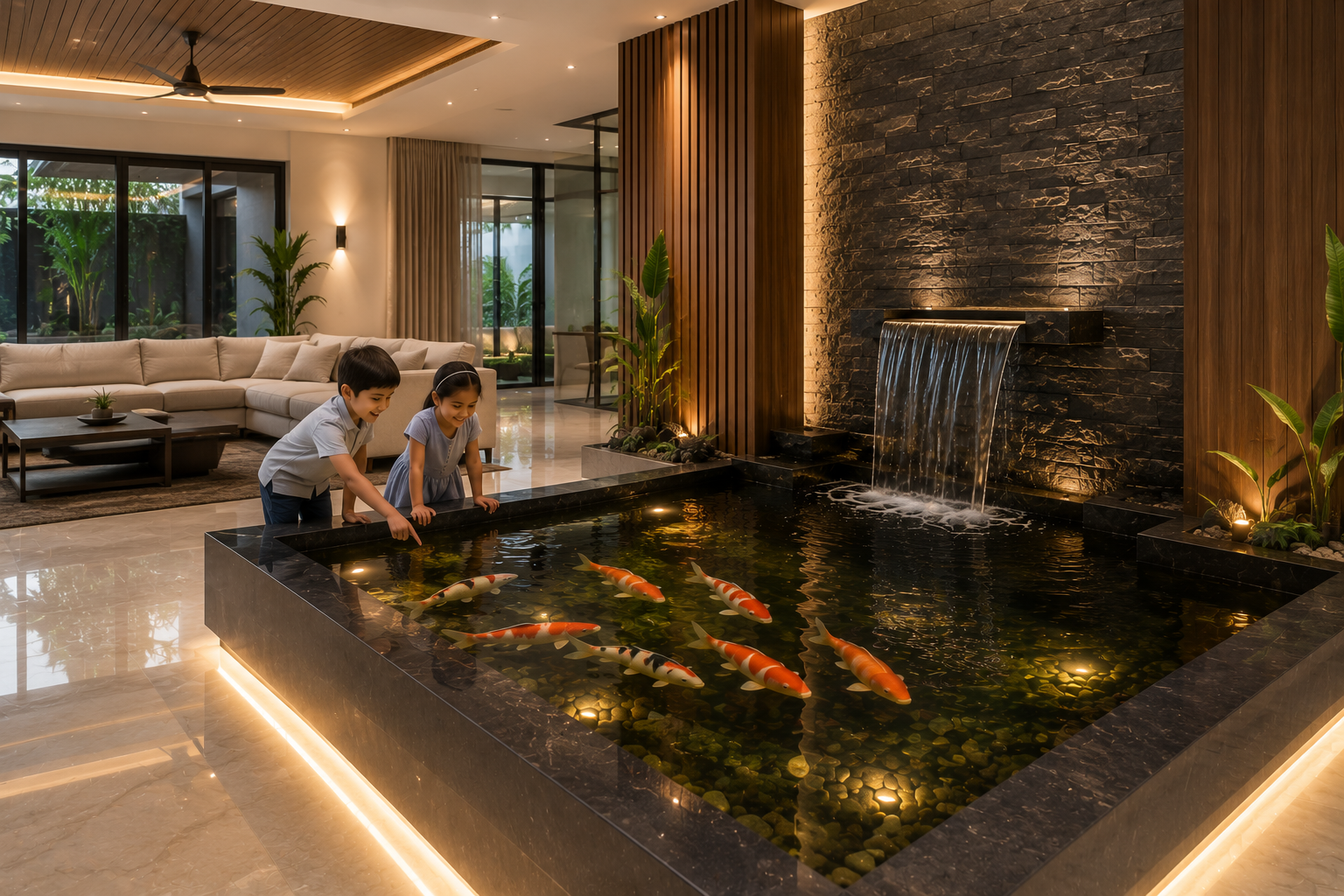
Indoor Pond Design : Bring Nature Into Your Home
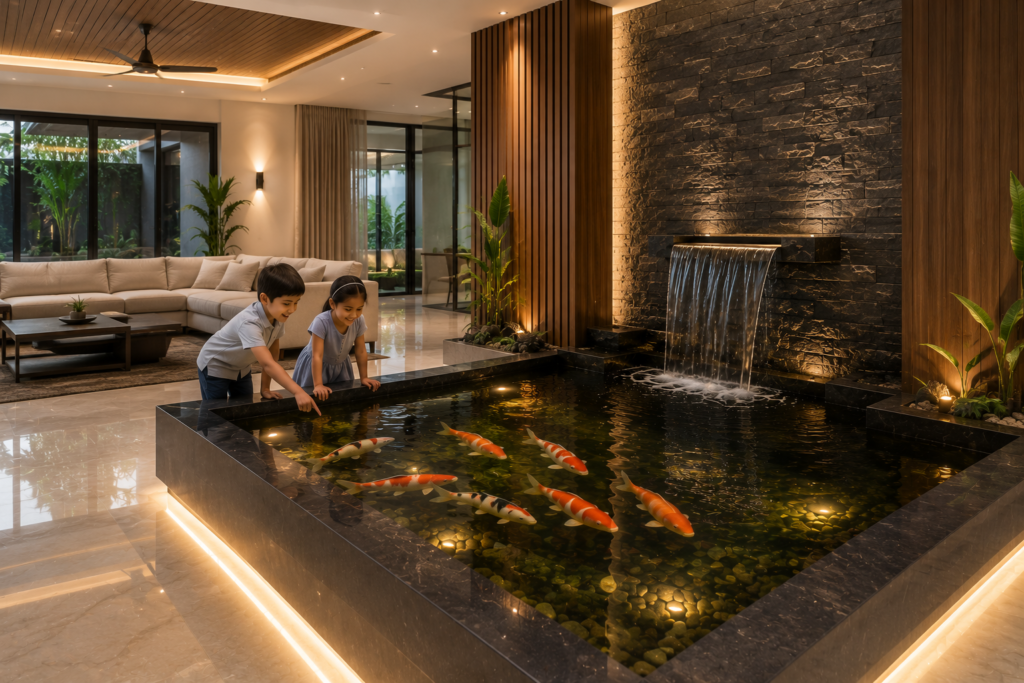
Imagine stepping into your home and being welcomed by the gentle sound of flowing water, colorful koi fish gliding gracefully beneath the surface, lush aquatic plants swaying naturally, and soft lighting creating a peaceful atmosphere. An indoor pond is more than just a decorative feature—it’s a living ecosystem that transforms your home into a relaxing sanctuary.
Indoor ponds have become increasingly popular in modern homes, luxury villas, offices, hotels, restaurants, and commercial spaces. Whether you’re looking for a contemporary glass pond in your living room or a natural koi pond in an indoor courtyard, a well-designed indoor pond can elevate your interior like no other feature.
This comprehensive guide covers everything you need to know about indoor pond design, from choosing the right location and materials to filtration, lighting, maintenance, and professional construction tips.
Why Choose an Indoor Pond?
Unlike outdoor ponds, indoor ponds remain protected from harsh weather, falling leaves, excessive algae growth, and seasonal temperature changes. They provide year-round enjoyment while requiring less environmental maintenance.
Benefits of an Indoor Pond
- Creates a peaceful and relaxing environment
- Adds luxury and elegance to interiors
- Enhances property value
- Provides a unique focal point
- Supports healthy ornamental fish
- Improves indoor humidity naturally
- Reduces stress through the calming effect of water
- Can be customized to suit any interior design style
Whether installed in a residence or commercial property, an indoor pond becomes a conversation piece that blends architecture with nature.
Choosing the Perfect Location
Selecting the right location is one of the most important decisions in indoor pond construction.
Living Room
A living room pond creates a luxurious centerpiece. Positioning it near seating areas allows everyone to enjoy the soothing movement of water and fish.
Indoor Courtyard
Homes with open courtyards are ideal for larger koi ponds. Natural daylight supports plant growth while maintaining a vibrant appearance.
Entrance Lobby
A beautifully illuminated pond at the entrance creates an unforgettable first impression for guests.
Under Staircase
Unused spaces beneath staircases can be converted into elegant decorative ponds with waterfalls.
Dining Area
An indoor pond beside the dining area creates a relaxing atmosphere for family gatherings.
Office Reception
Many businesses install indoor ponds to create a premium and welcoming environment.
Types of Indoor Ponds
Modern Minimalist Pond
Perfect for contemporary homes featuring:
- Clean geometric shapes
- Black granite finish
- Hidden filtration
- Frameless glass
- Soft LED lighting
Natural Koi Pond
Inspired by traditional Japanese gardens.
Features include:
- Natural rocks
- Waterfalls
- Aquatic plants
- Wooden bridges
- Large koi fish
Glass Viewing Pond
Glass walls provide stunning underwater views of colorful fish.
These ponds are increasingly popular in luxury homes.
Indoor Waterfall Pond
The combination of a pond and waterfall produces soothing natural sounds while increasing oxygen levels.
Zen Meditation Pond
Designed specifically for relaxation with bamboo, smooth stones, moss, and gentle flowing water.
Planning Your Indoor Pond
Proper planning prevents costly mistakes.
Consider:
- Available floor space
- Ceiling height
- Structural load capacity
- Waterproofing
- Plumbing routes
- Electrical supply
- Drainage
- Maintenance access
- Lighting
Professional planning ensures long-term reliability.
Choosing the Right Pond Size
There is no universal size.
Instead, match the pond to the available space.
Small Indoor Pond
Suitable for apartments and compact homes.
Ideal for:
- Goldfish
- Aquatic plants
- Decorative waterfalls
Medium Indoor Pond
Perfect for villas.
Can include:
- Multiple fish
- Biological filtration
- Glass viewing window
- LED lighting
Large Luxury Pond
Designed for:
- Premium residences
- Hotels
- Commercial spaces
Usually includes:
- Koi fish
- Waterfalls
- Professional filtration
- Custom landscaping
Construction Materials
The quality of materials determines durability.
Popular materials include:
RCC Concrete
Strong and permanent.
Best for luxury installations.
Waterproof Membranes
Prevent leakage while extending pond life.
Natural Stone
Provides a premium natural appearance.
Granite
Modern and highly durable.
Glass Panels
Offer spectacular underwater viewing.
Use only laminated or toughened safety glass.
Essential Equipment
Pond Filter
A high-quality filtration system removes dirt and fish waste while maintaining clear water.
Types include:
Water Pump
The heart of every pond.
Functions include:
- Water circulation
- Waterfall operation
- Oxygen distribution
- Filter supply
Choose a pump based on pond volume.
UV Clarifier
A UV clarifier destroys free-floating algae and helps maintain crystal-clear water.
Especially recommended for koi ponds.
Aeration System
Air pumps improve oxygen levels, ensuring healthier fish and beneficial bacteria.
Pond Lighting
Lighting enhances the beauty of your pond during evening hours.
Popular options:
- Warm white LEDs
- RGB color-changing lights
- Underwater spotlights
- Hidden strip lights
Auto Top-Up System
Automatically maintains water levels by replacing evaporated water.
Best Fish for Indoor Ponds
Koi Fish
The most popular choice.
Known for:
- Vibrant colors
- Friendly behavior
- Long lifespan
Goldfish
Easy to maintain and ideal for beginners.
Butterfly Koi
Graceful long fins create an elegant appearance.
Shubunkin
Colorful and highly active.
Orfe
Suitable for larger ponds with excellent swimming ability.
Best Plants
Plants improve water quality while enhancing aesthetics.
Recommended species include:
- Water Lily
- Lotus
- Anubias
- Java Fern
- Bucephalandra
- Peace Lily
- Lucky Bamboo
- Pothos
Water Quality Management
Healthy water is essential for fish health.
Maintain:
| Parameter | Recommended |
|---|---|
| pH | 7.0–8.0 |
| Ammonia | 0 ppm |
| Nitrite | 0 ppm |
| Nitrate | Below 40 ppm |
| Temperature | 20–26°C |
Test water regularly using reliable aquarium test kits.
Indoor Pond Filtration Process
A professional pond usually follows this sequence:
Bottom Drain → Mechanical Filter → Biological Filter → UV Clarifier → Pump → Waterfall → Pond
This continuous cycle keeps water clean and oxygen-rich.
Lighting Design Tips
Lighting transforms the appearance of an indoor pond.
Professional recommendations:
- Use warm white lighting for natural effects.
- Install underwater spotlights to highlight fish.
- Hide LED strips behind stonework.
- Use timers for consistent illumination.
- Avoid excessive brightness.
Indoor Pond Maintenance
Daily
- Observe fish behavior
- Remove floating debris
- Check water circulation
Weekly
- Clean skimmer
- Rinse filter sponge
- Test water parameters
Monthly
- Partial water change (10–20%)
- Inspect pumps
- Check UV system
- Clean glass
Every Six Months
- Service pumps
- Replace UV bulb if required
- Inspect waterproofing
- Deep-clean filtration media
Common Mistakes to Avoid
Many indoor pond problems result from avoidable mistakes.
Avoid:
- Overcrowding fish
- Using an undersized filter
- Poor waterproofing
- Incorrect pump sizing
- Overfeeding
- Skipping maintenance
- Insufficient aeration
- Ignoring water testing
Indoor Pond Design Trends
Current trends include:
- Infinity-edge ponds
- Frameless glass ponds
- Indoor courtyard koi ponds
- Floating stepping stones
- Smart automated filtration
- Hidden waterfalls
- Nature-inspired landscaping
- Black granite finishes
- Wooden deck surrounds
- Integrated seating beside the pond
Why Hire Professional Indoor Pond Builders?
Professional installation ensures:
- Proper waterproofing
- Correct plumbing
- Efficient filtration
- Safe electrical work
- Long-lasting construction
- Healthy water circulation
- Easier maintenance
- Better aesthetics
An expertly built pond lasts for years with minimal issues.
Estimated Indoor Pond Budget
The total cost depends on:
- Pond size
- Construction materials
- Filtration system
- Pump capacity
- Lighting
- Glass panels
- Waterfalls
- Landscaping
- Fish selection
- Automation features
Rather than choosing the lowest-cost option, invest in quality equipment and professional installation for better long-term performance.
Final Thoughts
An indoor pond is more than a decorative water feature—it is a lifestyle enhancement that brings tranquility, elegance, and natural beauty into your living or working space. Whether you envision a minimalist pond, a lush indoor courtyard with koi, or a luxurious glass-view installation, careful planning and quality craftsmanship are essential.
By selecting the right location, installing an efficient filtration system, choosing healthy fish and aquatic plants, and following a consistent maintenance routine, you can enjoy a thriving indoor pond for many years.
For homeowners and businesses seeking a truly custom solution, partnering with experienced professionals ensures every detail—from waterproofing and plumbing to lighting and landscaping—is designed to perfection.
Frequently Asked Questions (FAQs)
1. What is the ideal depth for an indoor pond?
For ornamental fish, a depth of 60–90 cm is suitable. Larger koi ponds typically benefit from 90–120 cm depth to provide better water stability and fish comfort.
2. Can I keep koi fish in an indoor pond?
Yes. Koi thrive in indoor ponds that provide adequate space, excellent filtration, proper aeration, and stable water quality.
3. Do indoor ponds require a filtration system?
Absolutely. A high-quality filtration system is essential to remove waste, support beneficial bacteria, and maintain clear, healthy water.
4. How often should I clean an indoor pond?
Routine maintenance includes weekly debris removal and filter checks, with a 10–20% partial water change every 2–4 weeks, depending on fish load and water quality.
5. Can an indoor pond increase home value?
Yes. A professionally designed indoor pond can enhance the visual appeal and uniqueness of a property, making it more attractive to potential buyers.