

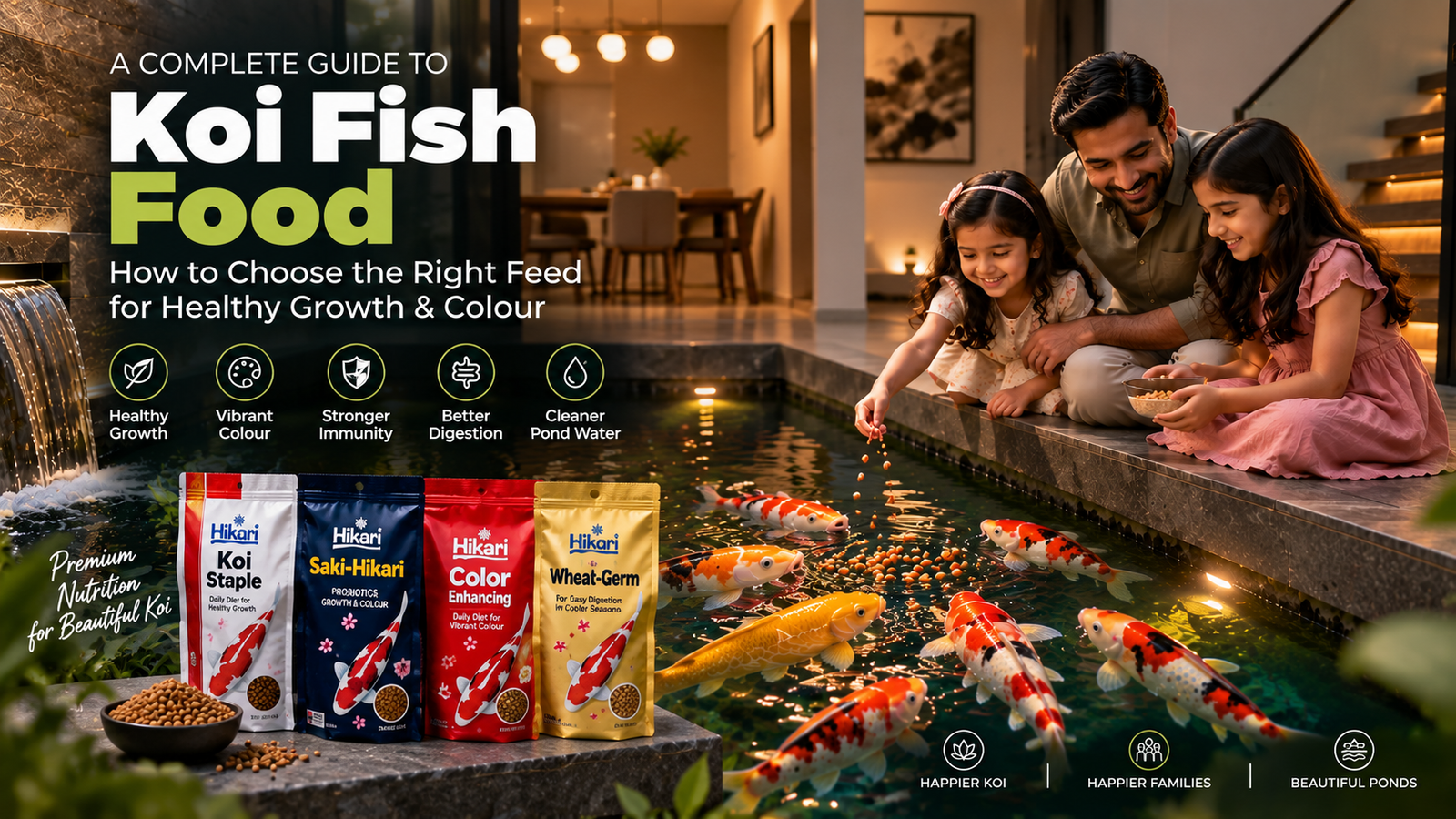
Choosing the right koi fish food is one of the most important parts of keeping koi healthy, active, and beautifully coloured. A good-quality koi feed provides essential nutrients for growth, energy, immunity, and colour development while also supporting good pond water quality.
With so many types of koi fish feed available, choosing the right one can sometimes be confusing. The ideal feed depends on factors such as koi size, water temperature, growth goals, colour development, and feeding habits.
In this guide, we explain how to choose the right koi food, what to look for in a quality feed, how often to feed koi, and how proper feeding can help maintain a healthy pond.
Why Choosing the Right Koi Fish Food Matters
Koi require a balanced diet containing protein, fats, carbohydrates, vitamins, and minerals. Their nutritional requirements can change depending on their age, size, activity level, and water temperature.
High-quality koi food can help support:
- Healthy growth and body development
- Natural colour development
- Energy and activity
- Immune system support
- Healthy digestion
- Overall fish condition
- Better feeding response
However, feeding more food does not necessarily mean faster or healthier growth. Overfeeding can leave uneaten food in the pond, which can contribute to poor water quality and increased waste.
What Makes a Good Koi Fish Feed?
When choosing koi fish food, look beyond the packaging and consider the nutritional profile and suitability for your fish.
1. Balanced Protein
Protein is an important component of koi nutrition because it supports growth and tissue maintenance.
Growing koi generally require feeds formulated to support growth, while larger adult koi may have different nutritional requirements.
2. Colour-Enhancing Ingredients
Many koi keepers choose specialised koi food for colour to support the development and maintenance of vibrant red, orange, yellow, and other natural colour patterns.
Some colour-enhancing feeds contain ingredients such as carotenoid-rich components. These should be used according to the manufacturer’s feeding recommendations.
3. Easily Digestible Ingredients
A digestible koi feed can help fish utilise nutrients efficiently and may reduce unnecessary waste entering the pond.
Good digestion is particularly important because koi are continuously exposed to their pond environment.
4. Vitamins and Minerals
A properly formulated koi feed should provide important vitamins and minerals that contribute to the fish’s overall nutritional needs.
A balanced diet is preferable to relying on a single ingredient or feeding excessive amounts.
Choosing Koi Food Based on Fish Size
Koi food is available in different pellet sizes. Choosing an appropriate pellet size makes feeding easier and allows koi to consume the food comfortably.
Small Koi
Small and juvenile koi generally benefit from smaller-sized pellets that are easier to eat and digest.
Medium-Sized Koi
Medium koi can usually be fed appropriately sized floating pellets that allow them to feed comfortably at the surface.
Large Koi
Larger koi can consume larger pellets, depending on the product formulation and manufacturer’s recommendation.
Always check the recommended pellet size before purchasing koi fish feed.
Floating Koi Food vs Sinking Koi Food
One of the common questions among koi keepers is whether floating or sinking food is better.
Floating Koi Food
Floating pellets are popular because they allow you to observe your fish while feeding.
They can help you:
- Monitor appetite
- Observe fish activity
- Identify unusual feeding behaviour
- Control the quantity of food being offered
- Remove uneaten food more easily
For many ornamental koi ponds, floating koi food is a convenient choice.
Sinking Koi Food
Sinking feeds can be useful in specific feeding situations, particularly when fish prefer feeding below the surface.
The choice depends on the feeding behaviour of your koi and the formulation of the product.
Koi Food for Growth
If your main objective is healthy koi development, choose a feed formulated with appropriate nutritional levels for growth.
Young and actively growing koi generally require nutrient-dense food. However, growth should be gradual and supported by good water quality, adequate oxygen, proper filtration, and suitable pond conditions.
Remember that koi food for growth works as part of an overall pond management system rather than as a replacement for proper filtration and maintenance.
Koi Food for Colour
Koi are famous for their beautiful colour patterns, making colour development an important consideration for many hobbyists.
Specialised koi food for colour may contain colour-supporting ingredients designed to complement the fish’s natural pigmentation.
For the best results, combine appropriate feeding with:
- Good water quality
- Adequate filtration
- Regular maintenance
- Proper feeding quantity
- Suitable sunlight and pond conditions
- Healthy fish genetics
Food can support colour development, but it cannot completely change the natural genetic colour potential of a koi.
How Often Should You Feed Koi Fish?
Koi feeding frequency depends on water temperature, fish size, activity, and the specific feed being used.
During warmer conditions, koi are generally more active and may feed more frequently. During cooler conditions, their metabolism and feeding activity can decrease.
A practical approach is to offer only an amount that your koi can consume within a few minutes.
Avoid continuously adding food simply because the fish are still approaching the surface.
Always follow the feeding instructions provided with your chosen koi fish feed.
How Much Koi Food Should You Feed?
There is no single feeding quantity that works for every pond.
The appropriate amount depends on:
- Number of koi
- Fish size
- Water temperature
- Feed formulation
- Fish activity
- Pond conditions
- Filtration capacity
Start with a controlled quantity and observe how quickly the fish consume it.
If food remains after feeding, reduce the quantity during the next feeding session.
Why Overfeeding Koi Can Be a Problem
Overfeeding is one of the most common feeding mistakes in ornamental ponds.
Uneaten koi food can break down and contribute to organic waste in the pond. Excess feeding can also increase the biological load placed on the filtration system.
Signs that you may be feeding too much include:
- Uneaten food after feeding
- Increased pond waste
- Cloudy water
- Increased maintenance requirements
- Reduced water quality
Good koi keeping is not about feeding as much as possible. It is about providing the right nutrition in the right quantity.
Koi Food and Pond Water Quality
Your choice of koi fish food is closely connected to pond water management.
Even a high-quality feed can create excess waste if it is used incorrectly. Uneaten food and fish waste become part of the organic load that your filtration system needs to process.
For a healthy koi pond, combine proper feeding with:
- Mechanical filtration
- Biological filtration
- Adequate pond circulation
- Proper aeration
- Regular water testing
- Routine filter maintenance
- Appropriate stocking levels
A well-maintained filtration system helps support clear and healthy pond water.
How to Store Koi Fish Food
Proper storage helps maintain the quality of your koi feed.
Follow these basic practices:
- Keep the feed in a cool, dry place.
- Close the container properly after every use.
- Keep the food away from direct sunlight.
- Avoid moisture entering the container.
- Do not mix old feed with a fresh unopened batch unless appropriate.
- Follow the manufacturer’s storage instructions.
Avoid keeping large quantities exposed to heat and humidity for long periods.
How to Choose the Best Koi Fish Food
When searching for the best koi fish food, consider the following checklist:
✔ Fish Size
Choose an appropriate pellet size for your koi.
✔ Feeding Purpose
Decide whether your priority is general maintenance, growth, colour support, or seasonal feeding.
✔ Nutritional Profile
Check the product information and feeding recommendations.
✔ Pellet Type
Choose floating or sinking food according to your fish and feeding method.
✔ Water Temperature
Consider seasonal changes and follow the manufacturer’s recommendations.
✔ Feed Quality
Choose koi food from a reliable manufacturer and purchase from a trusted supplier.
✔ Pond Conditions
Consider your filtration system, stocking density, and overall pond health before deciding how much to feed.
Buy Koi Fish Food Online in India
Looking for koi fish food in India? Greenfin The Pond Studio offers pond and koi-keeping supplies for hobbyists and pond owners.
Choosing the right koi feed is an important step toward maintaining healthy and active fish. Whether you are maintaining a home koi pond or managing a larger ornamental pond, selecting an appropriate feed and following proper feeding practices can make a significant difference.
Explore the available koi fish feed and pond supplies at Greenfinindia.com and choose the product that matches your koi’s nutritional and feeding requirements.
Frequently Asked Questions About Koi Fish Food
What is the best food for koi fish?
The best food depends on the koi’s size, age, water temperature, feeding objective, and nutritional requirements. Choose a properly formulated koi feed from a reliable manufacturer and follow its feeding instructions.
How many times a day should koi be fed?
Feeding frequency depends on water temperature, fish size, activity, and the specific feed. During warmer conditions, koi may feed more actively, while feeding activity generally decreases as water becomes colder.
Is floating food good for koi?
Yes. Floating koi food is widely used because it allows keepers to observe the fish while feeding and monitor how much food they consume.
Does koi food improve colour?
Specialised colour-supporting koi feeds can help support natural colour development when used appropriately. However, koi colour is also influenced by genetics, water quality, health, and environmental conditions.
Can you overfeed koi?
Yes. Overfeeding can increase waste and place additional load on the pond’s filtration system. Feed only an appropriate quantity that the fish can consume within a short period.
What size pellets should I feed my koi?
Pellet size should match the size of your koi. Smaller fish generally require smaller pellets, while larger koi can consume larger pellets. Always check the manufacturer’s recommendation.
Can koi eat normal fish food?
Koi can consume various types of fish food, but a properly formulated koi feed is designed specifically to provide nutrition suitable for ornamental carp. Choosing a dedicated koi feed is generally more appropriate for regular koi pond feeding.
Final Thoughts
Choosing the right koi fish food is an important part of responsible koi keeping. A suitable feed can provide essential nutrition while supporting healthy growth, activity, digestion, and natural colour development.
However, feeding is only one part of successful koi pond management. Good filtration, aeration, water quality, appropriate stocking, and regular maintenance are equally important.
Choose a koi feed according to your fish size, feeding goals, water conditions, and the manufacturer’s recommendations—and always avoid overfeeding.
Shop koi fish food and pond supplies at Greenfinindia.com.