

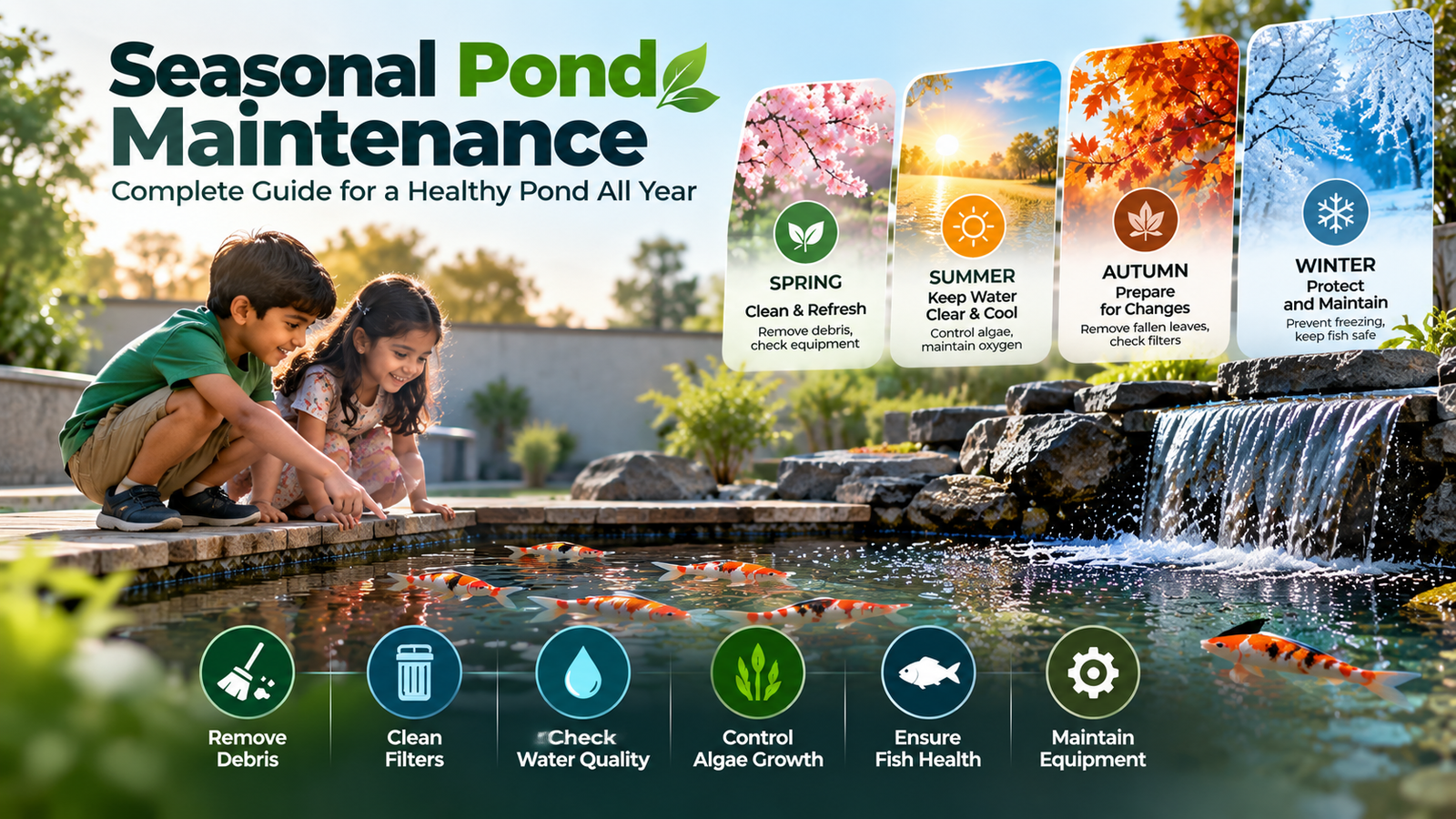
A pond changes throughout the year. Temperature, rainfall, sunlight, humidity, falling leaves, plant growth, and fish activity can all affect pond water quality and filtration performance.
That is why seasonal pond maintenance is important for keeping outdoor ponds, koi ponds, garden ponds, and water features clean, clear, and healthy throughout the year.
A pond that looks perfectly clear during one season may develop algae, excess debris, low oxygen, or filtration problems during another. Instead of waiting for problems to appear, a seasonal maintenance routine helps you identify and manage potential issues early.
In this guide, we explain how to maintain a pond throughout the year, including what to check during summer, monsoon, autumn, and winter.
Why Is Seasonal Pond Maintenance Important?
Outdoor ponds are directly exposed to changing weather conditions.
Seasonal changes can affect:
- Pond water temperature
- Oxygen levels
- Algae growth
- Fish activity
- Fish feeding
- Aquatic plant growth
- Water evaporation
- Rainwater entering the pond
- Leaves and organic debris
- Pond filtration
- Pump performance
Regular maintenance allows you to adjust your pond-care routine according to these changing conditions.
For koi ponds and heavily stocked ponds, seasonal water-quality monitoring is particularly important because fish produce waste throughout the year.
Seasonal Pond Maintenance Checklist
A simple yearly maintenance cycle can be divided into four major periods:
| Season | Main Maintenance Focus |
|---|---|
| Summer | Temperature, evaporation, oxygen, algae |
| Monsoon | Rainwater, overflow, debris, water chemistry |
| Autumn | Leaves, sludge, filter maintenance |
| Winter | Fish feeding, temperature, equipment |
The exact timing varies depending on your local climate. In tropical regions such as Kerala, the traditional four-season pattern may not apply exactly, so rainfall and temperature are often more useful indicators than calendar dates.
Summer Pond Maintenance
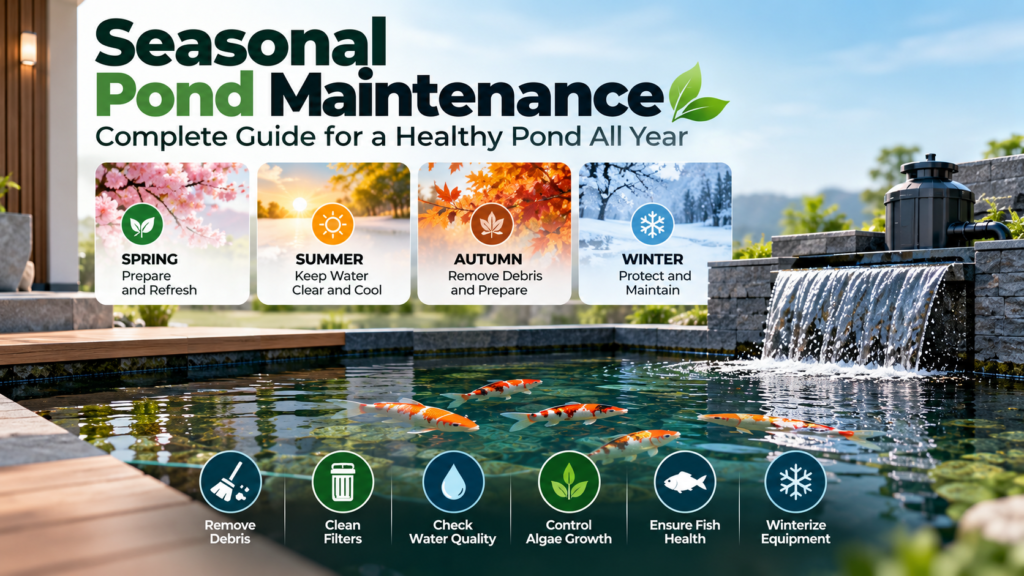
Summer can bring higher temperatures, stronger sunlight, increased evaporation, and faster algae growth.
These conditions can affect both fish and pond filtration.
1. Monitor Pond Temperature
Check your pond temperature regularly, particularly during periods of extreme heat.
Warmer water holds less dissolved oxygen than cooler water, so fish may become more sensitive to low oxygen conditions during hot weather.
A reliable pond thermometer can help you monitor changes.
2. Increase Aeration When Necessary
Good aeration helps maintain oxygen levels and improves water circulation.
Depending on your pond design, you may use:
- Air pumps
- Air stones
- Aeration systems
- Waterfalls
- Fountains
- Properly positioned circulation pumps
Watch your fish for signs of oxygen stress, such as repeated gasping near the surface.
3. Check Water Evaporation
Hot weather can cause water levels to fall.
Check the pond regularly and top up water when necessary.
If using treated municipal water, use an appropriate water conditioner according to the manufacturer’s instructions.
Avoid making large sudden changes to water chemistry.
4. Control Algae Growth
Longer periods of sunlight can encourage algae growth.
To manage excessive algae:
- Avoid overfeeding fish
- Remove excessive organic waste
- Maintain good filtration
- Control unnecessary lighting or direct sunlight where practical
- Maintain suitable aquatic plants
- Check whether UV clarification is appropriate
If the pond repeatedly turns green, investigate the underlying nutrient and filtration conditions rather than relying only on short-term treatments.
5. Check Your Pond Pump
Inspect the pond pump for:
- Reduced flow
- Blocked intake
- Debris buildup
- Impeller problems
- Unusual noise
- Overheating
A pump that is not circulating water properly can affect filtration, waterfalls, fountains, and oxygenation.
Monsoon Pond Maintenance
For regions such as Kerala, the monsoon can be one of the most important periods for pond maintenance.
Heavy rainfall can introduce large amounts of water, soil, leaves, dust, and organic material into an outdoor pond.
1. Check Pond Overflow Systems
Before heavy rainfall, inspect the pond’s overflow system.
Make sure:
- Overflow pipes are clear
- Drainage paths are unobstructed
- Skimmers are not blocked
- Water cannot easily enter electrical equipment
- Surrounding soil cannot wash directly into the pond
A properly designed overflow system helps prevent uncontrolled flooding.
2. Monitor Water Level
Heavy rain can rapidly increase pond water volume.
An overflowing pond can cause fish loss, erosion, equipment damage, or unwanted contaminants entering the water.
Check the pond after heavy rainfall and make sure water is flowing through the intended overflow route.
3. Watch for Sudden Water-Quality Changes
Rainwater can alter pond chemistry, especially after heavy rainfall.
Monitor important parameters such as:
- pH
- Ammonia
- Nitrite
- Nitrate
- Temperature
If fish appear stressed after heavy rain, test the water and investigate the cause before making major changes.
4. Remove Leaves and Debris
Rain and wind can carry leaves, branches, soil, and other debris into the pond.
Remove floating debris regularly before it decomposes and contributes to nutrient accumulation.
A pond net or skimmer can make this task easier.
5. Protect Electrical Equipment
Pond pumps, UV clarifiers, lighting systems, and other electrical equipment require appropriate protection from water exposure.
Inspect:
- Power connections
- Cables
- Control equipment
- Pump connections
- Electrical protection systems
Electrical installations around water should be handled safely and according to local electrical requirements.
6. Check Pond Filtration
Heavy rainfall can increase the amount of suspended material entering an outdoor pond.
Inspect mechanical filtration regularly and clean it when necessary.
Avoid unnecessarily cleaning all biological media at the same time, because beneficial microorganisms are an important part of the biological filtration system.
Autumn Pond Maintenance
In areas with significant seasonal leaf fall, autumn can bring a large amount of organic debris into ponds.
For tropical areas, similar conditions may occur during periods of heavy plant shedding or strong winds.
1. Remove Falling Leaves
Leaves that remain in the pond eventually decompose.
Decomposing organic matter can contribute nutrients and consume oxygen.
Use a pond net or skimmer to remove leaves regularly.
2. Clean Mechanical Filter Media
Inspect your mechanical filtration system for accumulated debris.
Depending on the filter design, clean:
- Filter brushes
- Filter pads
- Screens
- Pre-filters
- Mechanical chambers
Follow the manufacturer’s maintenance instructions.
3. Check for Pond Sludge
Organic material can accumulate at the bottom of the pond.
If sludge becomes excessive, consider removing it using suitable pond-cleaning equipment such as a pond vacuum.
Large ponds may require professional pond-cleaning services.
4. Trim Dead Plant Material
Remove dead or decaying leaves and stems from aquatic plants.
This reduces unnecessary organic waste entering the pond.
Winter Pond Maintenance
Winter maintenance depends heavily on your local climate.
In warmer regions such as Kerala, winter may have a much smaller effect on pond temperature than in colder countries.
However, cooler periods can still affect fish activity and feeding.
1. Monitor Fish Activity
Fish metabolism generally changes as water temperature changes.
Observe:
- Swimming activity
- Feeding response
- Breathing
- Position in the pond
- General behavior
Avoid feeding more than the fish can consume.
2. Adjust Feeding According to Conditions
Do not follow a fixed feeding schedule regardless of temperature and fish activity.
Feed according to the requirements of your fish and the actual pond conditions.
Excess food that remains uneaten contributes to organic waste.
3. Check Pond Equipment
Inspect your:
- Pond pump
- UV clarifier
- Air pump
- Filter
- Waterfall system
- Plumbing
Make sure equipment continues to operate correctly.
4. Continue Water Testing
Do not stop testing water simply because fish activity has changed.
Continue monitoring water quality according to your pond’s needs.
Seasonal Pond Maintenance for Koi Ponds
Koi ponds require particular attention because koi produce a significant amount of waste and are often kept at relatively high stocking densities.
Throughout the year, monitor:
- Ammonia
- Nitrite
- Nitrate
- pH
- Temperature
- Dissolved oxygen
A well-designed koi pond filtration system should combine appropriate mechanical and biological filtration.
Depending on the pond design, this may include:
- Multi-chamber filtration
- Pressurized filtration
- Biological filter media
- UV clarification
- Rotary drum filtration
- Bottom drains
- Skimmers
- Aeration
The filtration system should be sized according to the pond’s actual water volume and fish load.
Seasonal Pond Filter Maintenance
Your pond filter should be inspected throughout the year rather than only cleaned once annually.
Mechanical Filtration
Mechanical media captures debris and may become clogged more quickly during periods of heavy rainfall, leaf fall, or increased organic waste.
Clean it when flow becomes restricted or according to the manufacturer’s recommendations.
Biological Filtration
Biological media provides surfaces for beneficial microorganisms.
Avoid aggressively cleaning all biological media at once.
If cleaning is necessary, follow the manufacturer’s instructions and avoid unnecessary exposure to untreated chlorinated water.
UV Clarifier
A UV clarifier can be useful for controlling suspended algae and improving water clarity.
Inspect the UV lamp and quartz sleeve according to the manufacturer’s maintenance schedule.
Remember that a UV clarifier works alongside mechanical and biological filtration rather than replacing them.
Seasonal Pond Pump Maintenance
Pond pumps operate continuously in many installations, making routine inspection important.
Check the pump for:
- Blocked intake
- Reduced flow
- Debris
- Impeller buildup
- Unusual vibration
- Unusual noise
- Damaged cables
The required pump capacity depends on the pond volume, filtration system, pipework, waterfall height, and desired circulation.
If you notice consistently reduced flow, investigate the pump, plumbing, filter, and intake before replacing the pump.
How to Maintain Pond Water Quality Throughout the Year
Good seasonal maintenance should always include water-quality management.
Test Pond Water
Depending on your pond, regularly test:
- Ammonia
- Nitrite
- Nitrate
- pH
- Temperature
For fish-heavy ponds, monitoring dissolved oxygen can also be useful.
Control Fish Feeding
Adjust feeding according to fish activity, temperature, and pond conditions.
Avoid excessive feeding because uneaten food becomes organic waste.
Maintain Proper Filtration
Your filtration system should be appropriate for:
- Pond volume
- Fish population
- Feeding levels
- Organic load
- Desired water clarity
Remove Organic Waste
Regularly remove:
- Leaves
- Dead plants
- Uneaten food
- Dead fish
- Excess algae
- Accumulated sludge
Reducing organic waste helps reduce the nutrient load entering the pond.
Seasonal Pond Maintenance Mistakes to Avoid
1. Ignoring the Pond During Heavy Rain
Rain can rapidly change water levels and introduce debris and contaminants.
2. Overfeeding Fish
Fish feeding should be adjusted according to conditions rather than following the same quantity throughout the year.
3. Cleaning All Filter Media at Once
This can unnecessarily disrupt biological filtration.
4. Ignoring Low Oxygen
Hot weather and high fish loads can increase oxygen demand.
5. Neglecting the Pump
A partially blocked pump can reduce circulation and filtration performance.
6. Overusing Algae Treatments
Treating algae without addressing excess nutrients, sunlight, stocking, and filtration may only provide temporary results.
7. Making Sudden Water Chemistry Changes
Large and unnecessary changes can stress fish.
Seasonal Pond Maintenance Checklist
Summer
- Check water temperature
- Monitor oxygen levels
- Inspect pond pump
- Control algae
- Check water evaporation
- Monitor water quality
Monsoon
- Check overflow systems
- Remove rain-related debris
- Inspect filters
- Monitor water parameters
- Check electrical equipment
- Watch for sudden water-level changes
Autumn / Leaf-Fall Period
- Remove leaves
- Clean mechanical filtration
- Remove excessive sludge
- Trim dead plant material
- Check pump intake
Winter
- Monitor fish activity
- Adjust feeding
- Continue water testing
- Inspect filtration
- Check pumps and aeration
- Remove accumulated debris
Frequently Asked Questions
What is seasonal pond maintenance?
Seasonal pond maintenance is the practice of adjusting pond cleaning, filtration, fish feeding, water testing, algae control, and equipment inspection according to changing weather and pond conditions throughout the year.
How often should I clean my pond?
The frequency depends on pond size, fish population, filtration, plants, weather, and debris levels. Regular light maintenance is generally easier than allowing large amounts of waste to accumulate.
How do I maintain a koi pond during summer?
Monitor water temperature, maintain good aeration and circulation, control algae, avoid overfeeding, check the pump and filter, and regularly monitor water quality.
How do I protect my pond during monsoon?
Inspect overflow and drainage systems, remove leaves and debris, monitor water quality after heavy rainfall, protect electrical equipment, and check filtration more frequently when necessary.
Should I turn off my pond pump during the rainy season?
Not automatically. A pond pump is normally an important part of circulation and filtration. Whether it should be turned off depends on the pond design, electrical safety, rainfall conditions, and equipment installation. Always follow the equipment manufacturer’s instructions and local electrical safety requirements.
How can I keep pond water clear throughout the year?
Use properly sized mechanical and biological filtration, maintain suitable circulation, control feeding and stocking, remove organic waste, manage algae, and use UV clarification when appropriate.
Conclusion
Effective seasonal pond maintenance is about adapting your pond-care routine to changing environmental conditions.
Summer requires greater attention to temperature, evaporation, oxygen, and algae. Monsoon maintenance focuses on rainfall, overflow, debris, water chemistry, and equipment protection. Periods of heavy leaf fall require additional debris and sludge management, while cooler periods may require changes to fish feeding and observation.
The most important thing is to maintain the entire pond system—not just the water.
A properly selected pond pump, filtration system, UV clarifier, aeration system, and filter media, combined with regular cleaning and water testing, can make pond maintenance easier throughout the year.
For pond construction, filtration systems, pond pumps, UV clarifiers, aeration, and pond maintenance solutions, Greenfin The Pond Studio can help you choose and design the right system for your pond.