

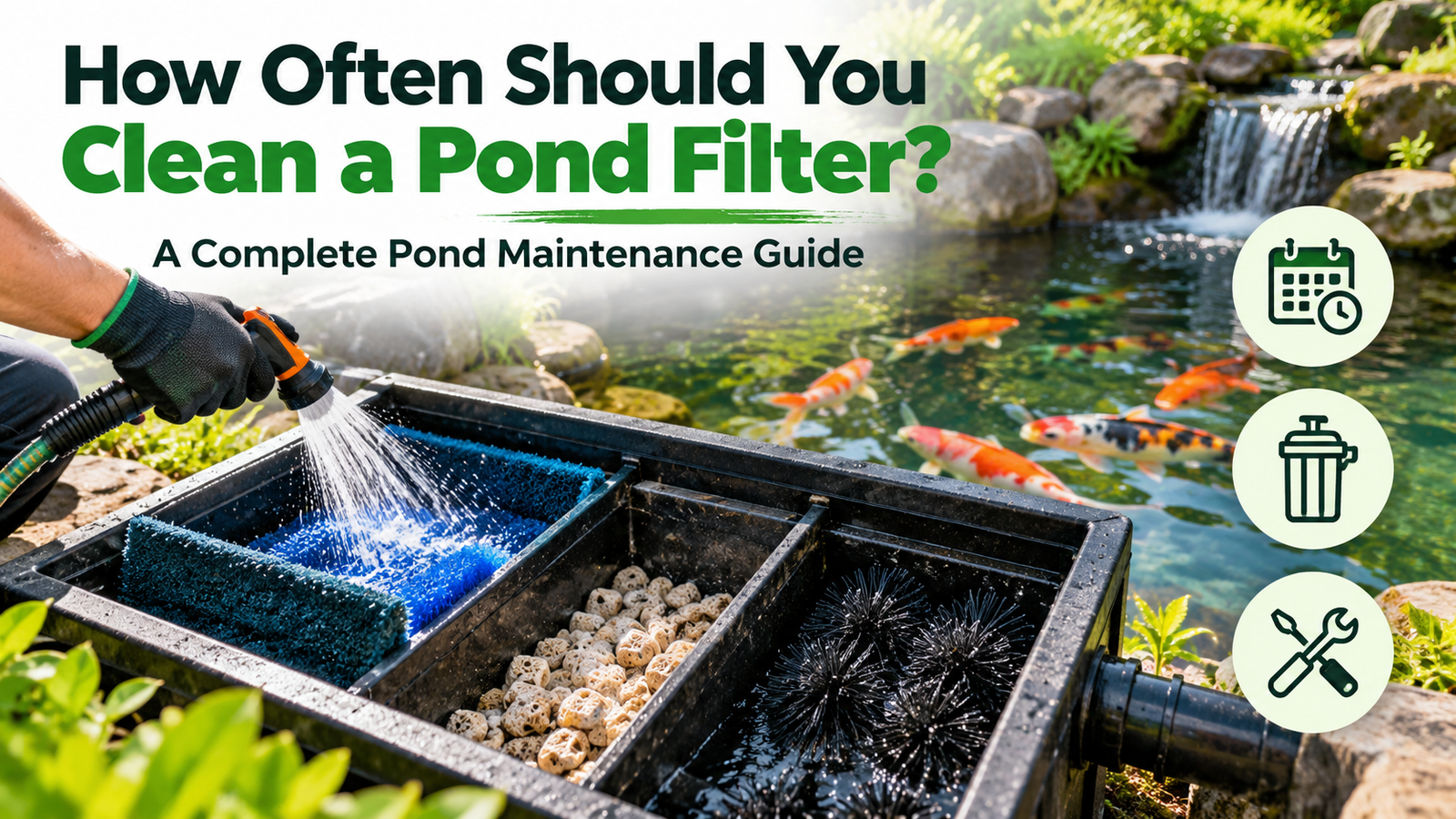
A pond filtration system plays an important role in maintaining clean, healthy water. It removes fish waste, leaves, uneaten food, suspended particles, and other organic debris while providing a suitable environment for beneficial bacteria.
But even the best pond filter needs regular maintenance.
One of the most common questions pond owners ask is:
How often should you clean a pond filter?
There is no single cleaning schedule that works for every pond. The ideal frequency depends on the pond size, number of fish, feeding habits, filter type, pump flow, amount of debris, and seasonal conditions.
In this guide, we explain how often different pond filters should be cleaned, how to clean them properly, and how to know when your filter needs maintenance.
Why Is Pond Filter Cleaning Important?
As pond water passes through the filtration system, the filter media gradually collects waste.
Mechanical filter media can accumulate:
- Fish waste
- Uneaten food
- Leaves
- Dirt
- Sludge
- Algae
- Fine suspended particles
If this material continues to accumulate, water flow through the filter can decrease.
A heavily blocked filter may also cause increased maintenance requirements and reduce the overall efficiency of the filtration system.
Regular maintenance helps keep water moving through the filter and allows the filtration system to perform effectively.
How Often Should You Clean a Pond Filter?
For many ponds, mechanical filter media may need cleaning anywhere from once a week to once every few weeks, but the exact schedule depends on the system.
Some ponds may require more frequent cleaning, while lightly stocked ponds may need less frequent maintenance.
Instead of following a fixed calendar alone, monitor the condition of the filter.
Clean the filter when you notice:
- Reduced water flow
- Increased water level before the filter
- Excessive sludge
- Visible blockage
- Dirty mechanical media
- Pump performance dropping
- Water clarity getting worse
The best maintenance schedule is therefore based on the actual condition of the filtration system.
Pond Filter Cleaning Frequency by Filter Type
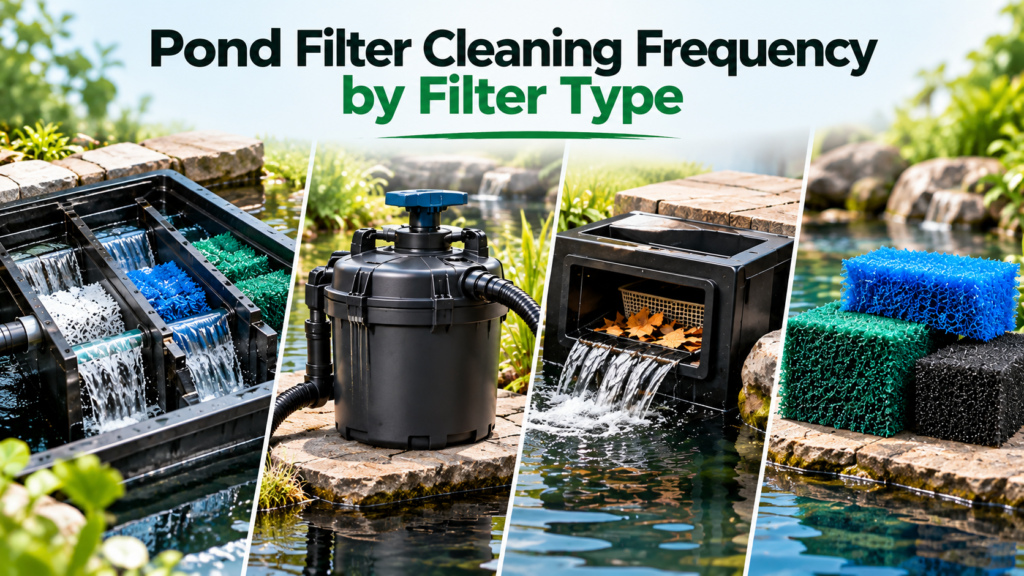
Different filtration systems require different maintenance routines.
1. Multi-Chamber Pond Filter
Multi-chamber filtration systems normally contain separate stages for mechanical and biological filtration.
The first chambers generally collect the largest amount of solid waste.
Typical maintenance:
Mechanical chambers: Inspect frequently and clean when heavily loaded.
Biological chambers: Clean less frequently and only when necessary.
The exact schedule depends on the amount of waste entering the system.
A large koi pond with many fish may require considerably more frequent mechanical cleaning than a lightly stocked ornamental pond.
2. Pressurized Pond Filter
Pressurized pond filters are enclosed systems that often include a cleaning or backwash function.
Depending on the model and pond conditions, cleaning may be performed using the manufacturer’s recommended procedure.
Many pressurized filters can be cleaned without completely removing the filter media from the housing.
Check the filter when:
- Water flow decreases
- Pressure increases
- The filter becomes visibly blocked
- Water quality begins to decline
Always follow the cleaning instructions provided for the specific filter model.
3. Pond Skimmer
A pond skimmer collects floating debris before it reaches the main filtration system.
The skimmer basket may need frequent cleaning, especially when the pond is surrounded by trees.
During periods of heavy leaf fall, it may need to be checked daily.
Removing debris from the skimmer regularly reduces the amount of organic material entering the filtration system.
4. Filter Mats and Sponges
Filter mats and sponges collect mechanical waste.
When they become heavily blocked, water flow can decrease.
They should be cleaned when necessary rather than waiting until they become completely clogged.
When cleaning biological filter media, avoid unnecessarily removing all beneficial bacteria at once.
Mechanical vs Biological Filter Cleaning
Understanding the difference between mechanical and biological filtration is important.
Mechanical Filter Media
Mechanical media physically captures waste particles.
Examples include:
- Filter brushes
- Filter mats
- Filter socks
- Filter sponges
- Foam media
These materials generally require more frequent cleaning.
Biological Filter Media
Biological media provides surface area for beneficial bacteria.
Examples include:
- Bio balls
- Ceramic media
- Japanese filter media
- Moving-bed media
- Biological sponge
Biological media usually does not need the same frequent cleaning as mechanical media.
The goal is to remove excessive accumulated debris without unnecessarily disturbing the biological filtration system.
Should You Clean Biological Filter Media?
Yes, but only when necessary.
Biological media should not be treated like a mechanical filter that needs frequent deep cleaning.
Beneficial bacteria colonize the surfaces of biological media. Excessive cleaning can disturb this bacterial population.
When biological media needs cleaning, use appropriate pond water or follow the filter manufacturer’s recommendations.
Avoid using strong cleaning chemicals unless the manufacturer specifically instructs you to do so.
Should You Clean a Pond Filter With Tap Water?
For mechanical media, cleaning methods depend on the filter design and manufacturer’s instructions.
However, when cleaning biological media, many pond keepers prefer using water removed from the pond rather than untreated chlorinated tap water.
This helps reduce unnecessary disturbance to the beneficial bacterial population.
If your local water supply is treated with chlorine or chloramine, take this into consideration when maintaining biological filtration media.
Always follow the instructions provided with your particular filtration system.
How to Clean a Pond Filter Properly
The cleaning process depends on the filter design, but the following general approach can help.
Step 1: Turn Off the Pump
Switch off the pond pump before opening or servicing the filtration system.
This prevents water from continuing to flow through the system while you work.
Step 2: Inspect the Filter
Check the filter chambers, media, inlet, outlet, pipes, and surrounding area.
Look for:
- Sludge
- Blockages
- Excess algae
- Damaged media
- Reduced water flow
Step 3: Remove Accumulated Waste
Remove heavy debris and sludge from the mechanical filtration stages.
Step 4: Clean Mechanical Media
Rinse or clean mechanical media according to the filter manufacturer’s instructions.
Avoid unnecessarily over-cleaning biological media.
Step 5: Inspect Biological Media
Check whether biological media has become heavily clogged.
If cleaning is necessary, handle it carefully.
Step 6: Check the Pump and Plumbing
Inspect the pump intake, pipes, valves, and connections for blockages.
Step 7: Restart the System
After completing maintenance, restore the filter components and restart the pump.
Check the water flow and confirm that the system is operating normally.
Signs That Your Pond Filter Needs Cleaning
You don’t always need to wait for a scheduled maintenance day.
Your pond can tell you when the filtration system needs attention.
1. Reduced Water Flow
If the water returning to the pond becomes weaker, the filter or plumbing may be partially blocked.
2. Increased Sludge
Visible accumulation of sludge in mechanical chambers is a clear indication that cleaning may be required.
3. Cloudier Water
If the pond becomes increasingly cloudy, check the filtration system and other possible causes.
4. Pump Straining
Reduced flow at the pump or increased resistance can indicate a blocked filter or plumbing system.
5. Water Level Difference
In certain filtration systems, a significant difference in water level between chambers can indicate restricted flow.
Factors That Affect Pond Filter Cleaning Frequency
There are several factors that determine how often a pond filter needs maintenance.
Fish Population
More fish generally means more waste.
A heavily stocked koi pond can require more frequent filtration maintenance than a pond with only a few ornamental fish.
Fish Size
As koi grow, their waste production can increase.
A filtration system that worked well when fish were small may eventually require additional capacity.
Feeding
Overfeeding increases the amount of uneaten food and waste entering the pond.
Controlled feeding can help reduce unnecessary organic loading.
Pond Location
A pond surrounded by trees may collect large quantities of leaves and organic debris.
This can increase the frequency of skimmer and mechanical filter cleaning.
Pond Size
Large ponds may have larger filtration systems with greater waste-handling capacity.
However, pond size alone does not determine cleaning frequency.
Season
Seasonal changes can significantly affect pond maintenance.
Heavy rain, falling leaves, high temperatures, and increased biological activity can change the amount of waste entering the filtration system.
Pond Filter Cleaning During Monsoon Season
Monsoon conditions can introduce additional debris and organic material into outdoor ponds.
Rainwater may carry:
- Soil
- Leaves
- Dust
- Small organic particles
- Other contaminants
During periods of heavy rainfall, inspect your pond skimmer and mechanical filtration more frequently.
Also check whether water levels, pump operation, and overflow systems are functioning correctly.
Pond Filter Cleaning During Summer
Warm weather can increase fish activity and feeding.
Higher temperatures can also influence biological activity within the pond.
During summer, regularly monitor:
- Water flow
- Fish behavior
- Water clarity
- Filter condition
- Aeration
- Water temperature
Adequate circulation and aeration are particularly important in heavily stocked ponds.
Can Over-Cleaning a Pond Filter Be a Problem?
Yes.
Cleaning too frequently or aggressively can be counterproductive, especially when biological media is involved.
A pond filtration system is not simply a dirt trap. Biological filtration depends on beneficial microorganisms living within the system.
The goal is to remove excessive accumulated waste while maintaining the biological function of the filter.
This is why mechanical and biological filter media should be treated differently.
How Often Should You Check Your Pond Filter?
Even if your filter does not require cleaning every time, regular inspection is useful.
A simple routine could include:
Daily:
Observe water flow, fish behavior, and obvious surface debris.
Weekly:
Check the skimmer, pump intake, and mechanical filtration.
Every few weeks:
Inspect the filter chambers and clean mechanical media when required.
Seasonally:
Perform a more detailed inspection of the complete filtration and plumbing system.
These are general guidelines rather than fixed rules. Your pond’s actual requirements may differ.
When Should You Upgrade Your Pond Filter?
Sometimes frequent cleaning is a symptom of insufficient filtration capacity.
Consider reviewing your filtration system if you experience:
- Constant filter blockage
- Poor water clarity
- Weak water circulation
- Excessive sludge
- Increasing fish population
- Frequent maintenance
- Persistent algae problems
The solution may involve increasing mechanical filtration, adding biological media, improving pump flow, installing a skimmer, or adding UV clarification.
A complete filtration assessment is often more useful than simply cleaning the same undersized filter more frequently.
Final Thoughts
There is no universal answer to how often you should clean a pond filter.
A lightly stocked garden pond may require less maintenance, while a heavily stocked koi pond can require frequent inspection and mechanical filter cleaning.
The most important approach is to monitor your filtration system and clean it when waste accumulation begins to restrict water flow or affect performance.
Remember:
Clean mechanical media regularly, maintain biological media carefully, inspect your pump and plumbing, and avoid unnecessary over-cleaning.
A properly maintained filtration system can help support better pond water quality and reduce long-term maintenance problems.
Greenfin India Pond Solutions
Greenfin The Pond Studio provides pond equipment and solutions including pond pumps, filtration systems, UV clarifiers, aeration equipment, pond skimmers, and pond construction services.
If you are building a new pond or experiencing recurring filtration problems, selecting the correct filtration system for your pond size and fish load is an important first step.
Explore pond filtration products and pond solutions from Greenfin India.