


A pond skimmer is an important component of a well-designed pond filtration system. It helps remove leaves, floating debris, insects, dust, and other unwanted material from the surface of pond water before they sink to the bottom and become organic waste.
Whether you have a koi pond, garden pond, ornamental pond, or large outdoor water feature, installing the right pond skimmer can make pond maintenance easier and help maintain cleaner water.
In this guide, we explain what a pond skimmer is, how it works, where it should be installed, its benefits, and how to choose the right skimmer for your pond.
What Is a Pond Skimmer?
A pond skimmer is a filtration device designed to collect floating debris from the surface of a pond.
It typically contains a floating or adjustable weir that allows a thin layer of surface water to enter the skimmer. A pump then draws the water through a basket or filter chamber where leaves and larger debris are trapped.
The cleaner water can then be sent to the main pond filter, UV clarifier, waterfall, or returned to the pond.
What Does a Pond Skimmer Remove?
A pond skimmer can collect:
- Leaves
- Grass
- Small branches
- Floating insects
- Dust
- Flower petals
- Surface debris
- Uneaten floating food
- Other lightweight organic material
Removing this material before it sinks helps reduce the amount of organic waste accumulating in the pond.
How Does a Pond Skimmer Work?
A pond skimmer works by continuously drawing water from the surface.
The basic process is:
Pond Surface → Skimmer Weir → Debris Basket → Pump → Filter → Pond Return
As the pump operates, surface water moves toward the skimmer. The adjustable weir allows the upper layer of water to enter while floating debris is captured inside the skimmer basket.
The collected debris can then be removed manually during routine maintenance.
Why Is a Pond Skimmer Important?
A pond skimmer provides several benefits for pond owners.
1. Removes Floating Debris
Leaves and other floating material can quickly accumulate on an outdoor pond. A skimmer helps remove this debris automatically.
2. Reduces Organic Waste
If leaves remain in the pond, they eventually sink and decompose. This adds organic material to the pond.
Removing debris early helps reduce this buildup.
3. Improves Water Appearance
A clean water surface makes a pond look clearer and more attractive.
This is particularly useful for ornamental and koi ponds where water appearance is important.
4. Reduces Filter Load
A skimmer captures larger debris before it reaches downstream filtration equipment.
This can help reduce the amount of solid waste entering the main filtration system.
5. Makes Pond Maintenance Easier
Instead of manually removing floating leaves every day, the skimmer collects them in a basket that can be emptied during routine maintenance.
Does a Koi Pond Need a Pond Skimmer?
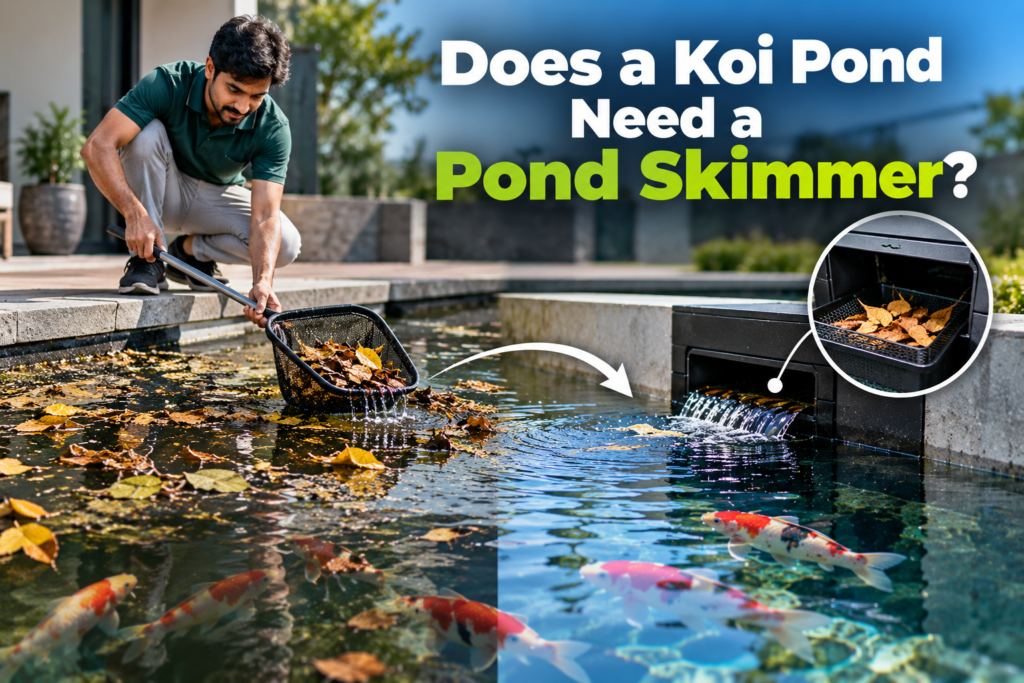
A koi pond can benefit significantly from a pond skimmer, particularly when it is located outdoors and exposed to leaves, dust, insects, and other debris.
Koi ponds often require strong mechanical filtration because fish produce waste and outdoor ponds receive additional organic material from the environment.
A pond skimmer provides an additional first stage of debris removal before water enters the main filtration system.
However, a skimmer does not replace biological filtration, mechanical filtration, or UV clarification.
Where Should a Pond Skimmer Be Installed?
Correct positioning is important for effective pond skimming.
A pond skimmer is generally installed at the edge of the pond where it can collect water from the surface.
The ideal location depends on:
- Pond shape
- Prevailing wind direction
- Water circulation
- Pump position
- Water return location
- Waterfall location
- Number of skimmers
Wind can naturally push floating debris toward one side of a pond. Positioning the skimmer in a location where debris naturally collects can improve performance.
How Deep Should a Pond Skimmer Be Installed?
The installation depth depends on the specific skimmer model.
The skimmer should generally be positioned so that its weir operates correctly at the normal pond water level.
If the skimmer is installed too high or too low, the water level may not pass through the weir correctly.
Always follow the manufacturer’s installation instructions for the specific pond skimmer being used.
Pond Skimmer vs Bottom Drain
A pond skimmer and bottom drain perform different jobs.
| Feature | Pond Skimmer | Bottom Drain |
|---|---|---|
| Main function | Removes surface debris | Removes waste from pond bottom |
| Captures | Leaves and floating debris | Settled waste and debris |
| Location | Pond surface/edge | Pond bottom |
| Main benefit | Surface cleaning | Bottom waste removal |
| Best used for | Outdoor ponds | Koi ponds and larger filtration systems |
For larger koi ponds, using both a pond skimmer and bottom drain can provide more complete waste management.
Pond Skimmer vs Surface Skimmer
The terms pond skimmer and surface skimmer are often used to describe similar equipment.
A pond skimmer is generally designed as a dedicated surface-water intake that collects floating debris before water moves toward filtration.
Depending on the product design, surface skimmers may be integrated into different filtration systems or pond configurations.
When choosing between models, check the recommended pond size, flow rate, basket capacity, installation requirements, and pump compatibility.
Can a Pond Skimmer Remove Algae?
A pond skimmer can remove floating or suspended larger algae and organic debris that reaches the skimmer.
However, it does not normally eliminate microscopic algae responsible for green pond water.
If your pond has green water, a complete solution may include:
Pond Skimmer + Mechanical Filter + Biological Filter + UV Clarifier + Proper Pond Aeration
Each component performs a different function.
Can a Pond Skimmer Improve Water Clarity?
Yes, indirectly.
A pond skimmer removes leaves, dust, insects, and other floating material before they break down and contribute to the pond’s organic load.
However, water clarity also depends on:
- Mechanical filtration
- Biological filtration
- UV clarification
- Pond circulation
- Fish stocking
- Feeding practices
- Water quality
- Regular maintenance
A skimmer should therefore be considered one part of a complete pond filtration system.
How Often Should You Clean a Pond Skimmer Basket?
The cleaning frequency depends on the amount of debris entering your pond.
During seasons when trees drop large amounts of leaves, the basket may need to be emptied frequently.
Check the basket regularly and clean it whenever it becomes significantly filled.
A blocked basket can restrict water flow and reduce pump performance.
What Happens If a Pond Skimmer Gets Blocked?
When the skimmer basket becomes heavily blocked, water flow can decrease.
This may result in:
- Reduced pump flow
- Poor surface skimming
- Increased pump strain
- Reduced filtration performance
- Possible pump issues if water supply becomes insufficient
Regularly checking the skimmer basket is therefore an important part of pond maintenance.
How to Choose the Right Pond Skimmer
Before purchasing a pond skimmer, consider the following factors.
1. Pond Size
Choose a skimmer designed for your approximate pond size and water volume.
2. Flow Rate
Check the recommended water flow range and make sure it matches the pump and filtration system.
3. Basket Capacity
A larger debris basket can be useful for ponds surrounded by trees.
4. Pond Design
Consider whether the pond is new construction or an existing pond being upgraded.
5. Installation Type
Some skimmers are designed for specific installation methods, so check compatibility with your pond structure.
6. Pump Compatibility
The skimmer, pump, plumbing, and filtration system should be designed to work together.
Pond Skimmer for Small Ponds
Small garden ponds can also benefit from surface skimming.
A compact skimmer may be sufficient where the amount of floating debris is relatively low.
However, selecting equipment based on actual water flow and pond conditions is more important than choosing equipment based only on pond volume.
Pond Skimmer for Large Koi Ponds
Large koi ponds may require higher-capacity skimming systems.
Depending on the pond design, multiple skimmers may be considered to provide better surface coverage.
Large ponds may also use:
- Bottom drains
- Pre-filters
- Mechanical filters
- Biological filters
- UV clarifiers
- Aeration systems
- High-flow pond pumps
A complete filtration design should be planned around the pond’s volume, fish load, turnover rate, and plumbing layout.
Common Pond Skimmer Mistakes
Installing the Skimmer in the Wrong Location
Poor positioning can reduce the amount of debris entering the skimmer.
Choosing the Wrong Flow Rate
A pump that is not compatible with the skimmer can reduce performance.
Ignoring Water Level
The skimmer weir needs the correct water level to operate effectively.
Not Cleaning the Basket
A full basket can restrict water flow.
Expecting the Skimmer to Do Everything
A skimmer removes surface debris, but it does not replace the complete pond filtration system.
Frequently Asked Questions About Pond Skimmers
What is a pond skimmer used for?
A pond skimmer is used to remove leaves, insects, dust, and other floating debris from the surface of a pond.
Does every pond need a pond skimmer?
Not every pond requires a skimmer, but outdoor ponds exposed to leaves and debris can benefit greatly from one.
Does a pond skimmer replace a filter?
No. A pond skimmer primarily removes surface debris. A complete pond filtration system may also require mechanical and biological filtration and, depending on water conditions, UV clarification.
Is a pond skimmer necessary for a koi pond?
A koi pond can benefit from a skimmer because it helps remove floating debris and reduces the amount of organic material entering the pond.
How often should I clean my pond skimmer?
Check the skimmer basket regularly. The required cleaning frequency depends on the amount of debris entering the pond.
Can a pond skimmer remove green water?
No. A pond skimmer is mainly designed for surface debris. Green water caused by microscopic algae generally requires appropriate filtration and often UV clarification.
Where should a pond skimmer be installed?
A pond skimmer should generally be installed at the pond edge in a position that allows it to collect surface water effectively. Pond shape and water circulation should be considered when choosing the location.
Final Thoughts
A pond skimmer is a valuable part of an effective pond filtration system. By continuously collecting leaves, insects, dust, and other floating debris, it helps keep the pond surface cleaner and reduces the amount of organic material entering the water.
For koi ponds and larger outdoor ponds, combining a pond skimmer with bottom drains, mechanical filtration, biological filtration, UV clarification, proper pond pumps, and aeration can provide a more complete approach to water management.
Choosing the correct pond skimmer based on pond size, flow rate, debris load, and filtration design will help create a cleaner, healthier, and easier-to-maintain pond.