

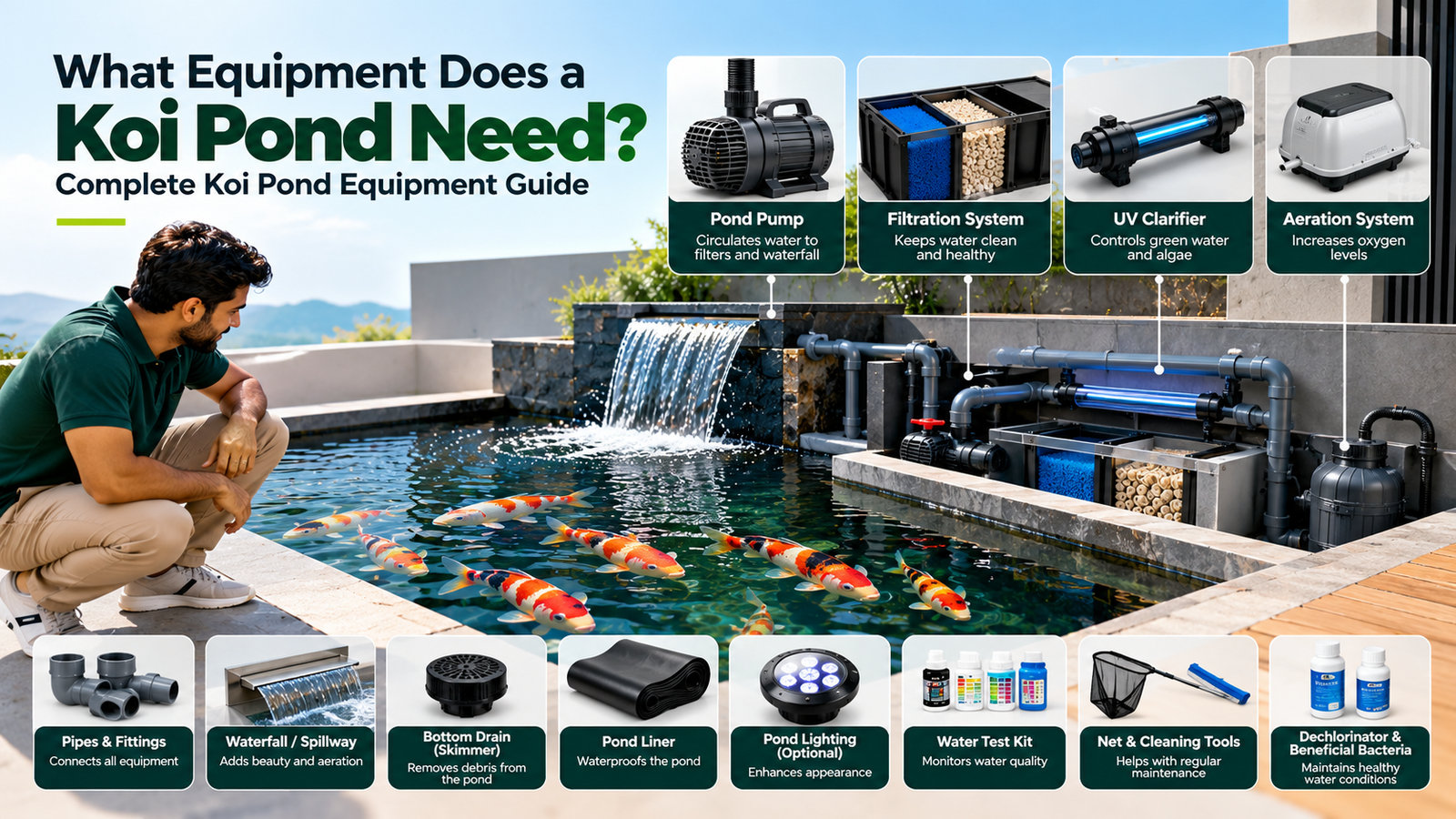
A healthy koi pond needs more than clean water and beautiful koi fish. The right koi pond equipment helps maintain water quality, oxygen levels, circulation, filtration and overall fish health.
If you’re planning a new koi pond or upgrading an existing one, understanding which equipment is essential can help you build a more reliable and easier-to-maintain pond system.
So, what equipment does a koi pond need?
A typical koi pond may require a pond pump, biological and mechanical filtration, UV clarifier, air pump, bottom drain, skimmer and suitable plumbing. The exact equipment depends on pond size, koi stocking level, water volume and the type of pond design.
In this guide, we’ll explain the most important koi pond equipment and what each component does.
What Equipment Is Needed for a Koi Pond?
The main equipment used in a koi pond includes:
- Pond Pump
- Pond Filter
- Biological Filter Media
- UV Clarifier
- Air Pump
- Air Stones or Diffusers
- Bottom Drain
- Pond Skimmer
- Plumbing & Valves
- Waterfall or Fountain Equipment
- Pond Lighting
- Automatic Water-Level Equipment
Not every pond needs every item. Equipment should be selected according to the pond’s size, fish load and filtration design.
1. Pond Pump
A pond pump is one of the most important pieces of equipment in a koi pond.
The pump circulates water between the pond, filtration system, waterfall, fountain or other water features.
Good water circulation helps distribute oxygen and prevents stagnant areas.
What should you consider when choosing a koi pond pump?
Consider:
- Pond volume
- Required flow rate
- Head height
- Pipe length
- Pipe diameter
- Filter flow requirements
- Waterfall requirements
- Electricity consumption
For example, a pump for a small decorative koi pond may have very different requirements from a pump used in a large koi pond with multiple bottom drains and filtration chambers.
Important: Don’t choose a pump based only on its maximum LPH rating. Check the actual flow at the required head height.
2. Pond Filter
A good pond filtration system is essential for maintaining water quality.
Koi produce waste continuously, and uneaten food and organic debris can also enter the water.
A pond filter helps remove unwanted particles and provides biological filtration.
Depending on the pond design, filtration may include:
- Mechanical filtration
- Biological filtration
- Pre-filtration
- UV clarification
A properly designed filtration system is particularly important for heavily stocked koi ponds.
3. Biological Filter Media
Biological filtration provides a surface where beneficial bacteria can grow.
These bacteria help process harmful nitrogen compounds produced by fish waste.
Common biological media include:
- Bio balls
- Ceramic media
- Moving-bed media
- Japanese filter mat
- Other specialized biological media
The amount of media required depends on the pond volume, fish stocking level, feeding rate and filter design.
For a heavily stocked koi pond, biological filtration should be designed carefully rather than simply filling a chamber with as much media as possible.
4. UV Clarifier
A pond UV clarifier is commonly used to improve water clarity and control suspended algae.
Green water is often caused by microscopic algae suspended throughout the water.
A UV clarifier exposes water passing through the unit to ultraviolet light, helping control these suspended organisms.
Does a UV filter replace a pond filter?
No.
A UV clarifier and pond filter perform different functions.
Pond filter: Removes waste and supports biological filtration.
UV clarifier: Helps control suspended algae and certain microorganisms.
For many koi ponds, using both can be beneficial.
5. Pond Air Pump
Koi require oxygen-rich water, particularly when stocking levels are high.
A pond air pump supplies air through air stones or diffusers, helping increase oxygen exchange at the water surface.
Aeration becomes especially important:
- During hot weather
- At night
- In heavily stocked ponds
- During power or filtration problems
- When water temperatures increase
A properly sized air pump can help maintain healthy oxygen levels.
6. Air Stones and Diffusers
An air pump alone does not distribute oxygen efficiently throughout the pond.
Air stones or diffusers release small air bubbles into the water.
The bubbles increase water movement and improve gas exchange at the surface.
For larger ponds, multiple air diffusers may be positioned strategically to improve oxygen distribution.
7. Bottom Drain
A bottom drain helps remove waste and debris from the deepest part of the pond.
Koi waste and other heavy particles tend to settle toward the bottom.
A properly designed bottom-drain system can transport this waste toward the filtration system before it accumulates.
Bottom drains are particularly useful in:
- New koi ponds
- Large ponds
- Concrete ponds
- Professionally designed filtration systems
A bottom drain should be planned during pond construction because it requires appropriate plumbing and installation.
8. Pond Skimmer
A pond skimmer removes floating debris from the water surface.
It can collect:
- Leaves
- Insects
- Dust
- Floating debris
- Surface oils
A skimmer helps keep the pond surface cleaner and can reduce the amount of debris entering the main filtration system.
For outdoor koi ponds surrounded by trees or plants, a skimmer can be especially useful.
9. Plumbing, Pipes and Valves
Good filtration equipment can only work effectively if the plumbing system is properly designed.
Pond plumbing should be selected according to the required flow rate.
Important components include:
- PVC pipes
- Flexible pond hose
- Ball valves
- Check valves
- Unions
- Pipe fittings
- Drain lines
Why is pipe size important?
If the pipe is too small, it can restrict water flow and increase pump workload.
Long pipe runs and excessive bends can also increase resistance.
Therefore, plumbing should be designed together with the pump and filtration system.
10. Waterfall or Fountain Equipment
Many koi ponds include a waterfall or fountain for visual appeal and additional water movement.
A waterfall can also contribute to aeration because water movement increases contact between water and air.
The equipment may include:
- Waterfall pump
- Waterfall blade
- Fountain pump
- Fountain nozzle
- Flow-control valve
- Plumbing
The pump should be selected based on the desired flow, waterfall width and head height.
11. Pond Lighting
Pond lighting isn’t essential for fish filtration, but it can dramatically improve the appearance of a koi pond at night.
Common options include:
- Underwater LED lights
- Fountain lights
- Waterfall lights
- Landscape lighting
Use pond lighting designed specifically for the intended wet environment and installation location.
12. Automatic Water-Level Equipment
Water evaporation can gradually lower the pond water level.
An automatic top-up system can help maintain a consistent water level.
This can be useful for ponds with:
- Waterfalls
- Fountains
- High evaporation
- Large surface areas
A water-level controller can automatically add water when the level falls below a set point.
How Do I Choose Koi Pond Equipment?
The correct equipment depends on several factors.
1. Pond Volume
Calculate the total water volume first.
2. Number of Koi
A pond with 10 koi and a pond with 100 koi have very different filtration requirements.
3. Koi Size
Larger koi produce more waste than small fish.
4. Feeding Level
Higher feeding rates generally mean more waste and greater filtration requirements.
5. Pond Design
Consider whether the pond has:
- Bottom drains
- Skimmers
- Waterfalls
- Multiple filtration chambers
- Sumps
6. Required Turnover
The filtration system and pump should be selected to provide appropriate water circulation for the pond.
How Often Should Koi Pond Water Be Filtered?
Koi pond filtration systems are generally designed for continuous circulation.
A properly sized pump can continuously move pond water through the filtration system.
The exact turnover rate depends on:
- Pond volume
- Fish load
- Filter capacity
- Pump flow
- Plumbing
- Pond design
Rather than selecting equipment based on a single universal turnover number, the complete filtration system should be designed around the pond’s actual requirements.
What Is the Most Important Equipment for a Koi Pond?
If you are building a koi pond, the most important equipment generally includes:
Essential
- Pond pump
- Mechanical filtration
- Biological filtration
- Proper plumbing
- Aeration
Often Recommended
- UV clarifier
- Bottom drain
- Pond skimmer
Optional
- Waterfall
- Fountain
- Pond lighting
- Automatic top-up system
The exact combination depends on the pond design and stocking level.
Can a Koi Pond Work Without a Filter?
A koi pond should not rely on natural water conditions alone, especially when keeping a significant number of koi.
Koi produce waste, and high stocking levels can quickly affect water quality.
A properly designed filtration system helps manage waste and maintain suitable water conditions.
For a small, lightly stocked pond, the equipment requirements may be simpler, but filtration and aeration remain important considerations.
Koi Pond Equipment Checklist
Before completing your koi pond installation, check whether you have considered:
☐ Pond pump
☐ Mechanical filtration
☐ Biological filtration
☐ Filter media
☐ UV clarifier
☐ Air pump
☐ Air stones/diffusers
☐ Bottom drain
☐ Pond skimmer
☐ Correct-size plumbing
☐ Valves and fittings
☐ Waterfall/fountain pump
☐ Pond lighting
☐ Automatic water-level system
You may not need every item, but this checklist can help when planning your system.
Common Koi Pond Equipment Mistakes
Choosing an Undersized Pump
A small pump may not provide enough flow for the filtration system or waterfall.
Using Undersized Pipes
Small pipes can restrict flow and increase resistance.
Installing Insufficient Biological Media
A high fish load requires adequate biological filtration capacity.
Ignoring Aeration
Koi need sufficient oxygen, particularly in warm weather and heavily stocked ponds.
Choosing a UV Clarifier Without Considering Flow
UV performance depends on both the unit and the water flow through it.
Designing Equipment Separately
Pump, filter, plumbing, drains and returns should work as one integrated system.
Frequently Asked Questions
What equipment does a koi pond need?
A koi pond commonly needs a pond pump, mechanical and biological filtration, aeration and suitable plumbing. Depending on the pond design, a UV clarifier, bottom drain and skimmer may also be recommended.
Do koi ponds need a UV filter?
A UV clarifier is not the same as mechanical or biological filtration, but it can be useful for controlling suspended algae and improving water clarity.
Do koi ponds need an air pump?
Aeration is highly beneficial for koi ponds because koi require adequate dissolved oxygen. It becomes particularly important in warm weather and heavily stocked ponds.
How powerful should a koi pond pump be?
The correct pump depends on pond volume, filtration requirements, desired flow, head height and plumbing. The pump should be selected based on its actual flow at the required head.
Do I need a bottom drain for a koi pond?
A bottom drain is highly useful, particularly in larger or professionally designed koi ponds, because it can help remove waste from the deepest part of the pond.
Is a pond skimmer necessary for koi ponds?
A skimmer is not mandatory for every pond, but it is very useful for removing leaves and other floating debris from the water surface.
How do I keep my koi pond water clear?
Clear water requires a combination of effective mechanical filtration, biological filtration, appropriate circulation, adequate aeration, UV clarification when needed and proper pond maintenance.
Final Thoughts
The right koi pond equipment makes maintaining a healthy and attractive pond much easier.
The most important components are usually filtration, circulation and aeration. Additional equipment such as UV clarifiers, bottom drains, skimmers, waterfalls and automatic water-level systems can further improve pond performance and maintenance.
Instead of choosing equipment individually, consider the pond as a complete system.
Pond size + koi stocking + filtration + pump + plumbing + aeration = a healthy koi pond system.
If you’re planning a new koi pond or upgrading an existing system, choosing the right equipment at the design stage can save maintenance time and improve long-term performance.
Greenfin The Pond Studio provides pond pumps, filters, UV clarifiers, air pumps, filtration systems and pond equipment for koi ponds and ornamental ponds.
AEO Quick Answer
A koi pond typically needs a pond pump, mechanical and biological filtration, filter media, aeration and properly sized plumbing. Depending on the pond design, additional equipment such as a UV clarifier, bottom drain, skimmer, waterfall pump and automatic water-level system may also be needed.