

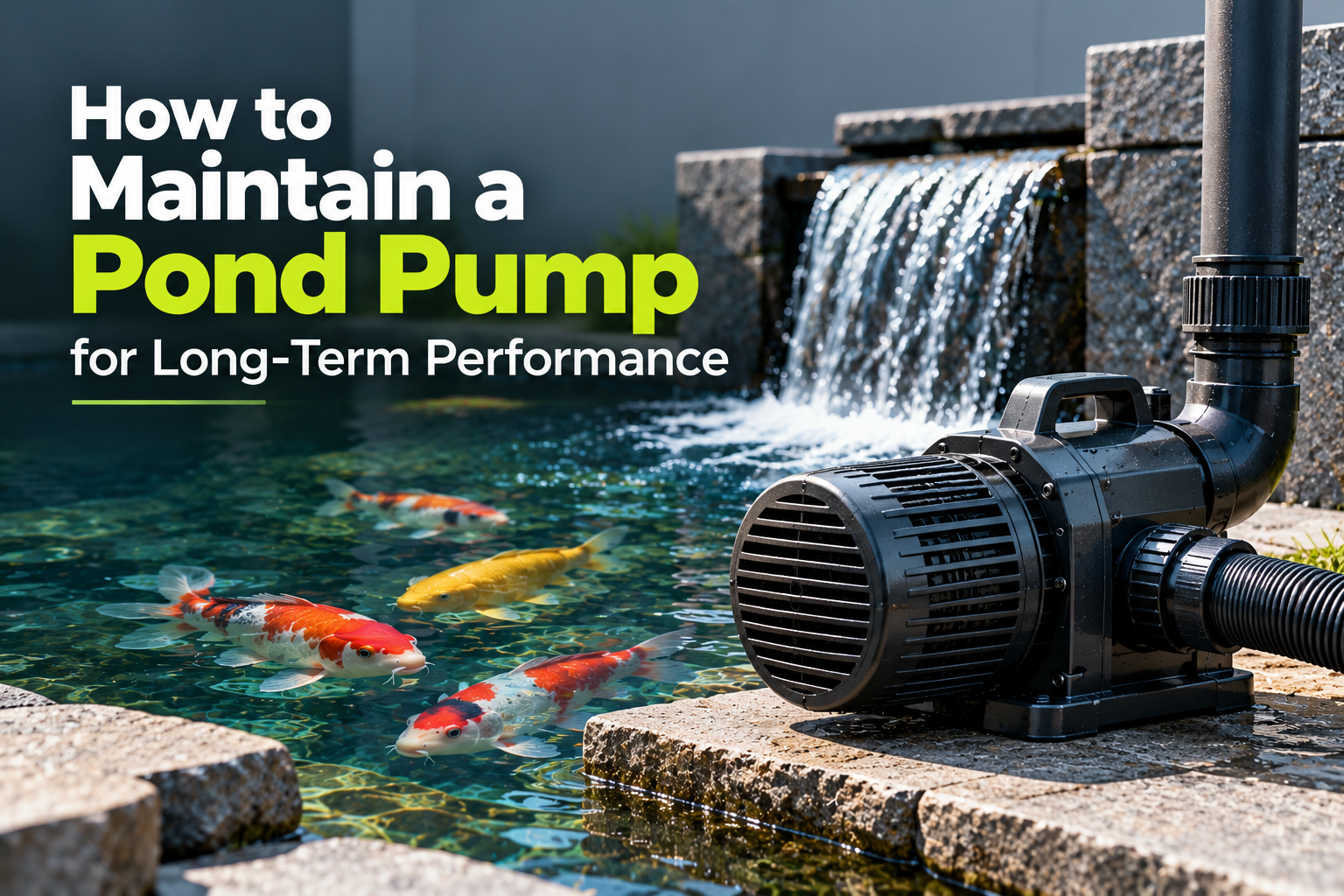
A pond pump is one of the most important components of a pond filtration system. It keeps water moving, supports filtration, improves circulation, and helps power waterfalls and fountains. Without proper maintenance, a pond pump can lose performance, consume more electricity than necessary, or stop working unexpectedly.
Learning how to maintain a pond pump helps pond owners protect their equipment, maintain healthy water conditions, and reduce the risk of expensive repairs. Regular cleaning, checking the water flow, inspecting the impeller, and ensuring proper installation can significantly improve pump reliability.
In this guide, we explain how to maintain a pond pump, identify common problems, establish a maintenance schedule, and choose the right equipment for long-term performance.
Why Is Pond Pump Maintenance Important?
Pond pumps often operate for long periods, circulating water through filters, waterfalls, fountains, and other pond equipment. Over time, leaves, algae, sludge, and other debris can restrict water flow or interfere with the pump’s internal components.
Regular maintenance offers several benefits:
- Consistent water circulation: Helps maintain the flow required by the pond and filtration system.
- Better filtration performance: Ensures water continues to move through the filter as intended.
- Reduced risk of breakdowns: Helps identify blockages, damaged parts, and unusual operating conditions early.
- Longer equipment life: Reduces unnecessary strain caused by restricted flow and poor installation.
- More reliable waterfalls and fountains: Helps maintain the intended water flow and visual appearance.
- Improved energy efficiency: A clean, correctly installed pump can avoid unnecessary operating strain.
Pump maintenance is especially important for koi ponds, heavily stocked ponds, and systems that operate continuously.
How Does a Pond Pump Work?
A pond pump draws water through its inlet and pushes it through an outlet. Depending on its design, the pump may move water directly through an integrated filter or supply water to an external filtration system, waterfall, or fountain.
The pump’s actual performance depends on several factors:
- Pump flow rate, usually measured in litres per hour (LPH).
- Vertical lifting height, also called head height.
- Pipe diameter and plumbing layout.
- Bends, valves, and other restrictions in the pipework.
- Blockages in the intake or impeller.
- The condition and design of the pump itself.
A pump that previously delivered strong water flow but now produces a weak stream may need cleaning, a plumbing inspection, or further troubleshooting.
1. Switch Off the Pump Before Maintenance
Safety should always be the first step when servicing pond equipment.
Before removing or cleaning the pump:
- Switch off the power supply.
- Disconnect the pump from the electrical supply with dry hands and follow the manufacturer’s instructions.
- Allow the pump to stop completely.
- Remove it from the pond only when it is safe to do so.
- Place it on a suitable surface for inspection.
Never open or handle an energised pump. If the power cable, plug, housing, or electrical connections show signs of damage, stop using the equipment and have it inspected by a qualified professional.
Outdoor pond installations should use suitable weather-protected electrical connections and appropriate residual-current protection.
2. Clean the Pump Intake and Pre-Filter
The pump intake is where water enters the pump. Leaves, algae, plant roots, and other debris can accumulate around the intake and restrict the flow.
How to clean the intake
- Disconnect the pump from power.
- Remove the intake cover or pre-filter according to the manufacturer’s instructions.
- Remove leaves, algae, and visible debris.
- Rinse removable filter components with suitable water.
- Check that the intake openings are clear.
- Reassemble the components securely before restarting the pump.
If your pond contains koi fish, inspect the intake regularly because fish waste, uneaten food, and organic debris can contribute to blockages.
Avoid running a pump without its required protective intake components. These components help prevent debris from entering the impeller and protect fish from unsuitable suction conditions.
3. Inspect and Clean the Pump Impeller
The impeller is a rotating component that moves water through the pump. Debris, mineral deposits, or wear can affect its performance.
Common signs of an impeller problem include:
- Reduced water flow.
- Unusual humming or grinding noises.
- Intermittent operation.
- Increased vibration.
- A pump that runs but moves little or no water.
Steps for impeller maintenance
- Disconnect the pump from the electrical supply.
- Remove the pump cover or impeller housing as described in the manual.
- Carefully inspect the impeller and surrounding chamber.
- Remove accumulated debris without damaging the blades or shaft.
- Check for cracks, excessive wear, or damage to any seals.
- Reassemble the pump according to the manufacturer’s instructions.
Do not force the impeller or use unsuitable tools. Some models have replaceable impellers, while others require a service kit or professional repair.
4. Check Water Flow and Pump Performance
Monitoring water flow is one of the easiest ways to identify developing pump problems.
If your pond waterfall becomes weaker or the filter receives less water than usual, inspect the pump and plumbing.
Check the following:
- Is the pump intake blocked?
- Are hoses or pipes kinked?
- Are valves fully open where required?
- Is the filter clogged?
- Has the water level fallen below the pump’s required operating level?
- Is the pump lifting water higher than its rated capacity allows?
If the pump is used for a waterfall, remember that the actual flow rate decreases as the required lifting height and plumbing resistance increase.
Compare the current performance with the pump’s specifications and the requirements of your filtration system.
5. Maintain the Pond Filter Connected to the Pump
A pond pump and filtration system work together. If the filter becomes blocked, water flow may decrease even when the pump itself is functioning correctly.
Mechanical filtration
Mechanical filter media captures solid waste such as leaves, fish waste, and suspended debris. Clean this media according to the filter manufacturer’s recommendations.
Biological filtration
Biological filter media supports beneficial bacteria that process fish waste. Avoid unnecessarily sterilising or replacing all biological media at once, as this can disrupt the biological filtration process.
Plumbing and connections
Inspect hoses, pipes, connectors, and valves for leaks, cracks, or blockages.
Maintaining the entire filtration system helps the pump operate under suitable conditions and supports stable pond water quality.
6. Keep the Pump Fully Submerged When Required
Many pond pumps are designed for continuous submerged operation, while some models have different installation requirements. Always follow the instructions for your specific pump.
For a submersible pump:
- Maintain the minimum required water level.
- Ensure the pump remains submerged as specified.
- Avoid placing it directly in thick sludge.
- Position it where the intake will not become buried in sediment.
- Check the water level during hot weather and periods of evaporation.
Running a pump outside its permitted operating conditions can cause overheating, damage, or premature failure.
Some pumps are designed for dry installation or external operation, but these should only be installed according to their rated specifications.
7. Inspect the Pump Cable and Electrical Connections
Pond equipment operates in a wet environment, so electrical safety is essential.
Inspect the pump cable and accessible connections for:
- Cuts or damaged insulation.
- Cracked plugs or connectors.
- Loose connections.
- Water ingress where it is not permitted.
- Signs of overheating or burning.
Never repair damaged underwater pump cables using ordinary tape or improvised connections. Stop using damaged equipment and arrange a suitable professional repair or replacement.
Use an appropriately rated outdoor electrical supply and residual-current device (RCD or equivalent protection). Keep electrical connections protected from water and follow local electrical safety requirements.
8. Prevent Overheating and Dry Running
A pump may overheat if it operates without sufficient water, encounters a severe blockage, or is used outside its intended operating conditions.
To reduce the risk:
- Maintain the correct water level.
- Keep the intake clear.
- Follow the manufacturer’s installation instructions.
- Ensure the pump has adequate water supply.
- Do not operate a pump dry unless it is specifically designed for dry running.
- Investigate repeated shutdowns rather than continually restarting the equipment.
If the pump becomes unusually hot, makes abnormal noises, or repeatedly trips electrical protection, disconnect it safely and investigate the cause before using it again.
9. Choose the Right Pond Pump for Your Setup
Correct pump selection is just as important as regular maintenance. A pump that is unsuitable for your pond may struggle to supply the required flow or operate under excessive resistance.
Consider pond volume
Estimate the pond’s actual water volume and consider the fish population and filtration requirements. Koi ponds generally produce a substantial waste load and often require more robust filtration than lightly stocked ornamental ponds.
Check the required flow rate
Choose a pump that can provide the necessary flow through your filtration system at the actual operating head. The pump’s maximum advertised flow rate is usually measured under more favourable conditions.
Consider waterfall height
If your pump powers a waterfall or fountain, account for the vertical lift, pipe length, pipe diameter, and desired water effect.
Check energy consumption
Compare pump wattage and the flow delivered under your operating conditions. Because pond pumps may run for many hours each day, efficient equipment can reduce long-term electricity costs.
Select a suitable pump type
Submersible pumps are commonly used for many garden ponds, while external pumps may be appropriate for certain larger or specialised systems. Choose according to the manufacturer’s specifications and the design of your installation.
10. Pond Pump Maintenance Schedule
The frequency of maintenance depends on pond conditions, fish stocking, pump design, and the amount of debris entering the water.
| Maintenance task | Suggested frequency |
|---|---|
| Check water flow and unusual noises | Weekly |
| Inspect the intake for debris | Weekly, or more often if needed |
| Clean the pre-filter or intake cover | As needed, based on blockage |
| Inspect hoses, pipes, and valves | Monthly |
| Inspect the impeller and housing | According to the manual and when performance declines |
| Check cables and accessible electrical connections | Regularly and before handling equipment |
| Review pump performance and energy use | Periodically |
| Complete a thorough inspection | According to the manufacturer’s maintenance schedule |
These are general guidelines. A pond with many koi fish, abundant leaves, or heavy organic loading may require more frequent cleaning.
Common Pond Pump Problems and Solutions
Problem 1: The Pond Pump Is Running but Not Pumping Water
Possible causes:
- Blocked intake.
- Air trapped in a system that requires priming.
- Low pond water level.
- Clogged impeller.
- Blocked or restricted plumbing.
What to do: Disconnect the power, check the intake and plumbing, and follow the manufacturer’s instructions for priming or restarting the pump.
Problem 2: The Pond Pump Has Low Water Flow
Possible causes:
- Dirty pre-filter.
- Debris around the impeller.
- Excessive lifting height.
- Kinked hose or blocked pipe.
- Worn pump components.
What to do: Clean the intake, inspect the impeller, and compare the installation with the pump’s flow and head specifications.
Problem 3: The Pump Makes Unusual Noises
Possible causes:
- Debris inside the impeller chamber.
- Loose components.
- Vibration against a hard surface.
- Worn bearings or other internal parts.
What to do: Disconnect the pump and inspect it according to the manufacturer’s instructions. Seek professional servicing if the noise persists.
Problem 4: The Pump Keeps Switching Off
Possible causes:
- Overheating.
- Low water level.
- An obstruction.
- A faulty electrical supply.
- Activation of a protective device.
What to do: Disconnect the pump safely and investigate the cause. Never bypass electrical protection or repeatedly reset a pump that continues to trip.
Problem 5: The Waterfall Has Become Weak
Possible causes:
- Reduced pump flow.
- Blocked plumbing.
- A clogged filter.
- Increased head height or excessive plumbing resistance.
- A leaking pipe or connection.
What to do: Check the entire water path from the pump to the waterfall rather than replacing the pump immediately.
Frequently Asked Questions
1. How often should I clean my pond pump?
Inspect the intake at least weekly and clean it whenever debris restricts flow. The impeller and internal components should be inspected according to the manufacturer’s recommendations or whenever performance declines.
2. Can a pond pump run continuously?
Many pond pumps are designed for continuous operation, but this depends on the model and installation. Follow the manufacturer’s rating and ensure the pump has the required water supply, ventilation where applicable, and suitable electrical protection.
3. Why is my pond pump losing pressure?
Reduced flow may result from a blocked intake, dirty filter, clogged impeller, restricted plumbing, excessive lifting height, or worn components. Check the full system before concluding that the pump needs replacement.
4. Should I switch off my pond pump at night?
Many koi ponds benefit from continuous circulation and filtration. Switching off the pump may interrupt filtration and oxygen distribution. Follow the requirements of your pond and filter system, especially where fish stocking is high.
5. Can I clean my pond pump with tap water?
You can often rinse the pump housing and removable components with clean water, provided the manufacturer’s instructions permit it. For biological filter media, avoid untreated chlorinated water that may damage beneficial bacteria. Follow the specific cleaning guidance for each component.
6. How long does a pond pump last?
Service life depends on build quality, operating conditions, maintenance, water quality, and usage. Regular inspection can help identify wear early, but no maintenance schedule guarantees a particular lifespan.
7. What size pond pump is best for a waterfall?
The correct pump depends on the desired waterfall flow, waterfall width, vertical lift, and plumbing resistance. Check the manufacturer’s pump curve to determine the flow available at the required head height.
Conclusion
Knowing how to maintain a pond pump helps you keep your pond circulation and filtration system operating reliably. Regular intake cleaning, impeller inspection, filter maintenance, water-level checks, and electrical safety inspections can help reduce avoidable breakdowns.
Remember that good pump maintenance involves more than cleaning the pump itself. The filter, plumbing, water level, and operating conditions all influence performance.
If your pond pump continues to lose flow, makes unusual noises, or repeatedly switches off, investigate the underlying cause before replacing the equipment.
Looking for reliable pond pumps and filtration equipment? Greenfin The Pond Studio offers pond pumps, filtration systems, UV clarifiers, and other pond equipment to help you maintain a healthy and attractive pond. Explore available products at greenfinindia.com.