

Maintaining clean, clear, and healthy pond water is essential for koi fish, goldfish, and other pond inhabitants. A reliable pond filtration system helps remove waste, control algae, and maintain a stable aquatic environment. Two important components used in pond filtration are UV pond filters and biological filters.
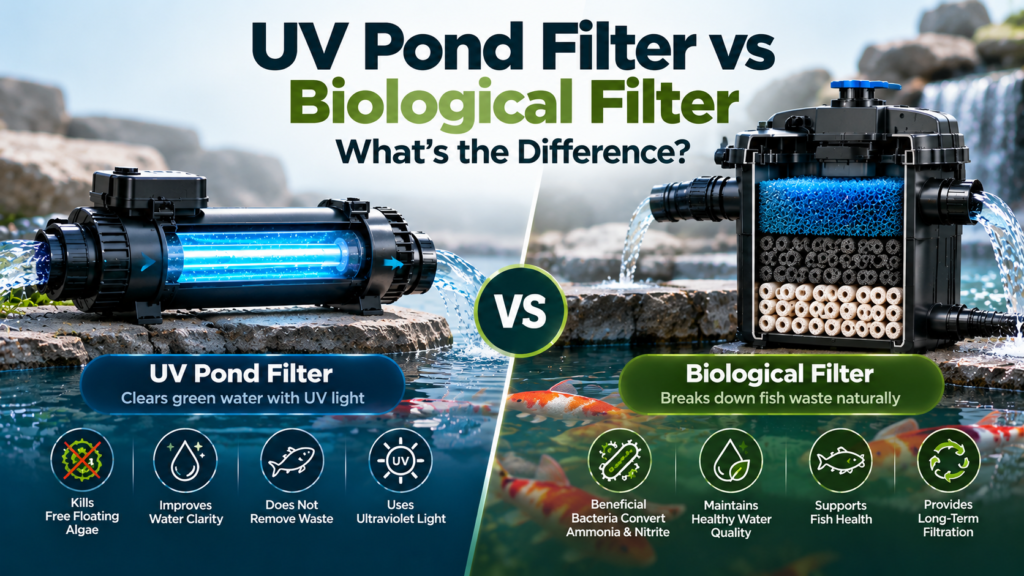
Although both help improve pond water quality, they perform different functions. A UV pond filter helps control suspended algae that cause green water, while a biological filter supports beneficial bacteria that break down toxic fish waste.
Understanding the difference between a UV pond filter vs biological filter helps you choose the right equipment for your pond and maintain better water quality throughout the year.
What Is a UV Pond Filter?
A UV pond filter uses ultraviolet light to control microscopic algae and certain microorganisms as pond water passes through a UV chamber. The UV-C light damages the DNA or RNA of susceptible organisms, preventing them from reproducing effectively.
UV clarifiers are particularly useful for ponds affected by green water, where microscopic algae make the water appear cloudy or green.
How Does a UV Pond Filter Work?
A typical UV pond filtration setup works as follows:
- A pond pump draws water from the pond.
- Water passes through the UV chamber.
- UV-C light exposes susceptible microorganisms to ultraviolet radiation.
- The treated water returns to the pond, usually through a filter or return line.
For the best results, the UV unit must have an appropriate flow rate and sufficient exposure time. A correctly sized UV clarifier can significantly improve water clarity when green water is caused by suspended algae.
Benefits of a UV Pond Filter
- Controls green water: Helps reduce suspended algae responsible for green pond water.
- Improves visibility: Makes it easier to observe fish and monitor pond conditions.
- Supports pond maintenance: Helps manage recurring green-water problems when combined with good filtration practices.
- Works with other filtration equipment: Can be integrated into many pond pump and filter systems.
Limitations of a UV Pond Filter
A UV pond filter does not remove solid fish waste, directly eliminate ammonia, or replace biological filtration. It also does not reliably control algae growing on pond walls, rocks, and other surfaces.
UV performance depends on lamp output, water clarity, flow rate, exposure time, and maintenance. Lamps lose effectiveness over time, even when they still appear to be working.
What Is a Biological Pond Filter?
A biological pond filter uses beneficial microorganisms to convert harmful nitrogen compounds produced by fish waste, uneaten food, and decomposing organic matter into less toxic substances.
Fish release ammonia through their gills, while additional ammonia is generated when organic waste decomposes. High ammonia concentrations can harm fish, making biological filtration essential in most stocked ornamental and koi ponds.
Biological filters contain media that provides a surface for beneficial bacteria to colonize. Common media types include ceramic rings, bio balls, moving-bed media, and other purpose-designed biological filter media.
How Does a Biological Pond Filter Work?
Biological filtration is part of the nitrogen cycle:
- Fish waste and decomposing organic matter produce ammonia.
- Beneficial bacteria convert ammonia into nitrite.
- Other beneficial bacteria convert nitrite into nitrate.
- Nitrate is managed through appropriate water changes, plant uptake where applicable, and other nutrient-management practices.
The biological filter needs time to mature before it can process the full waste load of a stocked pond. This process is known as cycling.
Benefits of a Biological Pond Filter
- Supports fish health: Helps control toxic ammonia and nitrite when properly established and sized.
- Provides stable water conditions: Supports the biological processes required in a healthy pond ecosystem.
- Handles ongoing fish waste: Continuously processes nitrogenous waste as water passes through the filter.
- Works with different filter designs: Can be incorporated into pressure filters, multi-chamber systems, moving-bed filters, and other suitable setups.
Limitations of a Biological Pond Filter
A biological filter does not automatically remove suspended algae responsible for green water. It also cannot compensate for excessive stocking, overfeeding, inadequate oxygen, or insufficient filter capacity.
Beneficial bacteria require oxygen and suitable conditions. Cleaning biological media with untreated chlorinated tap water or replacing all established media at once can damage the bacterial population and reduce filtration performance.
UV Pond Filter vs Biological Filter: Key Differences
The main difference is the problem each system is designed to solve. UV filtration targets susceptible suspended microorganisms, while biological filtration processes harmful nitrogen compounds.
| Feature | UV Pond Filter | Biological Pond Filter |
|---|---|---|
| Main purpose | Controls suspended algae causing green water | Processes ammonia and nitrite |
| Working method | UV-C light | Beneficial bacteria |
| Removes solid waste | No | Not by itself |
| Helps control ammonia | No | Yes, when established and adequately sized |
| Helps control green water | Yes, when correctly sized | Not directly |
| Requires biological maturation | No | Yes |
| Main maintenance | Lamp replacement and quartz-sleeve cleaning as required | Careful media maintenance and preservation of beneficial bacteria |
| Best used for | Improving green-water clarity | Maintaining biological water quality |
Can You Use a UV Pond Filter and Biological Filter Together?
Yes. For many koi ponds and heavily stocked ornamental ponds, combining UV clarification with biological filtration provides more complete water-quality management.
Each system performs a different task. Biological filtration helps protect fish by processing ammonia and nitrite, while UV clarification helps control suspended algae that affect water clarity.
A well-designed pond filtration system may include:
- A suitable pond pump to circulate water.
- Mechanical filtration to capture suspended solids and larger debris.
- Biological filter media to support beneficial bacteria.
- A UV clarifier to help control suspended algae.
- Adequate aeration to support fish and beneficial microorganisms.
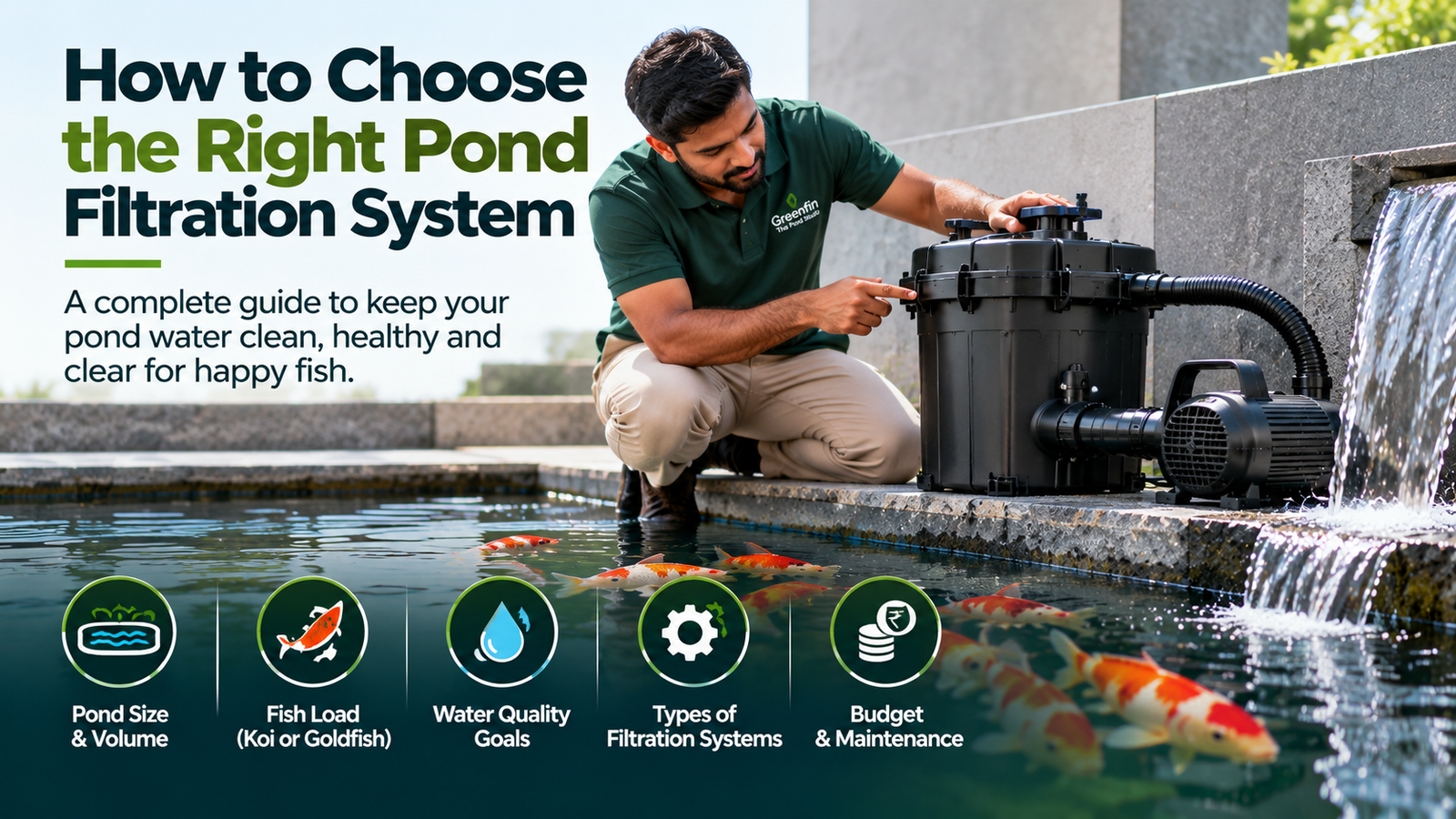
How to Choose the Right Pond Filtration System
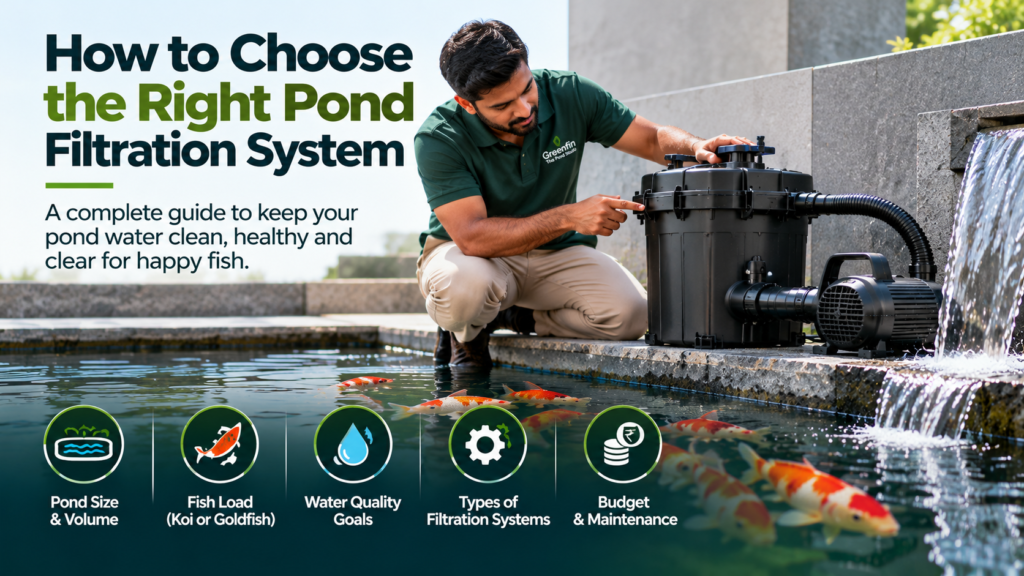
Before purchasing a UV pond filter or biological filter, assess your pond’s specific requirements.
1. Consider Your Pond Size
Calculate the pond’s approximate water volume in litres. Choose equipment rated for a pond of the appropriate size and fish load, rather than relying on pond volume alone.
2. Check Your Fish Stocking Level
Koi produce a substantial waste load, especially when they are large and fed frequently. Heavily stocked ponds generally need more biological filtration capacity and effective solids removal than lightly stocked ponds.
3. Identify Your Water Quality Problem
If the pond water is green but ammonia and nitrite are under control, a UV clarifier may help. If ammonia or nitrite levels are elevated, improve biological filtration, oxygenation, waste removal, and feeding management rather than relying on UV equipment.
If both problems occur, you may need both types of filtration.
4. Check Pump Flow Rate
The pump must deliver a suitable flow through the filter and UV unit. Excessively high flow through a UV chamber can reduce exposure time, while inadequate flow can compromise overall pond circulation.
Account for head height, pipework, bends, and other restrictions when selecting the pump.
5. Choose the Right Filter Media
Biological filter media should provide suitable surface area and water flow for beneficial bacteria. Select media compatible with your filter design and follow the manufacturer’s recommended loading and maintenance procedures.
6. Plan for Regular Maintenance
Inspect the pump, clean mechanical prefilters, check the UV lamp and quartz sleeve, and monitor ammonia, nitrite, and nitrate. Avoid unnecessary disturbance of established biological media.
Common Pond Filtration Mistakes to Avoid
Even good filtration equipment can perform poorly when incorrectly selected or maintained.
Using a UV clarifier as the only filter: UV treatment does not replace mechanical or biological filtration.
Choosing an undersized filter: A system rated only by pond volume may be inadequate for a pond with many koi or heavy feeding.
Ignoring water testing: Clear water does not necessarily mean safe water. Test ammonia and nitrite, particularly in new or heavily stocked ponds.
Cleaning all biological media at once: This can remove a large portion of the beneficial bacterial population.
Neglecting aeration: Fish and beneficial bacteria both need oxygen. Adequate aeration becomes particularly important during warm weather and periods of high biological demand.
Expecting UV to remove every type of algae: UV clarifiers primarily target susceptible organisms suspended in the water, not algae attached to pond surfaces.
Frequently Asked Questions
1. Is a UV pond filter better than a biological filter?
Neither is universally better because they perform different jobs. A UV clarifier helps control green water, while a biological filter processes ammonia and nitrite. Many koi ponds benefit from both.
2. Does a UV pond filter kill beneficial bacteria?
UV light can damage susceptible microorganisms that pass through the UV chamber. However, beneficial bacteria established on biological filter media are generally protected from direct exposure when the system is correctly designed. Follow the equipment manufacturer’s instructions.
3. Can a biological filter clear green pond water?
A biological filter alone does not reliably eliminate suspended algae. Good biological filtration helps maintain water quality, while a properly sized UV clarifier can help address green-water problems.
4. How long does a biological pond filter take to mature?
A new biological filter commonly needs several weeks to establish a useful bacterial population. The exact time varies with temperature, oxygen, pH, ammonia availability, and the filter’s starting conditions. Test water regularly and avoid adding too many fish before the system is ready.
5. How often should a UV pond lamp be replaced?
Follow the manufacturer’s specified service interval, which varies by model and lamp type. UV output can decline before the lamp stops glowing, so visible light does not guarantee effective clarification.
6. Do koi ponds need both UV and biological filtration?
Many koi ponds benefit from both because koi generate substantial waste and outdoor ponds can develop green water. The appropriate combination depends on stocking density, pond conditions, and existing equipment.
Conclusion
Understanding the difference between a UV pond filter and a biological filter is essential for selecting the right equipment for your pond. UV clarification helps control suspended algae and improve water clarity, while biological filtration supports beneficial bacteria that convert harmful ammonia and nitrite.
For many koi ponds, the best approach is to combine mechanical filtration, biological filtration, suitable water circulation, and UV clarification where needed. Regular water testing and appropriate maintenance are equally important for keeping pond water clear and fish healthy.
Looking for pond filtration equipment? Explore the pond pumps, UV clarifiers, pond filters, and filtration accessories available at Greenfinindia.com to find equipment suited to your pond’s requirements.