

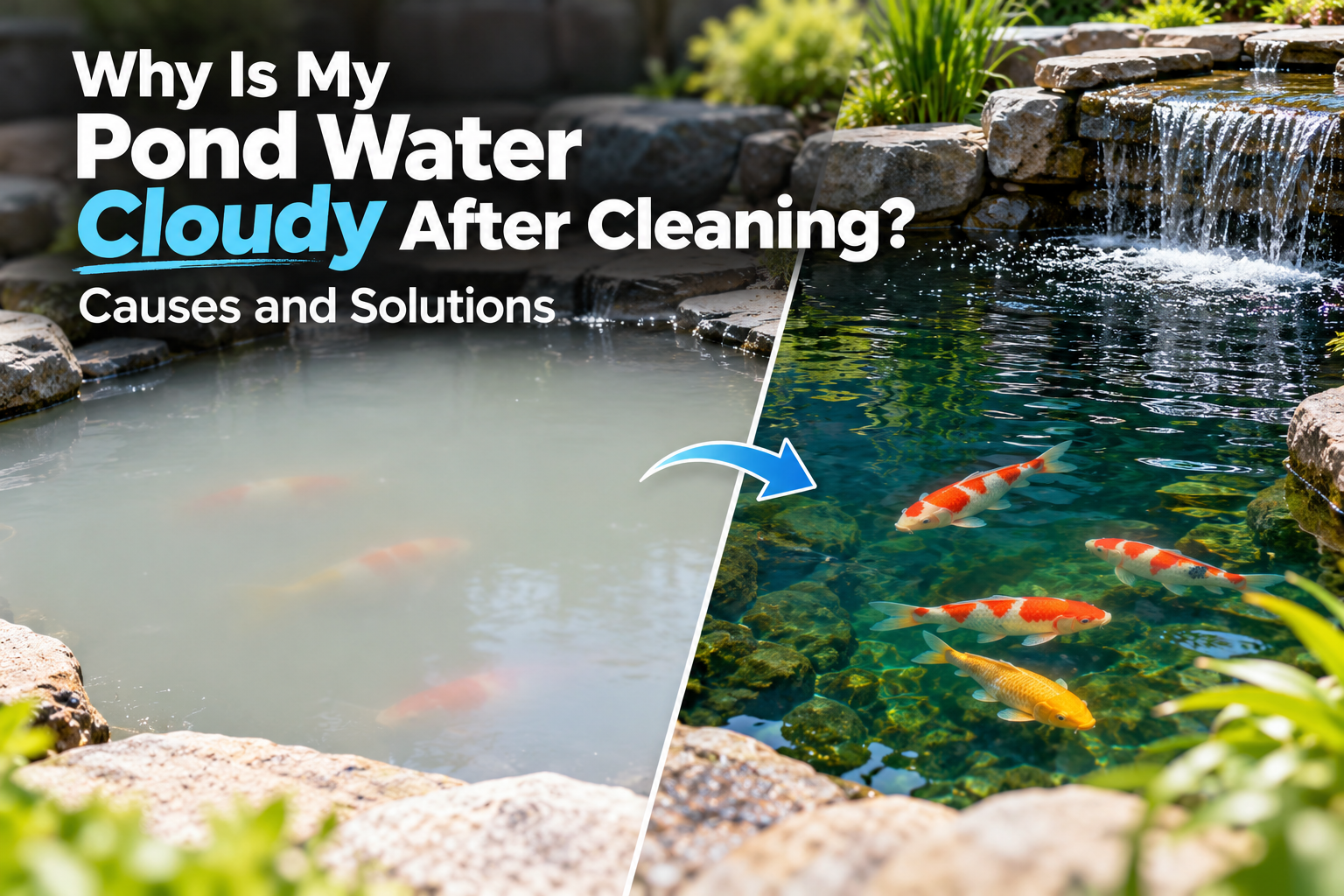

Cloudy pond water after cleaning is a common problem for pond owners. Even after removing debris, cleaning the filter, and changing some of the water, your pond may look milky, muddy, or hazy. This can happen because cleaning disturbs settled waste, affects beneficial bacteria, or changes the balance of the pond ecosystem.
Understanding why pond water becomes cloudy after cleaning helps you choose the right solution without harming your fish. In this guide, we explain the main causes of cloudy pond water, how to clear it safely, and how to prevent the problem in the future.
Why Is My Pond Water Cloudy After Cleaning?
If you notice cloudy pond water after cleaning, the first step is to identify the type of cloudiness. Brown or grey water often indicates disturbed sediment, while milky-white water may be associated with suspended particles or bacterial blooms. Green water usually indicates suspended algae.
The cause determines the best treatment. Adding chemicals or repeatedly changing the water without identifying the problem can make the situation worse.
1. Disturbed Pond Sediment and Debris
One of the most common reasons for cloudy water after cleaning is disturbed sediment. Over time, fish waste, uneaten food, decaying leaves, and other organic matter settle at the bottom of a pond.
When you scrub the pond floor, move rocks, or clean around the bottom drain, these particles can become suspended in the water.
How to fix it:
- Allow fine particles to settle naturally if fish are behaving normally.
- Remove remaining sludge using an appropriate pond vacuum or waste-removal system.
- Avoid aggressively stirring the pond bottom during routine maintenance.
- Check whether the mechanical filter is capturing suspended particles effectively.
For heavily stocked koi ponds, effective mechanical filtration is particularly important because fish waste can accumulate quickly.
2. Cleaning the Filter Too Thoroughly
Your pond filter does more than remove visible dirt. Biological filter media supports beneficial bacteria that help convert toxic ammonia into nitrite and then nitrate.
If you wash all the biological media thoroughly with chlorinated tap water, replace too much media at once, or clean the entire system excessively, the biological balance may be disrupted.
This can contribute to water-quality problems and, in some cases, a bacterial bloom that makes the water appear cloudy.
How to fix it:
- Clean mechanical filter media when it becomes clogged.
- Rinse biological media gently in removed pond water or appropriately dechlorinated water.
- Avoid replacing all biological media at the same time.
- Keep the filter running continuously unless maintenance or equipment safety requires it to be switched off.
- Test ammonia and nitrite after major filter maintenance.
Never assume that cloudy water is only a cosmetic issue. If fish are gasping at the surface or behaving unusually, test the water immediately.
3. Bacterial Bloom After Pond Cleaning
Milky or whitish cloudiness can sometimes be caused by a bacterial bloom. These blooms may occur when organic waste levels change, the biological filtration system is disturbed, or the pond ecosystem is adjusting after maintenance.
A bacterial bloom can temporarily reduce water clarity. However, it is important to check ammonia, nitrite, and dissolved oxygen rather than assuming every white haze is harmless.
How to fix it:
- Keep the filtration system operating properly.
- Provide sufficient aeration, particularly in ponds with koi or other heavily stocked fish.
- Avoid overfeeding until water quality is stable.
- Test ammonia and nitrite regularly.
- Do not add unnecessary algaecides, clarifiers, or other chemicals without identifying the cause.
If ammonia or nitrite is elevated, take appropriate corrective action promptly. Do not wait for the water to become clear before addressing unsafe water conditions.
4. Excessive Water Changes
Changing pond water can help remove accumulated waste, but replacing too much water at once may create sudden changes in temperature, pH, or water chemistry.
Untreated tap water may also contain chlorine or chloramine, which can harm fish and beneficial bacteria.
How to fix it:
- Use a suitable water conditioner for municipal water containing chlorine or chloramine.
- Match the replacement water temperature as closely as practical.
- Make partial water changes appropriate to the pond’s water quality and stocking level.
- Avoid repeatedly changing large volumes of water simply because the pond looks cloudy.
The correct amount of replacement water depends on the pond’s condition, fish load, and water-test results.
5. Poor Mechanical Filtration
Mechanical filtration captures suspended particles before they circulate throughout the pond. If your filter is undersized, clogged, incorrectly installed, or receiving insufficient water flow, fine debris may remain in the water.
This is especially common in ponds with many koi, where solid waste production can be high.
How to fix it:
- Inspect the filter for blockages.
- Check that the pump is delivering adequate flow.
- Ensure water is passing through the intended filtration stages.
- Choose a filter suitable for the pond’s volume and fish stocking level.
- Consider finer mechanical filtration if very small particles continue to pass through the system.
A suitable pond filtration system can improve clarity while helping maintain stable water conditions.
6. Green Water Caused by Suspended Algae
Sometimes pond owners notice cloudy water after cleaning because algae remain suspended in the water. If the pond appears green rather than white or brown, suspended microscopic algae may be responsible.
Sunlight, excess nutrients, and inadequate filtration can encourage algae growth.
How to fix it:
- Reduce excessive nutrient inputs by removing uneaten fish food and organic waste.
- Maintain suitable biological and mechanical filtration.
- Review the pond’s exposure to direct sunlight.
- Consider a properly sized UV clarifier when suspended green-water algae are the problem.
A UV clarifier can help control suspended algae, but it does not remove bottom sludge or replace biological filtration. It must be correctly sized and operated at a suitable flow rate.
How Long Does Cloudy Pond Water Take to Clear After Cleaning?
The time required for pond water to clear depends on the cause, particle size, filtration capacity, and pond conditions.
| Cause | What to expect |
|---|---|
| Disturbed fine sediment | May settle within hours or take longer |
| Mild bacterial bloom | May improve over several days if conditions stabilize |
| Poor mechanical filtration | May remain cloudy until the filtration issue is corrected |
| Suspended algae | Usually requires addressing the algae source and may need a suitable UV clarifier |
| Unsafe water chemistry | Requires prompt corrective action, regardless of water clarity |
These are general expectations rather than guaranteed timelines. If cloudiness persists, worsens, or is accompanied by fish distress, investigate water quality and filtration instead of simply waiting.
How to Prevent Cloudy Pond Water After Cleaning
Following a consistent maintenance routine can reduce the chances of cloudy water returning.
1. Clean the Filter Correctly
Remove accumulated dirt from mechanical filter media without unnecessarily disturbing biological media. Avoid cleaning every filtration stage aggressively at the same time.
2. Avoid Disturbing All the Pond Sludge
Remove waste gradually and carefully. If a large amount of sediment has accumulated, use suitable waste-removal equipment instead of stirring it throughout the pond.
3. Maintain Proper Water Circulation
Ensure the pump, pipes, drains, and filtration system are working correctly. Poor circulation can allow waste to collect in dead spots.
4. Avoid Overfeeding Fish
Feed koi and other pond fish an appropriate quantity. Uneaten food decomposes and increases the organic load on the filtration system.
5. Monitor Water Quality
Test ammonia, nitrite, pH, and other relevant water parameters regularly. Clear water does not always mean safe water, and cloudy water does not always mean the pond is chemically unsafe.
6. Choose the Right Pond Filtration System
The filtration system should suit the pond’s volume, fish population, feeding rate, and debris load. A combination of mechanical and biological filtration is important for most koi ponds.
Which Pond Equipment Helps Clear Cloudy Water?
The right equipment depends on what is causing the cloudiness.
- Pond filter: Captures suspended waste and supports biological filtration when properly designed.
- Pond pump: Maintains water circulation through the filtration system.
- Pond vacuum: Removes accumulated sludge and debris from the pond floor.
- UV clarifier: Helps control suspended algae responsible for green water.
- Air pump: Improves aeration and supports fish and beneficial bacteria, especially when oxygen demand is high.
At GreenfinIndia.com, pond owners can explore suitable pond pumps, filtration equipment, UV clarifiers, and maintenance products for different pond setups. Always select equipment according to your pond’s actual requirements.
Frequently Asked Questions
1. Is cloudy pond water after cleaning harmful to fish?
Not always. Cloudiness caused by harmless suspended sediment may clear without serious consequences. However, ammonia, nitrite, chlorine exposure, and low dissolved oxygen can be dangerous even when the water looks relatively clear. Monitor fish behaviour and test the water when needed.
2. Should I change the water if my pond becomes cloudy after cleaning?
Not automatically. First identify the cause and check water quality. If a water change is necessary, use properly conditioned replacement water and avoid sudden temperature or chemistry changes.
3. Can I add beneficial bacteria to cloudy pond water?
A suitable pond bacteria product may help support biological filtration, particularly after filter maintenance. However, it will not directly solve every cause of cloudiness. Follow the product instructions and check ammonia and nitrite if the biological filter has been disturbed.
4. Will a UV clarifier clear cloudy pond water?
A UV clarifier is designed primarily to control suspended algae that cause green water. It generally will not solve cloudiness caused by muddy sediment, fine debris, or poor mechanical filtration.
5. Why is my pond water cloudy and my koi fish are gasping?
This may indicate low dissolved oxygen or a water-quality problem. Increase aeration immediately, check that the pump and filter are operating, and test ammonia and nitrite. If fish continue to show distress, seek advice from an experienced aquatic veterinarian or pond professional.
6. How often should I clean my pond filter?
There is no single schedule for every pond. Clean mechanical filter media when flow decreases or waste accumulates, following the manufacturer’s guidance. Biological media generally requires gentler and less frequent cleaning. The correct routine depends on stocking levels, feeding, and filter design.
Conclusion
Cloudy pond water after cleaning can result from disturbed sediment, excessive filter cleaning, bacterial blooms, water changes, poor mechanical filtration, or suspended algae. The most effective solution is to identify the cause before adding treatments or making further changes.
Maintain proper circulation, preserve beneficial bacteria, remove waste carefully, and monitor water quality to keep your pond healthier and clearer. Choosing the right pond pump, filtration system, and maintenance equipment can make routine pond care easier and more effective.
Explore pond pumps, filters, UV clarifiers, and other pond equipment at GreenfinIndia.com to find solutions suited to your pond.