

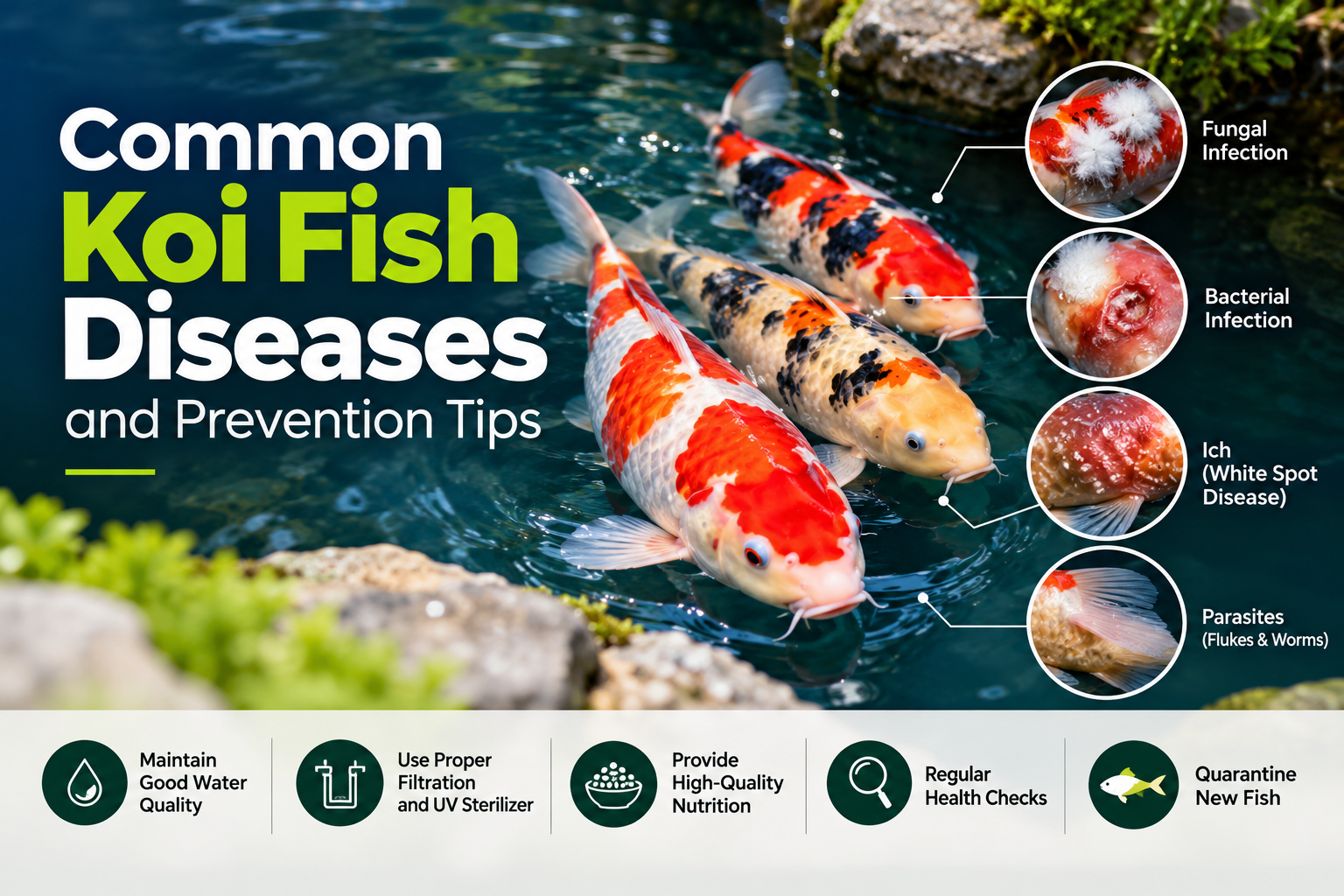
Koi fish are beautiful, colourful fish that can bring life to any outdoor pond. However, maintaining healthy koi requires proper water quality, balanced nutrition, adequate oxygen, and regular observation. Poor pond conditions, parasites, bacteria, and certain environmental changes can cause health problems that affect koi fish growth, colour, and overall well-being.
Understanding common koi fish diseases helps pond owners identify warning signs early and take appropriate action before the condition becomes more serious. Regular pond maintenance and a reliable filtration system are essential for reducing the risk of disease.
In this guide, we explain common koi fish diseases, their symptoms, possible causes, and practical prevention tips to help you maintain a healthy koi pond.
Why Do Koi Fish Get Diseases?
Koi fish can become sick for several reasons. Although pathogens such as parasites, bacteria, and viruses can cause disease, environmental stress often makes fish more vulnerable to infection.
Common contributing factors include:
- Poor pond water quality.
- Sudden changes in water temperature.
- Low dissolved oxygen levels.
- Overcrowding.
- Inadequate nutrition.
- Introduction of infected fish.
- Dirty pond equipment and contaminated nets.
- Inadequate quarantine procedures.
- Physical injuries caused by handling or sharp pond surfaces.
Maintaining stable water conditions and providing appropriate care can reduce stress and help koi maintain a healthy immune response.
1. Ich or White Spot Disease
White spot disease is a parasitic infection commonly associated with the protozoan Ichthyophthirius multifiliis.
Common Symptoms
- Small white spots resembling grains of salt on the body and fins.
- Scratching or rubbing against pond surfaces.
- Clamped fins.
- Reduced appetite.
- Rapid breathing in more severe cases.
Causes
The parasite can enter a pond through infected fish, contaminated equipment, or other sources. Stressful environmental conditions may increase the impact of an infection.
Prevention Tips
- Quarantine new koi before introducing them to the main pond.
- Monitor fish for unusual spots and behaviour.
- Maintain stable water quality and suitable temperatures.
- Clean and disinfect equipment appropriately between systems.
- Seek advice from an aquatic veterinarian if white spots appear.
Important: Not every white spot is ich. Other parasites and skin conditions can produce similar signs, so accurate identification is important before treatment.
2. Fin Rot
Fin rot is a condition in which the edges of a fish’s fins deteriorate. It is often associated with bacterial infection and poor environmental conditions.
Common Symptoms
- Frayed or ragged fin edges.
- Redness around the fins.
- Progressive fin erosion.
- Reduced activity.
- Loss of appetite in advanced cases.
Causes
Fin rot may develop when koi experience prolonged stress, injuries, poor water quality, or bacterial infection.
Prevention Tips
- Test ammonia and nitrite regularly.
- Maintain effective mechanical and biological filtration.
- Remove accumulated waste and uneaten food.
- Avoid overcrowding.
- Inspect pond surfaces for sharp edges that could injure fish.
- Address injuries and signs of infection promptly.
If fin damage progresses or the fish develops ulcers, seek professional advice to determine the cause and appropriate treatment.
3. Ulcers and Skin Infections
Ulcers are open sores that can develop on the skin or body of koi. They may be associated with bacterial infections, parasites, physical injuries, or other underlying health problems.
Common Symptoms
- Red or inflamed patches on the body.
- Open sores or pits in the skin.
- Damaged scales around affected areas.
- Reduced appetite.
- Unusual swimming behaviour.
- Worsening skin damage over time.
Causes
Skin damage may occur because of poor water conditions, parasites, rough handling, or injuries. Opportunistic bacteria can infect damaged tissue.
Prevention Tips
- Maintain good water quality.
- Handle koi carefully and minimise unnecessary stress.
- Quarantine newly acquired fish.
- Inspect fish regularly for wounds or unusual marks.
- Avoid handling or applying treatments without appropriate guidance.
Ulcers can become serious if left untreated. An aquatic veterinarian should assess koi with deep, spreading, or persistent sores.
4. Koi Parasite Infections
External parasites are among the common health problems affecting koi fish. Examples include Trichodina, Costia (now generally classified within Ichthyobodo), flukes, and fish lice.
Common Symptoms
- Frequent rubbing against pond walls or the bottom.
- Excessive mucus production.
- Clamped fins.
- Rapid breathing.
- Flashing, where fish suddenly twist or dart.
- Redness or irritation of the skin.
- Reduced appetite.
Some parasites are too small to identify without microscopic examination.
Prevention Tips
- Quarantine new fish.
- Avoid introducing untreated fish from unknown sources.
- Keep pond water clean and stable.
- Do not share nets or equipment between ponds without proper disinfection.
- Obtain a diagnosis before using antiparasitic products.
Different parasites require different treatments. Using the wrong product may fail to resolve the problem or harm koi and beneficial pond organisms.
5. Dropsy
Dropsy is a descriptive term for fluid accumulation and swelling in a fish’s body. It is not a single disease but a sign of an underlying health problem that may involve organ dysfunction, infection, or other systemic conditions.
Common Symptoms
- Swollen abdomen.
- Scales sticking outward from the body, sometimes resembling a pinecone.
- Bulging eyes in some cases.
- Loss of appetite.
- Weakness or difficulty swimming.
Causes
Dropsy may occur because of serious internal disease, organ dysfunction, or systemic infection.
Prevention Tips
- Maintain excellent water quality.
- Provide a nutritionally appropriate koi diet.
- Avoid overfeeding.
- Reduce stress and overcrowding.
- Monitor koi for swelling or unusual changes in body shape.
Dropsy is a serious warning sign, particularly when accompanied by raised scales. Affected fish should be assessed promptly by an aquatic veterinarian. Recovery depends on the underlying cause, and prevention cannot eliminate every case.
6. Swim Bladder and Buoyancy Problems
Koi that struggle to maintain their normal swimming position may have a buoyancy disorder. Possible causes include digestive problems, injury, infection, internal disease, or environmental stress.
Common Symptoms
- Swimming sideways or upside down.
- Floating near the surface.
- Resting continuously at the bottom.
- Difficulty maintaining a normal position in the water.
- Unusual swimming patterns.
Causes
Buoyancy problems can have several underlying causes. They should not automatically be attributed to overfeeding or a single food type.
Prevention Tips
- Feed a balanced diet formulated for koi.
- Avoid excessive feeding.
- Keep water conditions stable.
- Monitor fish after changes in feeding or pond conditions.
- Seek professional advice if symptoms persist or the fish cannot swim normally.
Sudden or severe buoyancy problems require prompt assessment because they may indicate a serious underlying condition.
7. Koi Herpesvirus Disease (KHV)
Koi herpesvirus disease is a serious, contagious viral disease that can affect common carp and koi. It can cause substantial losses in affected populations.
Common Symptoms
- Lethargy.
- Reduced appetite.
- Respiratory distress.
- Increased mucus production or damaged gill tissue.
- Skin lesions or changes in appearance.
- Sudden or unexplained deaths among multiple fish.
These symptoms are not unique to KHV. Other infections and water-quality problems can produce similar signs, so laboratory testing is needed to confirm the disease.
Prevention Tips
- Quarantine new koi under suitable conditions.
- Purchase fish from reputable suppliers.
- Avoid sharing untreated water between ponds.
- Disinfect equipment appropriately.
- Seek veterinary advice if several koi become sick or die unexpectedly.
There is no simple home remedy that reliably cures KHV. If the disease is suspected, isolate affected fish where practical, stop moving fish or pond water between systems, and contact an aquatic veterinarian or relevant fisheries authority for guidance.
8. Gill Disease
Gill problems can interfere with oxygen uptake and may result from parasites, bacterial infections, poor water quality, or exposure to harmful chemicals.
Common Symptoms
- Rapid gill movement.
- Gasping at the water surface.
- Fish gathering near waterfalls or aerators.
- Reduced activity.
- Poor appetite.
- Inflamed or damaged gill tissue.
Prevention Tips
- Maintain adequate dissolved oxygen.
- Test ammonia and nitrite regularly.
- Ensure the filtration system is operating properly.
- Remove excess organic waste.
- Avoid sudden changes in water conditions.
- Investigate possible chemical contamination if symptoms begin suddenly.
Gasping fish may be experiencing an oxygen emergency. Increase aeration immediately and check water quality while seeking professional help if the problem continues.
9. Bacterial Gill Disease and Other Bacterial Infections
Bacterial infections may affect the skin, fins, gills, or internal organs. Their severity depends on the pathogen, the condition of the fish, and environmental factors.
Common Symptoms
- Red patches on the body.
- Skin ulcers.
- Damaged fins.
- Inflamed gills.
- Lethargy.
- Reduced appetite.
- Unexplained mortality in severe cases.
Prevention Tips
- Maintain effective biological filtration.
- Remove accumulated sludge and debris.
- Avoid overcrowding.
- Reduce handling stress.
- Quarantine new fish.
- Seek an accurate diagnosis before using antibiotics.
Antibiotics should only be used under appropriate veterinary guidance. Unnecessary or incorrect use can contribute to antimicrobial resistance and may not address the underlying problem.
10. Fungal Infections
Fungal growth may develop on damaged tissue, eggs, or fish that are already weakened by other problems. Some conditions that resemble fungal infections may actually have different causes.
Common Symptoms
- White or grey cotton-like growth.
- Fuzzy patches on injured skin.
- Growth around damaged fins or wounds.
- Reduced activity in affected fish.
Causes
Fungal growth is often associated with injuries, poor water conditions, or other underlying health problems.
Prevention Tips
- Maintain good pond hygiene.
- Remove sources of injury where possible.
- Keep water parameters stable.
- Avoid unnecessary handling.
- Seek professional identification before applying medication.
Treatment should address the underlying cause as well as any confirmed secondary infection.
How to Prevent Common Koi Fish Diseases
Prevention is generally easier than managing a serious disease outbreak. A consistent pond maintenance routine helps protect koi from environmental stress and reduces opportunities for infections to spread.
1. Maintain Good Water Quality
Water quality is one of the most important factors in koi health.
Monitor these parameters:
| Water Parameter | Recommended Consideration |
|---|---|
| Ammonia | Ideally undetectable |
| Nitrite | Ideally undetectable |
| Nitrate | Keep at a suitable, controlled level through maintenance |
| pH | Stable and appropriate for koi; avoid sudden fluctuations |
| Dissolved oxygen | Maintain adequate levels, especially during hot weather |
| Temperature | Monitor changes and adjust feeding and management accordingly |
Test water more frequently when fish are stressed, after adding new fish, or when the biological filter is newly installed or disrupted.
2. Install the Right Pond Filtration System
A suitable filtration system removes solid waste and supports beneficial bacteria that convert toxic ammonia into nitrite and then nitrate.
Most koi ponds benefit from two main forms of filtration:
Mechanical filtration: Removes suspended waste, leaves, and other solid particles.
Biological filtration: Provides surfaces for beneficial bacteria that process ammonia and nitrite.
Choose a filter based on pond volume, fish stocking, feeding rate, waste load, and the actual flow delivered by the pump. A pond with many koi generally requires greater filtration capacity than a lightly stocked pond of the same size.
Explore suitable pond filtration equipment at GreenfinIndia.com and select a system appropriate for your pond.
3. Provide Adequate Oxygen
Koi require sufficient dissolved oxygen, particularly during warm weather and periods of high fish activity.
Ways to support oxygen levels include:
- Installing a suitable pond air pump.
- Using air stones or diffusers.
- Maintaining water circulation.
- Keeping pumps and filters in good working condition.
- Increasing aeration during hot weather or when fish show signs of respiratory distress.
Remember that waterfalls and fountains can contribute to aeration, but their effectiveness depends on the system design and operating conditions.
4. Avoid Overfeeding
Excess food increases waste production and can contribute to poor water quality.
Follow these practices:
- Choose a quality koi food suitable for the fish and water temperature.
- Feed appropriate portions.
- Remove uneaten food when practical.
- Observe appetite and feeding behaviour.
- Adjust feeding as temperatures change.
A sudden loss of appetite may indicate poor water conditions, stress, or illness rather than simply a feeding preference.
5. Quarantine New Koi Fish
New fish may carry parasites or infectious diseases even when they appear healthy.
Before introducing new koi:
- Keep them in a separate quarantine system.
- Use dedicated equipment.
- Monitor their behaviour, appetite, skin, fins, and breathing.
- Check water quality carefully.
- Seek veterinary guidance if symptoms appear.
- Follow an appropriate quarantine period and testing protocol before introduction.
The necessary quarantine duration depends on the disease risks and circumstances. A veterinarian can recommend suitable monitoring and testing procedures.
6. Perform Regular Pond Maintenance
A consistent maintenance schedule helps identify problems before they become severe.
Recommended tasks include:
- Checking pumps and filters.
- Testing water quality.
- Removing leaves and accumulated waste.
- Inspecting fish for unusual behaviour.
- Checking aeration equipment.
- Monitoring water levels.
- Cleaning filter components according to the manufacturer’s instructions without unnecessarily destroying beneficial bacteria.
Avoid cleaning all biological filter media aggressively at once, as this can disrupt the biological filtration process.
7. Observe Your Koi Every Day
Healthy koi are generally active, responsive, and interested in food when conditions are suitable.
Watch for:
- Fish isolating themselves from the group.
- Scratching or rubbing against surfaces.
- Unusual swimming behaviour.
- Loss of appetite.
- Rapid breathing.
- Red patches, sores, or damaged fins.
- Unexpected deaths.
Early observation helps you respond quickly when something changes.
What Should You Do If Your Koi Fish Become Sick?
If you notice signs of illness, follow a careful response plan.
Step 1: Check water quality. Test ammonia, nitrite, pH, temperature, and dissolved oxygen where possible.
Step 2: Observe the symptoms. Record which fish are affected, when symptoms started, and whether the condition is spreading.
Step 3: Improve oxygenation if necessary. If fish are gasping, increase aeration immediately while investigating the cause.
Step 4: Avoid unnecessary medication. Do not combine treatments or use chemicals without understanding the diagnosis and product instructions.
Step 5: Seek professional help. Consult an aquatic veterinarian if symptoms are severe, persistent, or affecting several fish.
Step 6: Prevent further spread. Avoid moving fish, water, or equipment between ponds until the problem has been assessed.
Sudden multiple deaths, severe respiratory distress, widespread ulcers, or suspected KHV require urgent professional attention.
Frequently Asked Questions About Common Koi Fish Diseases
1. What Are the Most Common Koi Fish Diseases?
Common koi health problems include white spot disease, external parasite infections, fin rot, skin ulcers, gill disease, fungal infections, and buoyancy disorders. Koi can also develop serious viral diseases, including KHV.
2. How Can I Tell If My Koi Fish Is Sick?
Look for unusual swimming, reduced appetite, rubbing against surfaces, rapid breathing, clamped fins, skin lesions, white spots, or unexpected isolation from other fish. These signs are not specific to one disease, so check water quality and seek professional advice when necessary.
3. Can Poor Water Quality Cause Koi Fish Diseases?
Poor water quality can stress koi, damage their gills, and increase their vulnerability to infections. High ammonia, detectable nitrite, low oxygen, and sudden pH changes can all contribute to health problems.
4. How Often Should I Check My Koi Pond Water?
Check fish behaviour and equipment daily. Test water regularly according to pond conditions and stocking levels, and test more frequently if fish become ill, new fish are introduced, or the filtration system is disrupted.
5. Does a Pond Filter Prevent All Koi Fish Diseases?
No. A suitable filter helps maintain water quality and reduce stress, but it cannot prevent every parasitic, bacterial, fungal, or viral infection. Quarantine, observation, proper feeding, and good pond hygiene are also important.
6. Why Are My Koi Fish Rubbing Against the Pond Walls?
Rubbing, also known as flashing, may indicate external parasites, skin irritation, or poor water quality. Check water parameters and seek an accurate diagnosis before selecting treatment.
7. Can Koi Fish Diseases Spread to Other Fish?
Some koi diseases are contagious and can spread through direct contact, shared water, or contaminated equipment. The risk depends on the specific disease. Quarantine and good biosecurity help reduce transmission.
8. What Is the Best Way to Keep Koi Fish Healthy?
Maintain stable water quality, provide suitable filtration and oxygenation, feed an appropriate diet, avoid overcrowding, quarantine new fish, and observe koi daily.
Conclusion
Understanding common koi fish diseases is essential for every pond owner. Problems such as white spot disease, parasite infections, fin rot, ulcers, gill disease, and serious viral infections can affect koi health, but good pond management can reduce many preventable risks.
Focus on maintaining excellent water quality, choosing the right pond filtration system, providing adequate oxygen, and feeding your koi appropriately. Quarantine new fish and respond promptly to unusual symptoms.
A well-maintained pond creates a healthier environment for koi and makes long-term pond care easier.
Looking for reliable pond pumps, filtration systems, UV clarifiers, and other pond equipment? Explore GreenfinIndia.com to find suitable products for your pond maintenance and filtration needs.