

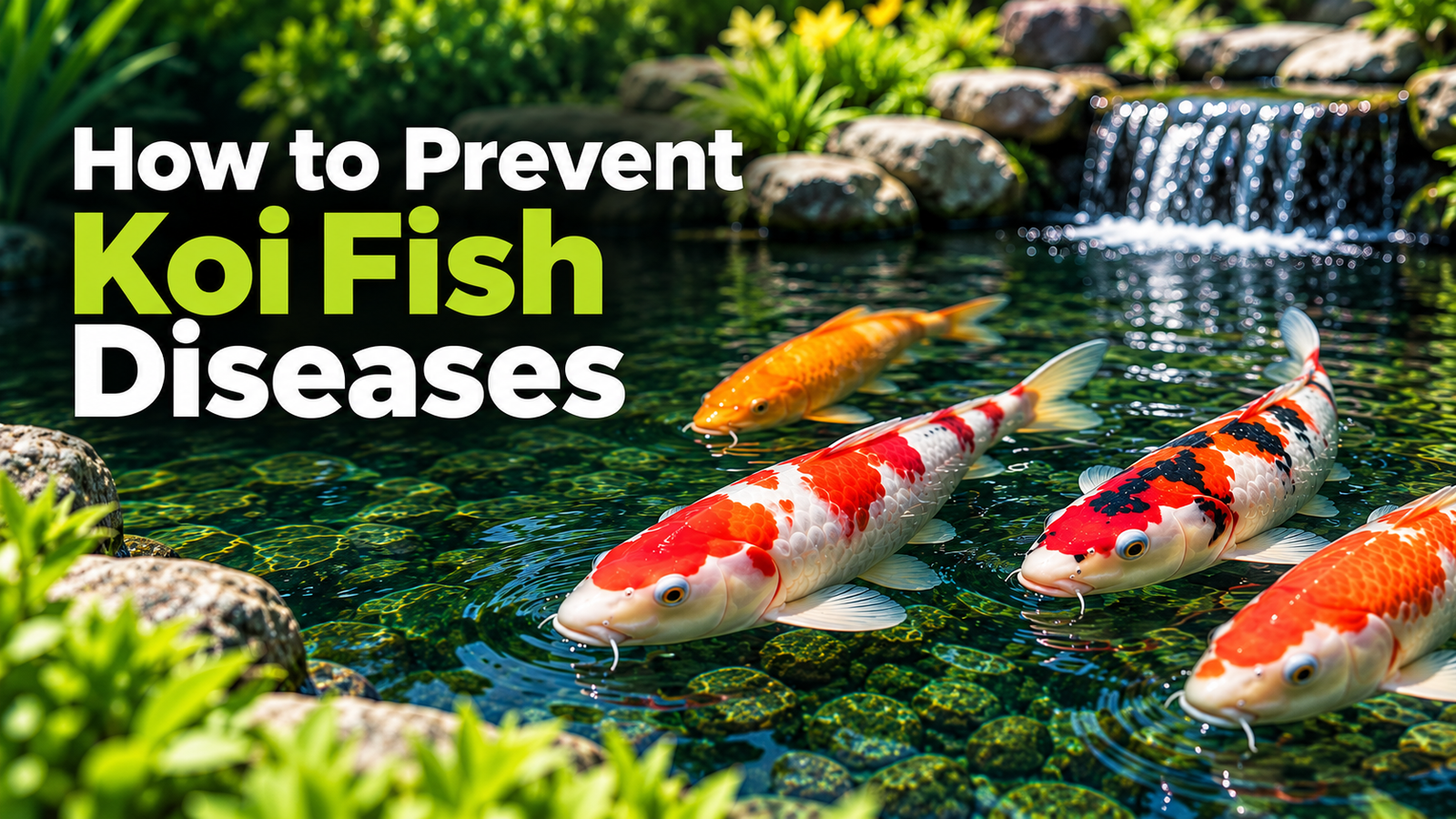
Koi fish are among the most popular ornamental fish for outdoor ponds because of their beautiful colours, graceful swimming movements and peaceful nature. However, maintaining healthy koi fish requires proper care, good water quality and a suitable pond environment.
Outdoor ponds are exposed to changing weather conditions, temperature fluctuations, organic waste and harmful microorganisms. These factors can affect koi fish health and increase the risk of diseases.
Poor water quality, overcrowding, inadequate filtration and improper feeding are some of the most common reasons koi fish become sick.
Understanding how to prevent koi fish diseases in outdoor ponds is essential for maintaining healthy fish and creating a clean, balanced pond environment.
In this guide, we will explore effective ways to prevent common koi fish diseases, improve pond water quality and maintain a healthy outdoor koi pond.
1. Maintain Good Pond Water Quality
Water quality is one of the most important factors affecting koi fish health. Even when pond water looks clear, harmful substances such as ammonia and nitrite may be present.
Poor water conditions can weaken the immune system of koi fish, making them more vulnerable to bacterial infections, parasites and other health problems.
Important water parameters to monitor include:
| Water Parameter | Recommended Condition |
|---|---|
| Ammonia | 0 ppm |
| Nitrite | 0 ppm |
| Nitrate | Preferably below 40 ppm |
| pH | Stable, approximately 7.0–8.5 |
| Dissolved Oxygen | Preferably above 6 mg/L |
| Water Temperature | Stable, approximately 18–25°C for active koi care |
Prevention Tips:
- Test pond water regularly.
- Remove accumulated organic waste.
- Avoid sudden changes in water chemistry.
- Perform appropriate partial water changes.
- Use a suitable water conditioner when adding chlorinated tap water.
- Monitor pH and KH after heavy rainfall.
Maintaining stable water conditions helps reduce stress and supports the natural resistance of koi fish.
2. Install a Proper Koi Pond Filtration System
A properly designed filtration system helps maintain clean and healthy pond water by removing solid waste and processing harmful nitrogen compounds.
Koi fish produce considerable waste, particularly when they are fed regularly. Without adequate filtration, ammonia and nitrite can accumulate and become dangerous.
A good koi pond filtration system should include three important components:
Mechanical Filtration
Mechanical filtration removes physical waste such as fish waste, uneaten food, leaves and suspended particles.
Biological Filtration
Biological filtration provides a surface for beneficial bacteria to grow. These bacteria convert toxic ammonia into nitrite and then nitrate through the nitrogen cycle.
UV Clarification
UV clarifiers help control suspended algae responsible for green pond water.
Prevention Tips:
- Select a filter according to pond volume and fish stocking density.
- Clean mechanical filter media regularly.
- Avoid destroying beneficial bacteria during filter maintenance.
- Ensure continuous water circulation.
- Check pump performance and filter flow.
- Maintain sufficient biological filter media.
A well-maintained filtration system creates a more stable environment for koi fish.
3. Provide Sufficient Oxygen Through Aeration
Oxygen is essential for koi fish respiration and the activity of beneficial bacteria in biological filters.
Outdoor ponds may experience reduced oxygen levels during hot weather, particularly when algae levels are high or organic waste accumulates.
Signs of insufficient oxygen include:
- Koi fish gathering near water outlets.
- Fish gasping at the water surface.
- Reduced swimming activity.
- Fish becoming unusually inactive.
- Increased stress among pond fish.
Prevention Tips:
- Install a suitable pond air pump.
- Use air stones or diffuser systems.
- Maintain adequate surface water movement.
- Remove excessive organic debris.
- Provide additional aeration during hot weather.
- Ensure continuous operation of aeration equipment.
Continuous aeration is particularly important in heavily stocked koi ponds.
4. Avoid Overcrowding Your Koi Pond
Overcrowding is a common mistake among outdoor pond owners.
When too many koi fish are kept in a limited water volume, waste production increases and the filtration system may struggle to maintain good water quality.
Overcrowding can contribute to:
- Increased ammonia levels.
- Reduced dissolved oxygen.
- Competition for food.
- Increased fish stress.
- Faster transmission of infectious diseases.
Prevention Tips:
- Calculate the actual pond water volume.
- Consider the adult size of koi fish.
- Avoid adding too many fish at once.
- Upgrade filtration before increasing fish numbers.
- Maintain adequate swimming space.
Remember that filtration capacity, oxygen availability and fish size are more important than simply counting the number of fish.
5. Quarantine New Koi Fish Before Introducing Them
Introducing new koi fish directly into an established pond can introduce parasites, bacterial infections and other pathogens.
Even fish that appear healthy may carry diseases without showing visible symptoms.
Quarantine is one of the most effective ways to reduce the risk of introducing infections into your existing koi population.
Prevention Tips:
- Keep new koi fish in a separate quarantine tank or pond.
- Maintain suitable filtration and aeration.
- Observe the fish for signs of illness.
- Monitor feeding behaviour and swimming activity.
- Seek professional fish-health advice if symptoms appear.
- Introduce fish only after an appropriate quarantine period and health assessment.
A quarantine period of approximately 3–4 weeks is commonly used as a starting point. Longer periods may be necessary depending on the source and health risks.
6. Feed Koi Fish a Balanced and High-Quality Diet
Nutrition plays an important role in maintaining the health and immune function of koi fish.
Poor-quality food, excessive feeding and unsuitable seasonal diets can negatively affect fish health and pond water quality.
Prevention Tips:
- Choose good-quality koi fish food.
- Feed according to fish size and water temperature.
- Avoid overfeeding.
- Remove uneaten food.
- Store fish food in a cool, dry place.
- Adjust feeding frequency during colder weather.
A balanced diet supports healthy growth, colour development and normal fish activity.
Overfeeding should be avoided because uneaten food decomposes and increases organic waste in the pond.
7. Prevent Parasites and Bacterial Infections
Koi fish can be affected by different parasites and bacterial infections. Identifying potential health problems early can help prevent serious disease outbreaks.
Some common koi fish diseases and conditions include:
| Disease or Condition | Common Symptoms |
|---|---|
| Ich (White Spot Disease) | Small white spots on the body and fins |
| Trichodina | Excess mucus, irritation and flashing |
| Costia | Excess mucus, lethargy and skin irritation |
| Flukes | Flashing, rubbing and respiratory distress |
| Fin Rot | Damaged or deteriorating fin edges |
| Ulcers | Open sores or skin lesions |
| Dropsy | Swollen abdomen and raised scales |
Prevention Tips:
- Maintain stable water quality.
- Quarantine new fish.
- Avoid unnecessary fish handling.
- Inspect fish regularly.
- Maintain suitable stocking levels.
- Do not use medications without identifying the problem.
If you notice ulcers, abnormal swimming, rapid breathing or unusual skin changes, consult an aquatic veterinarian or experienced fish-health professional.
Accurate diagnosis is important because different diseases require different treatments.
8. Protect Your Pond from Sudden Weather Changes
Outdoor ponds are directly exposed to environmental conditions. Heavy rainfall, extreme sunlight and sudden temperature changes can affect water quality and fish health.
Heavy rainfall may change pond pH and KH, while hot weather can increase water temperature and reduce dissolved oxygen.
Prevention Tips:
- Monitor water temperature regularly.
- Maintain sufficient pond depth.
- Avoid sudden large water changes.
- Check pH and KH after heavy rainfall.
- Provide shade where necessary.
- Increase aeration during hot weather.
- Prevent contaminated surface runoff from entering the pond.
These precautions help reduce environmental stress on koi fish.
9. Remove Pond Sludge and Organic Waste Regularly
Leaves, uneaten food, fish waste and other organic materials gradually accumulate at the bottom of outdoor ponds.
When this waste decomposes, it increases the organic load and can contribute to poor water quality and oxygen depletion.
Prevention Tips:
- Remove fallen leaves and debris.
- Clean mechanical filtration chambers.
- Maintain bottom drains and pond skimmers.
- Use suitable pond cleaning equipment.
- Avoid disturbing excessive bottom sludge around fish unnecessarily.
Regular waste removal helps maintain a cleaner and healthier pond environment.
10. Perform Regular Pond Maintenance and Fish Health Checks
Prevention is easier than treating a serious disease outbreak.
Regular pond inspection helps identify potential problems before they affect the entire fish population.
Observe your koi fish for:
- Normal swimming behaviour.
- Healthy appetite.
- Smooth and undamaged scales.
- Clear eyes.
- Undamaged fins.
- Normal breathing patterns.
Also inspect pumps, filters, air pumps and plumbing connections.
Create a regular pond maintenance routine to keep the filtration system working efficiently.
Common Signs of Disease in Koi Fish
Recognising early warning signs can help prevent health problems from becoming severe.
Watch for these symptoms:
- White spots on the body or fins.
- Red patches, ulcers or damaged scales.
- Clamped fins.
- Excessive mucus production.
- Rubbing against pond surfaces.
- Loss of appetite.
- Swimming near the water surface.
- Unusual lethargy or isolation.
If multiple fish show symptoms, check water quality immediately and seek professional advice.
Avoid randomly adding antibiotics, salt or chemical treatments to the entire pond.
Recommended Outdoor Koi Pond Maintenance Schedule
Following a consistent maintenance routine can help reduce the risk of fish diseases.
| Frequency | Maintenance Activity |
|---|---|
| Daily | Observe fish behaviour and feeding |
| Daily | Check pump and aeration operation |
| Weekly | Test ammonia, nitrite and pH |
| Weekly | Inspect and clean mechanical filters as needed |
| Weekly | Remove leaves and floating debris |
| Monthly | Inspect pond plumbing and bottom drains |
| Monthly | Check UV unit and clean quartz sleeve as required |
| Seasonally | Review filtration, aeration and fish stocking requirements |
Testing frequency should increase whenever fish appear unwell, weather changes significantly or the pond is newly established.
Frequently Asked Questions (FAQs)
1. What is the best way to prevent koi fish diseases?
Maintaining good water quality, proper filtration, sufficient oxygen, balanced feeding and quarantining new fish are the most important preventive measures.
2. How often should I change water in my koi pond?
Many well-maintained koi ponds benefit from regular partial water changes, often around 5–10% weekly. The exact amount depends on stocking density, filtration performance, water parameters and source-water quality. Always condition replacement water appropriately.
3. Can poor filtration cause koi fish diseases?
Yes. Poor filtration can allow ammonia, nitrite and organic waste to accumulate. These conditions stress fish and increase their susceptibility to disease.
4. Why are my koi fish not eating?
Loss of appetite can result from temperature changes, poor water quality, stress, parasites or infections. Check water parameters and observe other symptoms before deciding on treatment.
5. Is UV light necessary for outdoor koi ponds?
A UV clarifier can help control suspended algae and green pond water. However, it does not directly treat parasites or bacterial infections in koi fish and cannot replace proper filtration.
6. How long should new koi fish be quarantined?
A quarantine period of approximately 3–4 weeks is a common starting point. Fish should be observed and assessed for health problems before being introduced into the main pond.
7. Can koi fish diseases spread to other fish?
Yes. Many infectious koi diseases can spread through direct contact, contaminated water and shared equipment. Isolating affected fish and disinfecting equipment appropriately can help limit transmission.
Conclusion
Preventing koi fish diseases in outdoor ponds requires consistent care, proper equipment and attention to water quality. A healthy pond environment starts with effective filtration, sufficient aeration, balanced feeding and responsible fish stocking.
By following these preventive practices, pond owners can reduce disease risks, maintain better water quality and enjoy healthy, active koi fish throughout the year.
At Greenfin The Pond Studio, we offer pond filtration equipment, pumps, UV clarifiers, aeration systems and pond construction solutions to help you maintain a healthy outdoor koi pond.
Explore pond products and solutions at greenfinindia.com.