

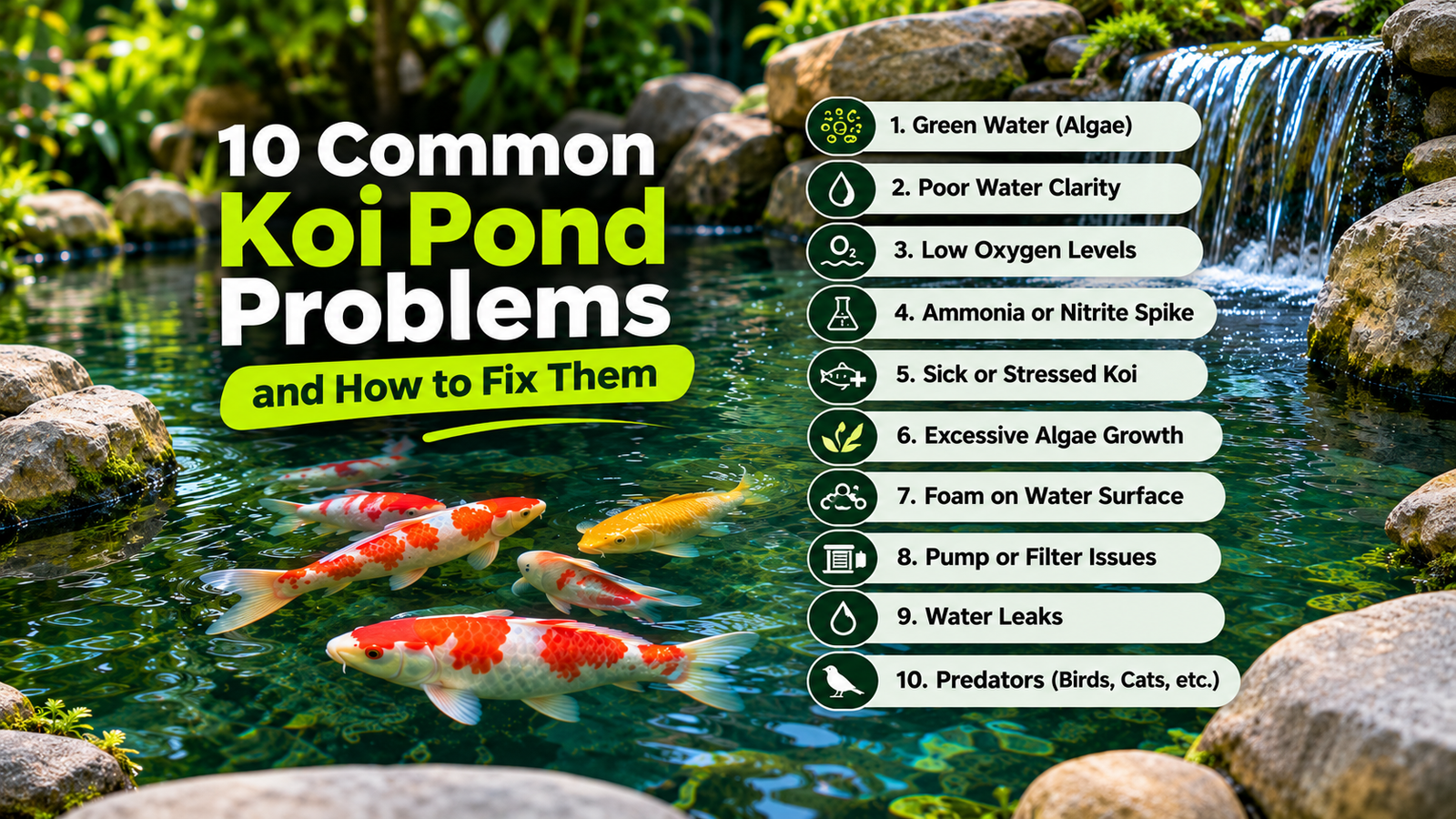
A healthy koi pond requires proper filtration, good water quality, sufficient oxygen, and regular maintenance. Even a well-designed pond can develop problems over time, affecting water clarity, fish health, and the overall pond environment.
Koi fish are sensitive to changes in water conditions. Problems such as green water, poor oxygen levels, algae growth, filter blockages, and unhealthy fish can occur when pond maintenance is neglected.
In this guide, we will explore 10 common koi pond problems, their causes, and practical solutions to help maintain a clean, healthy, and beautiful pond.
1. Green Pond Water
Green pond water is one of the most common problems faced by koi pond owners. It usually occurs because of microscopic suspended algae that multiply rapidly in water.
Common Causes:
- Excessive sunlight exposure.
- High nutrient levels in pond water.
- Fish waste and uneaten fish food.
- Insufficient biological filtration.
- Poor water circulation.
How to Fix It:
- Install a suitable UV clarifier to control suspended green algae.
- Improve mechanical and biological filtration.
- Avoid overfeeding koi fish.
- Remove accumulated organic waste.
- Perform regular water testing and partial water changes.
A properly sized UV clarifier combined with an efficient filtration system can help maintain clear pond water.
2. Excessive Algae Growth
String algae and blanket weed can grow on pond walls, rocks, waterfalls, and other underwater surfaces. Although some algae are natural in ponds, excessive growth can affect water circulation and appearance.
Common Causes:
- Excess nutrients, particularly nitrates and phosphates.
- Direct sunlight exposure.
- Poor water movement.
- Accumulated organic debris.
How to Fix It:
- Manually remove excessive string algae.
- Reduce excess fish feeding.
- Clean accumulated debris from the pond.
- Improve filtration and water circulation.
- Maintain appropriate pond shade.
Regular maintenance helps prevent algae from becoming difficult to control.
3. Low Oxygen Levels in Pond Water
Koi fish require sufficient dissolved oxygen to remain healthy. Low oxygen levels can cause fish to gather near waterfalls, fountains, or the water surface and gasp for air.
Common Causes:
- High water temperatures.
- Overcrowded fish populations.
- Insufficient aeration.
- Excessive organic waste.
- Heavy algae growth and nighttime oxygen consumption.
How to Fix It:
- Install a suitable pond air pump.
- Use air stones or diffuser discs for additional aeration.
- Improve water movement with waterfalls or fountains.
- Remove organic waste regularly.
- Avoid keeping too many fish in a small pond.
Important: If koi fish are gasping at the surface, increase aeration immediately and check dissolved oxygen levels.
4. Cloudy or Muddy Pond Water
Cloudy pond water reduces visibility and makes it difficult to monitor koi fish. It may appear brown, grey, or milky depending on the underlying cause.
Common Causes:
- Suspended dirt and fine particles.
- Disturbed pond sediment.
- Poor mechanical filtration.
- New pond construction or recently added water.
- Unbalanced biological filtration.
How to Fix It:
- Install an effective mechanical pond filter.
- Use suitable filter floss or fine mechanical filter media.
- Clean the pond bottom and remove accumulated sludge.
- Check filter performance and water flow.
- Allow biological filtration to establish in newly installed systems.
A combination of mechanical and biological filtration is essential for maintaining good water quality.
5. Poor Pond Filtration
An inefficient filtration system can allow fish waste, uneaten food, and harmful compounds to accumulate in pond water.
This is particularly problematic in heavily stocked koi ponds.
Common Causes:
- Undersized pond filters.
- Insufficient filter media.
- Blocked filter chambers.
- Weak pond pump performance.
- Poor filter maintenance.
How to Fix It:
- Select a filter based on actual pond volume and fish stocking levels.
- Install adequate mechanical and biological filtration.
- Use suitable biological media such as ceramic media, bio balls, and other established filter media.
- Clean mechanical filter sections regularly.
- Check the pump, plumbing, and water flow.
For larger koi ponds, a multi-chamber filtration system or appropriately designed pressurized filtration system can improve overall filtration performance.
6. Unhealthy Koi Fish
Changes in fish behaviour and appearance can indicate problems with pond water quality or fish health.
Some common warning signs include:
- Loss of appetite.
- Damaged or clamped fins.
- White spots on the body.
- Unusual swimming behaviour.
- Scratching against pond surfaces.
- Lethargy or isolation.
Common Causes:
- Poor water quality.
- Ammonia or nitrite toxicity.
- Parasites and bacterial infections.
- Sudden temperature changes.
- Stress caused by overcrowding.
How to Fix It:
- Test ammonia, nitrite, nitrate, pH, and temperature.
- Check for visible signs of disease.
- Quarantine affected fish when appropriate.
- Avoid adding medication without identifying the problem.
- Consult an aquatic veterinarian or experienced fish health professional when symptoms persist.
Maintaining stable water conditions is one of the most effective ways to support koi fish health.
7. High Ammonia and Nitrite Levels
Ammonia and nitrite are two dangerous compounds that can accumulate in poorly maintained koi ponds.
Ammonia is produced mainly through fish waste, uneaten food, and decomposing organic matter. Beneficial bacteria convert ammonia into nitrite and then into less toxic nitrate through biological filtration.
Common Causes:
- Inadequate biological filtration.
- New or immature filter systems.
- Excessive fish stocking.
- Overfeeding.
- Filter cleaning that damages beneficial bacteria.
How to Fix It:
- Test ammonia and nitrite levels regularly.
- Reduce feeding temporarily if levels are elevated.
- Perform appropriate partial water changes using properly conditioned water.
- Check biological filter performance.
- Avoid replacing or washing all biological media simultaneously.
- Increase aeration to support beneficial bacteria.
Important: Ammonia and nitrite should ideally remain at 0 ppm in a healthy, established koi pond.
8. Poor Water Circulation
Proper water circulation helps distribute oxygen, move waste towards filtration intakes, and prevent stagnant areas.
Poor circulation can result in waste accumulation and inconsistent water quality.
Common Causes:
- Undersized pond pumps.
- Incorrect pump placement.
- Blocked plumbing.
- Poor pond design.
- Insufficient water movement.
How to Fix It:
- Choose a pond pump according to pond volume and filtration requirements.
- Check pump flow rate and head-height limitations.
- Clean pump intake screens.
- Position water returns to improve circulation.
- Consider additional circulation pumps for large ponds.
For ponds with waterfalls and fountains, choose a pump that can provide sufficient flow at the required operating height.
9. Excessive Sludge and Waste Accumulation
Fish waste, fallen leaves, uneaten food, and other organic materials can collect at the bottom of a koi pond.
Over time, this waste can contribute to poor water quality and increased nutrient levels.
Common Causes:
- Lack of bottom drainage.
- Poor water circulation.
- Excessive feeding.
- Inadequate mechanical filtration.
- Infrequent pond cleaning.
How to Fix It:
- Use a pond vacuum to remove accumulated sludge.
- Install a suitable bottom drain during pond construction.
- Maintain proper water circulation towards waste collection points.
- Clean mechanical filter chambers regularly.
- Remove fallen leaves and other debris.
A properly designed bottom drain and filtration system can significantly reduce waste accumulation in larger koi ponds.
10. Pond Water Temperature Fluctuations
Koi fish are sensitive to sudden changes in water temperature. Rapid fluctuations can cause stress and make fish more vulnerable to health problems.
Common Causes:
- Direct sunlight.
- Shallow pond construction.
- Sudden weather changes.
- Large water changes involving water at a different temperature.
- Inadequate pond depth.
How to Fix It:
- Monitor pond temperature regularly.
- Provide suitable shade during hot weather.
- Avoid sudden, large temperature changes.
- Maintain adequate pond depth.
- Ensure sufficient aeration during warmer conditions.
Stable water temperature supports better fish health and helps maintain a balanced pond environment.
Essential Maintenance Tips to Prevent Koi Pond Problems
Preventing pond problems is easier than correcting them after they become serious. Follow these maintenance practices to maintain a healthy koi pond.
| Maintenance Task | Recommended Frequency |
|---|---|
| Check fish behaviour | Daily |
| Check pump operation | Daily |
| Remove floating debris | Daily or as needed |
| Test water parameters | Weekly |
| Inspect mechanical filtration | Weekly |
| Remove accumulated sludge | As needed |
| Inspect UV clarifier | Monthly |
| Check plumbing and water circulation | Monthly |
| Inspect biological filter media | Periodically |
Maintenance frequency may vary depending on pond size, fish population, feeding levels, and filtration capacity.
Choosing the Right Filtration System for a Healthy Koi Pond
A properly designed filtration system is one of the most important components of a successful koi pond.
A complete koi pond filtration setup generally includes three important stages:
1. Mechanical Filtration
Mechanical filtration removes suspended particles, fish waste, and debris from pond water.
Common options include:
- Filter brushes.
- Filter sponges.
- Filter mats.
- Filter floss.
- Rotary drum filters.
2. Biological Filtration
Biological filtration provides a surface for beneficial bacteria to grow. These bacteria help convert toxic ammonia into nitrite and then nitrate.
Popular biological filter media include:
- Ceramic rings.
- Bio balls.
- Moving bed media.
- Sintered glass media.
- Porous biological filter media.
3. UV Clarification
UV clarifiers use ultraviolet light to control suspended green-water algae and help improve pond water clarity.
The UV unit should be selected according to pond volume, water flow, algae load, and manufacturer recommendations.
Combining these three filtration stages helps maintain cleaner water and a healthier environment for koi fish.
Conclusion
Maintaining a healthy koi pond requires consistent attention to water quality, filtration, oxygen levels, fish health, and regular cleaning.
Problems such as green water, algae growth, poor circulation, low oxygen, and excessive sludge can be managed with the right equipment and maintenance practices.
Investing in a properly sized pond pump, efficient filtration system, UV clarifier, and suitable filter media can make pond maintenance easier while supporting healthy koi fish.
At Greenfin The Pond Studio, we provide pond equipment, filtration solutions, pumps, UV clarifiers, fountain systems, and pond construction services to help pond owners create and maintain beautiful outdoor ponds.
Explore pond products and solutions at greenfinindia.com.