

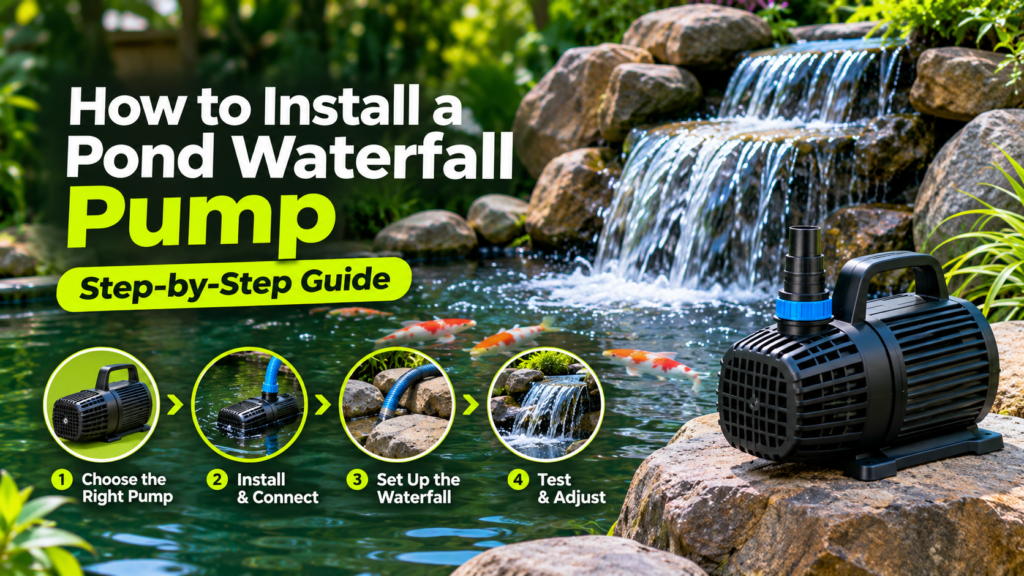
A pond waterfall adds beauty, movement, and natural sound to an outdoor pond. However, choosing and installing the right pond waterfall pump is essential to achieve consistent water flow, proper circulation, and efficient pond filtration.
A suitable waterfall pump helps move water from the pond to the waterfall outlet, creating a continuous flow of water while supporting oxygen exchange and overall pond circulation.
Whether you are building a new garden pond or upgrading an existing waterfall, understanding the correct pump installation process can help prevent common problems such as weak water flow, leakage, blockages, and pump failure.
In this guide, we will explain how to install a pond waterfall pump, how to select the right pump, and how to maintain it for long-term performance.
1. Choose the Right Pond Waterfall Pump
Before starting installation, select a pond pump that can deliver sufficient water flow for your waterfall.
The pump capacity depends on several factors:
- Waterfall width.
- Waterfall height.
- Required water flow.
- Pipe length and diameter.
- Number of bends and fittings.
- Pond volume.
A pump with insufficient capacity may produce a weak waterfall, while an unnecessarily powerful pump can increase electricity consumption and create excessive water movement.
Important: Always check the pump’s flow rate at the required head height, not just its maximum advertised flow rate.
2. Calculate the Required Water Flow
Waterfall width and height are important when calculating the required pump flow rate.
As a general starting point, a smooth waterfall may require approximately 100–150 litres per hour of flow per centimetre of waterfall width, depending on the desired appearance and waterfall design.
For example:
| Waterfall Width | Approximate Flow Rate |
|---|---|
| 20 cm | 2,000–3,000 LPH |
| 30 cm | 3,000–4,500 LPH |
| 40 cm | 4,000–6,000 LPH |
| 50 cm | 5,000–7,500 LPH |
| 60 cm | 6,000–9,000 LPH |
These are starting estimates for a relatively smooth sheet of water. Natural stone waterfalls may need different flow rates depending on their shape and desired appearance.
Also consider the vertical height between the pump and waterfall outlet when selecting your pump.
3. Prepare the Pond for Pump Installation
Before installing the pump, inspect the pond and prepare a suitable location.
Follow these steps:
- Choose a stable location inside the pond.
- Ensure the pump can remain fully submerged if it is a submersible model.
- Keep the pump away from excessive sludge and debris.
- Make sure the pump intake is accessible for cleaning.
- Check the electrical supply and cable routing.
- Ensure the waterfall outlet and return path are ready.
Avoid placing the pump directly on the muddy pond bottom, as accumulated sludge can enter the pump and cause blockages.
Using a stable platform or raised support can help protect the pump intake.
4. Connect the Pump to the Waterfall Pipe
Once the pump location is ready, connect the outlet to the waterfall plumbing.
Installation steps:
- Check the pump outlet size.
- Select a compatible hose or PVC pipe.
- Connect the pipe securely to the pump outlet.
- Use suitable connectors and clamps where required.
- Route the pipe towards the waterfall.
- Minimise unnecessary bends and restrictions.
- Secure the pipe to prevent movement.
Use a pipe diameter recommended by the pump manufacturer. Undersized pipes can reduce water flow and increase pressure losses.
For larger waterfalls, using a suitable larger-diameter pipe can improve water delivery.
5. Install the Waterfall Outlet
The waterfall outlet determines how water flows back into the pond.
Depending on your design, you can use:
- Waterfall spillways.
- Stainless steel waterfall outlets.
- Natural stone waterfall edges.
- Custom-built concrete waterfall channels.
- Multi-stage waterfall structures.
Ensure the outlet is level if you want an even sheet of water.
For natural-looking waterfalls, position stones carefully to guide water movement and minimise unwanted splashing.
Also ensure that the waterfall structure directs all water back into the pond to prevent water loss.
6. Check Electrical Connections and Safety
Electrical safety is especially important because pond pumps operate near water.
Follow these precautions:
- Use a suitable outdoor-rated electrical connection.
- Install a properly rated RCD or RCCB safety device.
- Keep electrical plugs and connections protected from water.
- Avoid exposed or damaged cables.
- Follow the pump manufacturer’s installation instructions.
- Ensure the pump is disconnected before maintenance.
Never handle electrical connections with wet hands. For permanent installations, consult a qualified electrician.
7. Start the Pump and Test Water Flow
After completing the plumbing and electrical connections, you can test the system.
Testing procedure:
- Confirm that the pump is correctly positioned.
- Check that all pipe connections are secure.
- Ensure the pump is submerged if required.
- Open any installed valves.
- Switch on the pump according to the manufacturer’s instructions.
- Observe water movement through the pipe.
- Check the waterfall flow and water return.
- Inspect all connections for leaks.
If the waterfall flow is weak, check for blocked intakes, undersized pipes, air trapped in the plumbing, excessive head height, or an unsuitable pump.
8. Adjust the Waterfall Flow Rate
Not every waterfall needs maximum water flow. Adjusting the flow rate can help achieve the desired appearance.
You can use a suitable flow-control valve installed on the pump discharge line.
Different flow rates create different waterfall effects:
- Low flow: Gentle water movement.
- Medium flow: Natural and continuous waterfall.
- High flow: Stronger water movement and increased splashing.
Avoid restricting the pump below the manufacturer’s minimum operating requirements.
For a multi-stage waterfall, adjust the outlet and stone positioning to distribute water evenly across each section.
9. Maintain the Pond Waterfall Pump
Regular maintenance helps improve pump performance and extend its operating life.
Recommended maintenance practices:
- Inspect the pump intake regularly.
- Remove leaves and debris.
- Clean the impeller when necessary.
- Check the pipe and hose connections.
- Inspect electrical cables for damage.
- Monitor water flow for sudden changes.
- Follow the manufacturer’s maintenance schedule.
If you notice unusual noise, vibration, overheating, or reduced water flow, switch off the pump safely and inspect the system.
10. Common Pond Waterfall Pump Installation Mistakes
Avoid these common mistakes when installing a pond waterfall pump.
| Common Mistake | Possible Problem | Solution |
|---|---|---|
| Choosing a low-capacity pump | Weak waterfall flow | Select the correct pump capacity |
| Using narrow pipes | Reduced water flow | Use suitable pipe diameter |
| Placing pump in sludge | Intake blockage | Raise pump above pond bottom |
| Ignoring head height | Poor pump performance | Calculate total pumping head |
| Poor pipe connections | Water leakage | Secure all joints properly |
| Incorrect outlet positioning | Uneven waterfall | Level and adjust the outlet |
| Ignoring maintenance | Pump failure | Inspect and clean regularly |
Types of Pond Pumps Used for Waterfalls
Different types of pond pumps are available depending on pond size, waterfall design, and installation requirements.
1. Submersible Pond Pumps
Submersible pumps operate underwater and are commonly used in garden ponds and small to medium waterfall installations.
Advantages:
- Easy installation.
- Compact design.
- No external pump housing required.
- Suitable for many residential ponds.
2. External Pond Pumps
External pumps are installed outside the pond and connected through suitable plumbing.
Advantages:
- Convenient access for servicing.
- Suitable for many larger pond systems.
- Can provide high water flow.
- Useful for dedicated filtration and waterfall circuits.
3. Filter and Waterfall Pumps
Some pond pumps are designed to handle water containing suspended debris and deliver water to pond filters or waterfall systems.
These can be useful in ponds where water circulation and filtration are connected.
Always check the pump’s permitted particle size and intended application before choosing it.
How to Choose the Best Pond Waterfall Pump
Before purchasing a waterfall pump, consider these important specifications:
| Specification | Why It Matters |
|---|---|
| Flow rate (LPH) | Determines water delivery |
| Maximum head height | Indicates vertical pumping capability |
| Power consumption (W) | Helps estimate electricity usage |
| Outlet diameter | Determines plumbing compatibility |
| Pump type | Submersible or external installation |
| Build quality | Important for long-term operation |
| Warranty | Provides additional purchase protection |
Choose a pump based on the actual waterfall design rather than pond volume alone.
Conclusion
Installing a pond waterfall pump requires proper planning, correct pump selection, suitable plumbing, and safe electrical connections.
A properly installed waterfall pump provides consistent water movement, improves pond circulation, and creates an attractive waterfall feature for your outdoor space.
By following the steps in this guide, you can avoid common installation mistakes and maintain an efficient waterfall system.
At Greenfin The Pond Studio, we offer pond pumps, filtration equipment, UV clarifiers, fountain systems, and pond construction solutions to help create beautiful and functional outdoor ponds.
Explore our pond equipment and solutions at greenfinindia.com.