

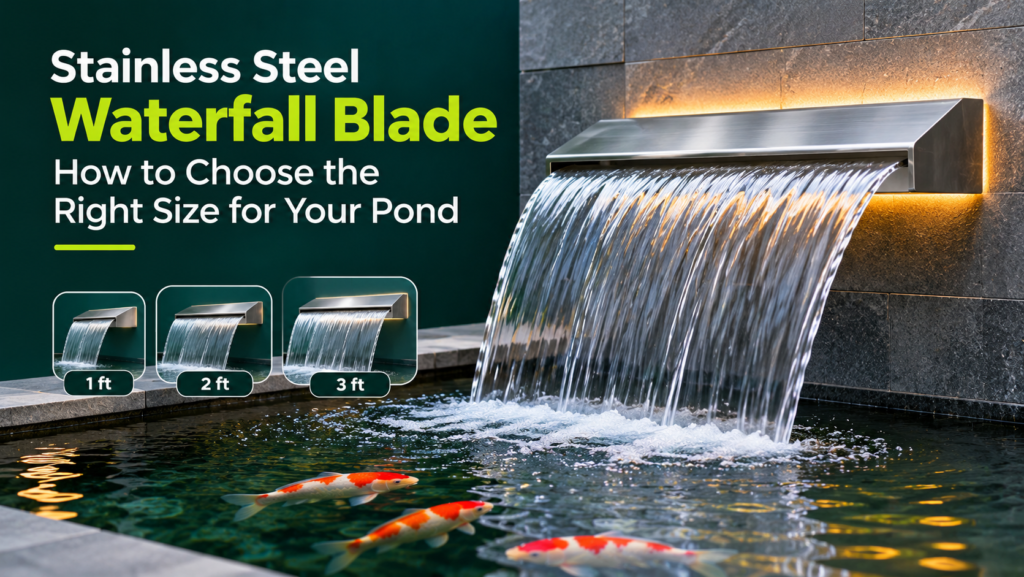
A stainless steel waterfall blade is an excellent choice for creating a modern, elegant and attractive water feature in gardens, swimming pools and koi ponds. It produces a smooth, cascading sheet of water that adds movement, sound and visual appeal to outdoor spaces.
However, choosing the correct waterfall blade size is important to achieve a beautiful and consistent water flow. The blade width, pump capacity, installation height and water supply all influence the final waterfall effect.
In this guide, we will explain how to choose the right Stainless Steel Waterfall Blade size, understand pump requirements and select the best waterfall blade for your pond or garden.
1. What Is a Stainless Steel Waterfall Blade?
A stainless steel waterfall blade is a specially designed water outlet that produces a flat, flowing sheet of water.
It is commonly installed on:
- Garden ponds.
- Koi ponds.
- Swimming pools.
- Outdoor water walls.
- Decorative fountains.
- Modern landscape water features.
Water is supplied to the blade through a connected pump and plumbing system. It flows through the internal chamber and exits through a narrow opening, creating a smooth waterfall effect.
Stainless steel waterfall blades are popular because of their modern appearance, durability and suitability for decorative water installations.
2. Why Is Choosing the Right Waterfall Blade Size Important?
The size of the waterfall blade directly influences the appearance and performance of the water feature.
Choosing an unsuitable size can result in uneven water flow, insufficient water coverage or excessive splashing.
Here are the main reasons to select the correct size.
A. Better Waterfall Appearance
A properly sized waterfall blade produces a balanced and attractive water curtain.
B. Consistent Water Flow
The correct blade and pump combination helps distribute water evenly across the outlet.
C. Reduced Water Splashing
Choosing the appropriate width and installation height helps control splashing around the pond or pool.
D. Proper Pump Performance
Different blade sizes require different water flow rates. Selecting the correct size helps avoid insufficient or excessive water flow.
E. Better Installation Compatibility
The waterfall blade should match the width of the wall, pond edge or installation surface.
3. Common Stainless Steel Waterfall Blade Sizes
Stainless steel waterfall blades are available in different widths to suit various installations.
Common options include:
| Waterfall Blade Size | Suitable Applications |
|---|---|
| 1 Foot | Small garden ponds and compact water features |
| 1.5 Feet | Small decorative ponds |
| 2 Feet | Residential garden ponds |
| 3 Feet | Medium-sized ponds and water walls |
| 4 Feet | Large garden ponds and swimming pools |
| 5 Feet | Large decorative water features |
| 6 Feet | Wide water walls and commercial installations |
These are general size categories. Actual availability depends on the product range.
Important: Blade width alone does not determine water flow. The outlet design, internal chamber, pump capacity and operating head also influence the waterfall effect.
4. How to Choose the Right Stainless Steel Waterfall Blade Size
Before purchasing a waterfall blade, consider the following factors.
A. Measure the Installation Area
First, measure the width of the wall or pond edge where you plan to install the waterfall blade.
For example:
- Wall width: 4 feet
- Recommended blade width: 2–3 feet
Leaving sufficient space around the waterfall blade can create a balanced appearance.
Avoid selecting a blade that is wider than the available installation area.
B. Consider Your Pond Size
The waterfall blade should be proportionate to the overall pond dimensions.
For example:
| Pond Size | Suggested Blade Width |
|---|---|
| Small pond | 1–2 feet |
| Medium pond | 2–3 feet |
| Large pond | 3–4 feet |
| Extra-large pond | 4–6 feet |
These are starting recommendations, not fixed technical specifications.
C. Check the Waterfall Height
Installation height affects how the water flows after leaving the blade.
- Low installation height: Creates a shorter, compact waterfall.
- Medium installation height: Creates a visible cascading effect.
- High installation height: Produces a longer waterfall but may increase splashing.
For koi ponds, consider fish safety and avoid excessive splashing or strong turbulence around the pond edges.
D. Select the Correct Pump Capacity
A waterfall blade requires sufficient water flow to produce a smooth and consistent water curtain.
The pump should be selected according to:
- Waterfall blade width.
- Required waterfall thickness.
- Installation height.
- Pipe diameter.
- Plumbing distance.
- Friction losses.
A larger waterfall blade generally requires a higher water supply, but the exact flow requirement must be checked against the manufacturer’s specifications.
5. How Much Pump Capacity Is Required for a Waterfall Blade?
Pump selection is one of the most important parts of a waterfall installation.
A pump with insufficient capacity may produce a weak or uneven water sheet. An oversized pump may create excessive splashing and unnecessary electricity consumption.
The following table provides general planning estimates only.
| Blade Width | Illustrative Flow Range |
|---|---|
| 1 Foot | 1,000–2,000 LPH |
| 2 Feet | 2,000–4,000 LPH |
| 3 Feet | 3,000–6,000 LPH |
| 4 Feet | 4,000–8,000 LPH |
| 5 Feet | 5,000–10,000 LPH |
| 6 Feet | 6,000–12,000 LPH |
These figures are preliminary estimates, not guaranteed manufacturer requirements. Actual flow requirements can vary significantly depending on the blade design and desired water-sheet thickness.
Buying tip: Always check the manufacturer’s recommended flow rate and select a pump that can deliver the required LPH at the actual operating head.
6. Stainless Steel Waterfall Blade vs Other Waterfall Designs
There are different waterfall designs available for ponds and garden landscapes.
Stainless Steel Waterfall Blade
Best for modern water features
- Produces a flat sheet of water.
- Modern and minimal appearance.
- Suitable for pond edges and water walls.
- Available in different widths.
Natural Stone Waterfall
- Creates a natural landscape appearance.
- Suitable for garden ponds.
- Produces irregular flowing water.
- Requires suitable stone construction.
Waterfall Spillway
- Designed to distribute water over an edge.
- Available in different materials and configurations.
- Suitable for ponds and swimming pools.
- Can create a wide cascading effect.
The right choice depends on your landscape design, installation area and preferred water flow.
7. What Stainless Steel Grade Should You Choose?
Material quality is another important consideration when purchasing a stainless steel waterfall blade.
SS 304 Stainless Steel
SS 304 is commonly used for decorative water features and general outdoor installations.
Advantages:
- Good corrosion resistance in many freshwater environments.
- Smooth surface finish.
- Durable construction.
- Suitable for decorative pond applications.
SS 316 Stainless Steel
SS 316 offers better resistance to chloride-related corrosion than SS 304.
It may be a better option for installations exposed to saltwater, coastal conditions or more corrosive environments.
For freshwater ponds, SS 304 may be suitable when properly manufactured and maintained. However, installation conditions and water chemistry should always be considered.
8. Installation Tips for Stainless Steel Waterfall Blades
Correct installation helps achieve a smooth and attractive waterfall effect.
Follow these recommendations:
- Prepare the installation surface: Ensure the wall or mounting area is strong, level and properly finished.
- Position the blade: Install it horizontally to promote even water distribution.
- Connect the water supply: Use suitable plumbing to provide adequate water flow.
- Select the correct pump: Match the pump’s delivered flow rate with the blade requirements.
- Check for leakage: Inspect all plumbing connections before completing the installation.
- Test water distribution: Run the pump and check whether water flows evenly across the blade.
- Adjust the flow: Make suitable adjustments to achieve the desired waterfall appearance.
For larger installations, professional plumbing and waterproofing are recommended.
9. Common Mistakes to Avoid When Buying a Waterfall Blade
Avoid these mistakes to get the best performance from your waterfall system.
- Choosing a waterfall blade that is too wide for the wall.
- Selecting a pump without checking the required LPH.
- Ignoring the pump’s maximum head and actual operating flow.
- Using undersized water supply pipes.
- Installing the blade unevenly.
- Ignoring stainless steel material quality.
- Not checking plumbing connections for leakage.
- Selecting a pump based only on its maximum advertised flow rate.
A properly designed system provides better water distribution and a more attractive waterfall appearance.
10. Frequently Asked Questions (FAQs)
1. What is the best size of stainless steel waterfall blade for a garden pond?
A 2-foot or 3-foot waterfall blade is a common starting choice for residential garden ponds. The ideal size depends on the pond dimensions and available installation space.
2. Which pump is required for a 3-foot waterfall blade?
The required pump depends on the blade design, installation height and desired water flow. An illustrative starting range is 3,000–6,000 LPH, subject to manufacturer specifications and actual operating head.
3. Is SS 304 suitable for waterfall blades?
Yes. SS 304 is commonly suitable for freshwater decorative waterfall installations because of its corrosion resistance and durability. SS 316 may be preferable in more corrosive environments.
4. Can I install a stainless steel waterfall blade on a koi pond?
Yes. Stainless steel waterfall blades can be installed on koi ponds to create decorative cascading water features. Ensure that the water flow does not create excessive turbulence or compromise the filtration system.
5. Does a wider waterfall blade require a bigger pump?
Generally, yes. A wider blade usually requires more water flow to maintain an even sheet across the entire outlet. However, the exact pump capacity depends on the blade’s design.
6. What is the ideal installation height for a waterfall blade?
There is no single ideal height. It depends on the desired waterfall appearance, pond depth, surrounding structure and splashing requirements.
7. How do I maintain a stainless steel waterfall blade?
Clean the outlet regularly, remove dirt and mineral deposits, inspect the plumbing connections and check for corrosion or blockages.
Conclusion
Choosing the right Stainless Steel Waterfall Blade size is essential for creating a beautiful and properly functioning pond waterfall. Consider the installation width, pond dimensions, waterfall height, pump capacity and stainless steel grade before making your purchase.
For smaller garden ponds, a 1–2-foot blade may be suitable, while larger ponds and water walls may require 3–6-foot models.
At Greenfin The Pond Studio, explore stainless steel waterfall blades, pond pumps, fountain equipment and other pond accessories to create attractive and efficient water features.
Visit: https://greenfinindia.com/