

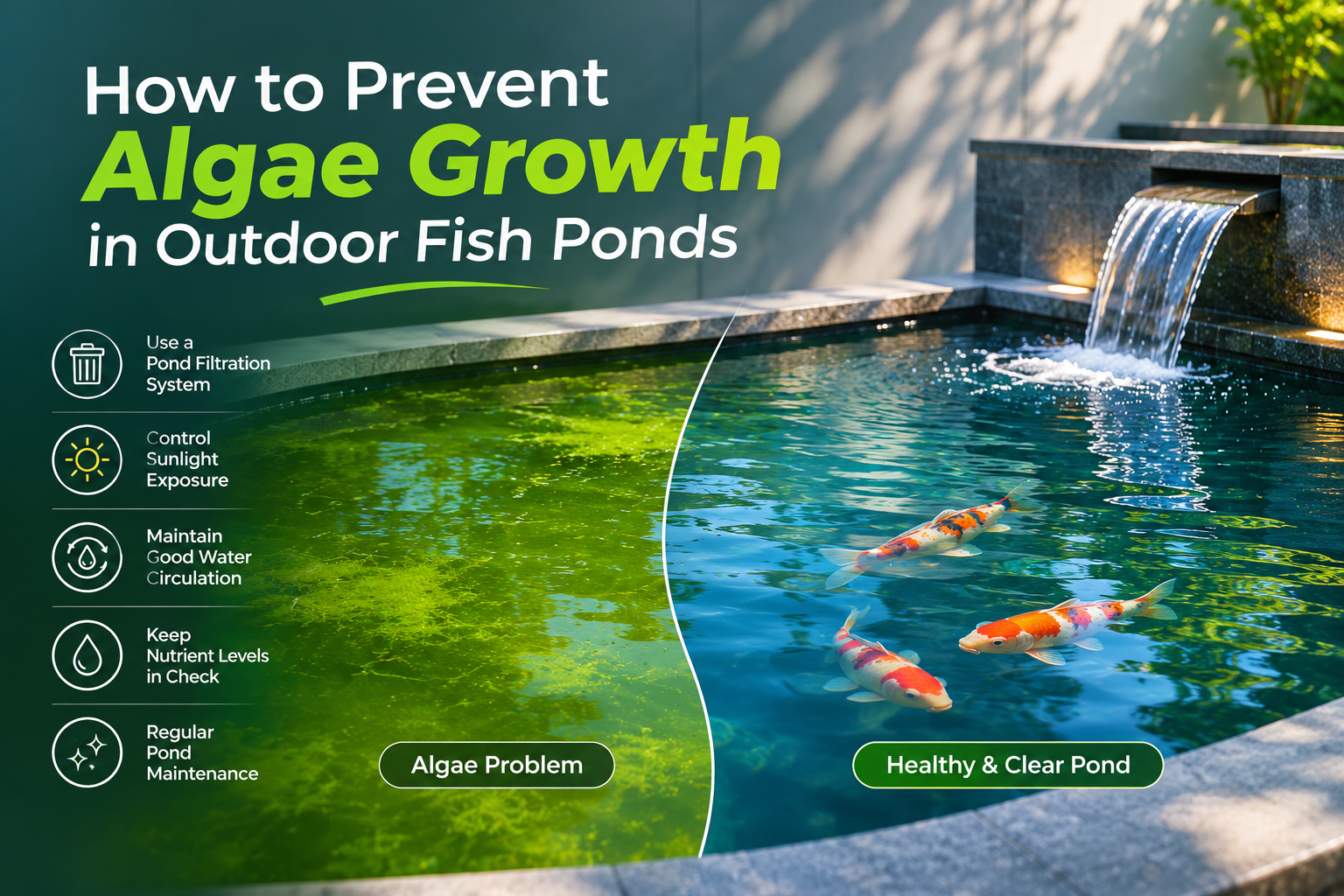

Algae growth is one of the most common challenges faced by outdoor fish pond owners. Green water, slippery pond surfaces, and excessive string algae can affect the appearance of a pond and create maintenance problems. In ponds containing koi and other ornamental fish, uncontrolled algae growth can also contribute to fluctuations in water quality and oxygen levels.
Algae naturally develop in aquatic environments, especially when sunlight and excess nutrients are available. However, excessive algae growth can be controlled with proper filtration, water circulation, UV clarification, and regular maintenance.
In this guide, we will explain the common causes of pond algae, effective prevention methods, and the best equipment to maintain clear and healthy outdoor fish ponds.
1. Why Does Algae Grow in Outdoor Fish Ponds?
Understanding the causes of algae growth is the first step towards effective pond algae control.
Several environmental factors encourage algae to multiply.
Excessive Sunlight
Outdoor ponds exposed to direct sunlight for long hours often experience increased algae growth. Sunlight provides the energy algae need for photosynthesis.
Excess Fish Waste
Fish waste produces ammonia, which is converted into other nitrogen compounds through the biological filtration process. These nutrients can contribute to algae growth when they accumulate.
Uneaten Fish Food
Overfeeding is another common cause of excessive algae growth. Uneaten food decomposes in the pond and releases nutrients that support algae development.
Poor Filtration
An inadequate filtration system may allow organic waste and excess nutrients to accumulate. Without proper mechanical and biological filtration, maintaining good water quality becomes difficult.
Low Water Circulation
Areas with poor water movement can collect debris and organic waste, creating conditions that encourage algae development.
2. Install a Proper Pond Filtration System
A suitable pond filtration system is one of the most important components of long-term algae prevention.
Pond filters help remove suspended particles, fish waste, and organic materials from the water.
There are two important filtration stages.
Mechanical Filtration
Mechanical filtration removes physical waste such as:
- Fish waste.
- Uneaten food.
- Leaves and debris.
- Suspended particles.
Mechanical filtration helps prevent organic waste from accumulating and breaking down inside the pond.
Biological Filtration
Biological filtration provides a surface for beneficial bacteria to grow. These bacteria convert toxic ammonia into nitrite and then into less harmful nitrate.
This process is known as the nitrogen cycle.
A properly sized biological filter helps maintain stable water quality and reduces excess nutrient accumulation.
3. Use a UV Clarifier to Control Green Water
Green water is commonly caused by microscopic suspended algae that multiply rapidly in outdoor ponds.
A UV clarifier is an effective solution for controlling this type of algae.
The pond pump circulates water through the UV clarifier, where ultraviolet light damages suspended algae cells. These algae can then clump together and be removed by the mechanical filtration system.
Benefits of using a UV clarifier include:
- Helps clear green pond water.
- Controls suspended microscopic algae.
- Improves overall water appearance.
- Supports easier pond maintenance.
Important: UV clarifiers mainly target suspended algae responsible for green water. They do not directly remove string algae attached to pond surfaces.
Choose the correct UV clarifier according to pond volume, pump flow rate, algae severity, and manufacturer recommendations.
4. Avoid Overfeeding Your Fish
Overfeeding is a major contributor to excess nutrients in outdoor fish ponds.
When fish receive more food than they can consume, the remaining food decomposes and increases the organic load.
Follow these feeding practices:
- Feed fish only the quantity they can consume within a few minutes.
- Avoid leaving uneaten food in the pond.
- Choose good-quality fish food.
- Adjust feeding quantities according to fish activity and water temperature.
- Remove leftover food whenever possible.
Proper feeding habits help reduce waste and support better pond water quality.
5. Add Aquatic Plants to Your Pond
Aquatic plants can help reduce nutrient availability by absorbing nitrogen and phosphorus from the water.
Suitable plants can also provide shade, reducing the amount of sunlight reaching the pond water.
Some benefits include:
- Competing with algae for available nutrients.
- Providing natural shade.
- Improving the appearance of the pond.
- Supporting a balanced aquatic environment.
However, plants should be selected carefully, especially in koi ponds where fish may disturb or eat certain aquatic plants.
Avoid allowing dead leaves and decaying plant material to accumulate in the pond.
6. Improve Pond Water Circulation and Aeration
Good water circulation helps distribute oxygen throughout the pond and reduces stagnant areas.
Aeration is especially important in ponds with high fish populations.
You can improve circulation by installing:
- Pond circulation pumps.
- Air pumps and air stones.
- Waterfall systems.
- Fountain systems.
- Suitable filtration outlets.
Waterfalls and fountains also increase contact between water and air, supporting oxygen exchange.
Maintaining adequate dissolved oxygen is particularly important during warm weather, when oxygen availability may decrease.
7. Remove String Algae Regularly
Unlike green water algae, string algae attach to pond walls, rocks, waterfall surfaces, and other submerged structures.
They can form long, green strands that affect the appearance of the pond.
Effective maintenance methods include:
- Remove visible string algae manually.
- Clean accumulated organic debris.
- Remove dead leaves and decaying plant material.
- Maintain suitable water circulation.
- Check filtration performance regularly.
Avoid removing too much algae at once if it is part of an established pond ecosystem. Sudden decomposition of large quantities of algae can negatively affect water quality.
8. Provide Shade to Reduce Excessive Sunlight
Direct sunlight can encourage rapid algae growth, particularly in shallow outdoor ponds.
Providing partial shade is a useful prevention method.
Consider these options:
- Install a pond shade net.
- Add suitable aquatic plants.
- Use pergolas or other outdoor shade structures.
- Position decorative structures to reduce excessive sunlight exposure.
Avoid completely covering the pond, as fish and aquatic plants still need appropriate environmental conditions.
9. Maintain Regular Pond Water Quality Checks
Regular water testing helps identify conditions that may encourage excessive algae growth.
Important water parameters include:
| Water Parameter | What to Monitor |
|---|---|
| Ammonia | Ideally 0 ppm |
| Nitrite | Ideally 0 ppm |
| Nitrate | Keep at a suitable low level |
| pH | Maintain stability |
| Dissolved Oxygen | Maintain adequate levels |
| Phosphate | Avoid excessive accumulation |
Testing regularly helps identify filtration problems and nutrient imbalances before they become serious.
Partial water changes can also help reduce accumulated nutrients. Always use properly treated replacement water and avoid sudden changes in temperature or water chemistry.
10. Common Mistakes to Avoid When Controlling Pond Algae
Many pond owners make mistakes that can increase algae problems or negatively affect fish health.
Avoid these common practices:
- Overfeeding fish.
- Allowing fish waste to accumulate.
- Running an undersized filtration system.
- Ignoring UV clarifier maintenance.
- Allowing poor water circulation.
- Using excessive chemical algae treatments.
- Ignoring regular water testing.
Be particularly careful with chemical algaecides. Rapid algae die-off can reduce dissolved oxygen and release nutrients back into the pond. Some treatments can also harm fish if used incorrectly.
Always follow the product manufacturer’s instructions and ensure adequate aeration.
11. Best Equipment for Effective Pond Algae Control
Choosing suitable pond equipment makes maintaining clear water easier.
| Equipment | Main Purpose |
|---|---|
| Pond Pump | Maintains water circulation |
| UV Clarifier | Controls suspended algae causing green water |
| Mechanical Filter | Removes physical waste |
| Biological Filter | Supports beneficial bacteria |
| Air Pump | Improves oxygenation |
| Pond Skimmer | Collects floating leaves and debris |
For larger koi ponds, a properly designed filtration system combining mechanical and biological filtration with suitable UV clarification can provide effective long-term water management.
12. How Greenfin Can Help You Maintain a Healthy Pond
At Greenfin The Pond Studio, we provide pond equipment and solutions to help pond owners maintain clean, healthy, and attractive outdoor fish ponds.
Explore our range of pond products and solutions:
- Pond pumps and circulation systems.
- UV clarifiers.
- Mechanical and biological pond filters.
- Pond filter media.
- Air pumps and aeration equipment.
- Pond construction and filtration services.
Whether you are setting up a new koi pond or upgrading an existing filtration system, choosing the right equipment is essential.
Visit Greenfinindia.com to explore pond equipment and filtration products.
Conclusion
Preventing algae growth in outdoor fish ponds requires a combination of proper filtration, nutrient management, water circulation, aeration, and regular maintenance.
Using a suitable pond pump, biological filtration system, and UV clarifier can help control common algae problems and maintain better water quality.
Remember that algae are a natural part of aquatic ecosystems. The goal is not to eliminate all algae but to prevent excessive growth and maintain a healthy environment for your fish.
With the right equipment and consistent maintenance, you can enjoy a cleaner, healthier, and more beautiful outdoor fish pond.