

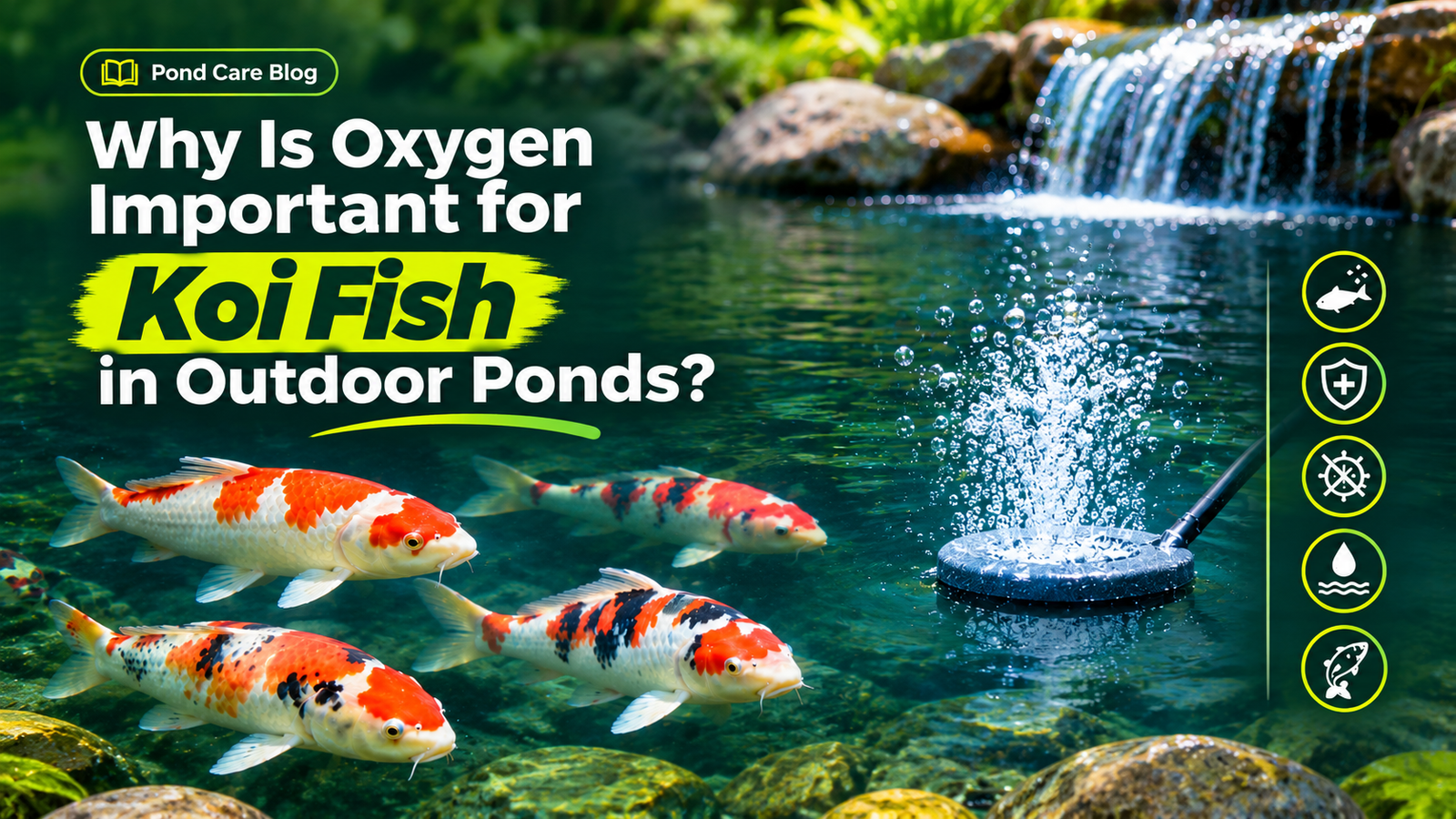
Koi fish are beautiful, active fish that require clean, oxygen-rich water to stay healthy and grow properly. Whether you have a small backyard pond or a large outdoor koi pond, maintaining the right dissolved oxygen level is one of the most important parts of pond management.
Oxygen plays a vital role in koi fish respiration, digestion, metabolism, immune function and overall health. Without sufficient oxygen, koi fish may become stressed, lose their appetite, swim near the water surface and eventually suffer serious health problems.
Outdoor ponds face several challenges that can reduce oxygen levels, including high temperatures, algae growth, overcrowding, organic waste and poor water circulation. Understanding the importance of oxygen and choosing the right pond aeration system can help maintain a healthy environment for koi fish.
In this guide, we will explain why oxygen is important for koi fish, how to identify low oxygen levels and how to improve oxygen circulation in outdoor ponds.
1. Why Do Koi Fish Need Oxygen?
Like other fish, koi breathe by passing water over their gills. Their gills absorb dissolved oxygen from the water and release carbon dioxide.
Dissolved oxygen is essential for several biological functions:
- Respiration: Provides the oxygen required for normal breathing.
- Energy production: Helps koi convert food into energy.
- Growth: Supports normal metabolism and healthy development.
- Immune function: Helps maintain overall health and resistance to stress.
- Activity: Supports swimming, feeding and natural behaviour.
When dissolved oxygen levels become too low, koi cannot function normally. Prolonged oxygen deficiency can cause severe stress, illness and even fish mortality.
2. What Is the Ideal Oxygen Level for a Koi Pond?
Dissolved oxygen (DO) is measured in milligrams per litre (mg/L), which is equivalent to parts per million (ppm) in freshwater.
For koi ponds, maintaining a dissolved oxygen level of around 6–8 mg/L is generally a good target.
| Dissolved oxygen level | Pond condition |
|---|---|
| 8–10 mg/L | Excellent oxygen availability |
| 6–8 mg/L | Good for koi fish |
| 4–6 mg/L | Low; monitor carefully |
| 2–4 mg/L | Dangerous oxygen deficiency |
| Below 2 mg/L | Critical condition |
These are practical guidelines rather than fixed biological thresholds. Oxygen requirements depend on water temperature, fish size, stocking density and overall pond conditions.
For healthy koi, aim to maintain oxygen levels above 6 mg/L, particularly during warm weather and periods of heavy feeding.
3. Signs of Low Oxygen in a Koi Pond
Recognising oxygen deficiency early can prevent serious problems.
Here are some common signs to watch for:
Koi Fish Gasping at the Water Surface
One of the most noticeable signs of low dissolved oxygen is koi gathering near the water surface and appearing to gasp for air.
Reduced Swimming Activity
Koi may become less active and spend more time resting near the bottom or around areas with better water movement.
Loss of Appetite
Low oxygen can affect metabolism and feeding behaviour. Fish may show less interest in food.
Fish Gathering Near Water Inlets
Koi may gather near waterfalls, fountains or filter outlets because these areas often contain more oxygen.
Sudden Fish Death
Severe oxygen deficiency can cause rapid fish deaths, particularly during hot weather or overnight oxygen depletion.
Important: Gasping can also be caused by gill disease, ammonia toxicity, nitrite poisoning or other water-quality problems. Check dissolved oxygen and test the water rather than assuming oxygen deficiency is the only cause.
4. What Causes Low Oxygen Levels in Outdoor Koi Ponds?
Several environmental and pond-management factors can reduce dissolved oxygen.
High Water Temperature
Warm water holds less dissolved oxygen than cold water. During summer, oxygen availability decreases while koi metabolism and oxygen demand generally increase.
Overcrowding
Too many koi in a pond increase oxygen consumption and waste production. A pond with excessive stocking needs stronger filtration and aeration.
Excessive Algae Growth
Algae produce oxygen during daylight through photosynthesis. However, they consume oxygen during darkness. Heavy algae growth can cause significant overnight oxygen depletion.
Poor Water Circulation
Stagnant water areas often have less effective oxygen exchange. Poor circulation can also allow organic waste to accumulate.
Organic Waste Accumulation
Uneaten fish food, fish waste, dead leaves and sludge are broken down by bacteria. This decomposition consumes dissolved oxygen.
Inadequate Filtration
Biological filtration relies on beneficial bacteria to break down harmful waste compounds. These bacteria also consume oxygen, making adequate aeration especially important in heavily stocked ponds.
5. Best Ways to Increase Oxygen in an Outdoor Koi Pond
Maintaining sufficient oxygen requires a combination of aeration, water circulation and good pond management.
1. Install a Pond Air Pump
A pond air pump is one of the most effective ways to improve oxygen circulation.
It pushes air through airline tubing and air stones or diffusers placed inside the pond. The rising bubbles help circulate water and increase contact between water and air.
Benefits include:
- Improves water movement.
- Supports dissolved oxygen availability.
- Helps maintain healthy conditions for koi.
- Supports oxygen requirements of biological filter bacteria.
Choose an air pump according to pond volume, stocking density, pond depth and diffuser requirements.
2. Use a Pond Waterfall
Waterfalls help increase oxygen exchange by allowing water to flow through the air before returning to the pond.
They also improve circulation and create a natural appearance.
A properly designed waterfall is particularly useful for outdoor koi ponds.
3. Install a Pond Fountain
Fountains spray water into the air and allow it to return to the pond.
This movement increases the contact between water and air, supporting oxygen exchange.
Fountains are useful for decorative ponds, although their effectiveness depends on the fountain design, water flow and pond size.
4. Improve Water Circulation with a Pond Pump
A suitable pond pump helps prevent stagnant areas and moves water through filtration systems, waterfalls and other water features.
For better circulation:
- Select a pump with suitable flow capacity.
- Position water outlets to improve overall pond movement.
- Avoid stagnant corners.
- Ensure the filter receives adequate water flow.
5. Maintain Proper Filtration
Biological filtration helps process ammonia and nitrite through beneficial bacteria.
Keep filter media clean without unnecessarily destroying beneficial bacterial colonies. Ensure sufficient water flow and oxygen supply through the filtration system.
6. Why Is Oxygen More Important During Summer?
Summer is one of the most challenging seasons for outdoor koi ponds.
As water temperature increases, its ability to hold dissolved oxygen decreases. At the same time, koi and beneficial bacteria may consume oxygen more rapidly.
During hot weather:
- Increase attention to pond aeration.
- Maintain continuous water circulation.
- Avoid excessive feeding.
- Remove accumulated organic waste.
- Monitor dissolved oxygen regularly.
- Check oxygen levels early in the morning.
In warmer parts of India, including Kerala, outdoor ponds may experience significant temperature changes and heavy rainfall. Continuous aeration and regular water-quality monitoring are useful throughout the year.
7. Is a Pond Air Pump Better Than a Waterfall for Oxygenation?
Both systems help improve oxygen availability, but they work differently.
| Feature | Pond Air Pump | Pond Waterfall |
|---|---|---|
| Main function | Supplies air through diffusers | Moves water through air |
| Oxygen exchange | Through rising bubbles and circulation | Through splashing and surface movement |
| Water circulation | Localised, depending on diffuser placement | Along the waterfall flow path |
| Installation | Airline tubing and diffuser | Water pump and waterfall plumbing |
| Best use | Continuous pond aeration | Aeration and decorative water movement |
For many koi ponds, using both an air pump and a waterfall provides better overall circulation and aeration than relying on a single system.
8. How to Choose the Right Air Pump for Your Koi Pond
Choosing the correct air pump is important for maintaining adequate oxygen levels.
Consider these factors before purchasing:
1. Pond Water Volume
Calculate the total water volume in litres before selecting an air pump.
2. Pond Depth
Deeper ponds require sufficient air pressure to push air through diffusers positioned near the bottom.
3. Number of Koi Fish
Ponds with higher fish stocking densities generally require greater aeration capacity.
4. Number of Air Stones
Consider how many air stones or diffusers you want to operate simultaneously.
5. Continuous Operation
Choose a reliable air pump suitable for continuous operation. A backup air pump or power backup system can be useful during electricity interruptions.
9. How Often Should You Run a Pond Air Pump?
For koi ponds, continuous aeration is generally recommended, including during nighttime.
Plants and algae consume oxygen through respiration at night, and dissolved oxygen levels often reach their lowest point shortly before sunrise.
Running an air pump continuously helps maintain water movement and oxygen exchange.
During hot weather, heavy stocking or periods of low oxygen, adequate aeration becomes especially important.
10. Regular Pond Maintenance Tips for Healthy Oxygen Levels
Good pond maintenance helps prevent oxygen-related problems.
Follow these simple practices:
- Check dissolved oxygen regularly.
- Clean mechanical filter sections to prevent clogging.
- Remove uneaten fish food.
- Remove fallen leaves and organic debris.
- Avoid overstocking koi.
- Maintain suitable feeding quantities.
- Keep pond pumps and air pumps operating properly.
- Check water temperature during hot weather.
- Monitor ammonia, nitrite and pH levels.
- Keep a backup aeration option available.
Regular maintenance helps maintain a stable pond environment and supports healthy koi growth.
Frequently Asked Questions (FAQs)
1. Do koi fish need oxygen at night?
Yes. Koi require oxygen continuously, including at night. Plants, algae, fish and beneficial bacteria all consume oxygen during darkness. Continuous aeration is recommended.
2. What is the ideal dissolved oxygen level for koi fish?
A dissolved oxygen level of approximately 6–8 mg/L is a good target for koi ponds. Higher oxygen availability can be beneficial, especially during warm weather.
3. Can koi fish survive without an air pump?
Koi can survive without an air pump if the pond has sufficient natural oxygen exchange and circulation. However, an air pump provides additional aeration and is particularly useful in heavily stocked ponds.
4. Does a waterfall provide enough oxygen for koi fish?
A waterfall helps increase oxygen exchange, but it may not provide sufficient aeration in every pond. Large or heavily stocked koi ponds may need additional air pumps and diffusers.
5. Why do koi fish gasp for air in the morning?
Dissolved oxygen often decreases overnight because photosynthesis stops while respiration continues. Low morning oxygen levels can cause koi to gather near the surface and gasp.
6. Does an air stone increase pond oxygen?
Yes. Air stones release bubbles that help circulate water and improve contact between water and air. This supports oxygen transfer into the pond.
7. Can too many koi fish reduce oxygen levels?
Yes. Higher fish stocking increases oxygen consumption and waste production. Always consider pond volume, fish size, filtration capacity and aeration before adding more koi.
8. Is continuous aeration necessary for a koi pond?
Continuous aeration is strongly recommended, particularly in outdoor ponds with high stocking densities, biological filtration systems or warm water conditions.
Conclusion
Oxygen is essential for maintaining healthy koi fish in outdoor ponds. It supports respiration, metabolism, growth and overall fish health. Low dissolved oxygen can quickly become dangerous, especially during summer, overnight and in heavily stocked ponds.
Installing a suitable pond air pump, maintaining proper water circulation, using waterfalls and keeping the filtration system clean are effective ways to support oxygen availability.
For a healthy koi pond, do not depend only on clear water. Monitor dissolved oxygen and maintain a properly designed aeration and filtration system.
At Greenfin The Pond Studio, explore pond pumps, air pumps, filtration systems and other pond equipment to help maintain a healthy environment for your koi fish.
Visit: https://greenfinindia.com/