

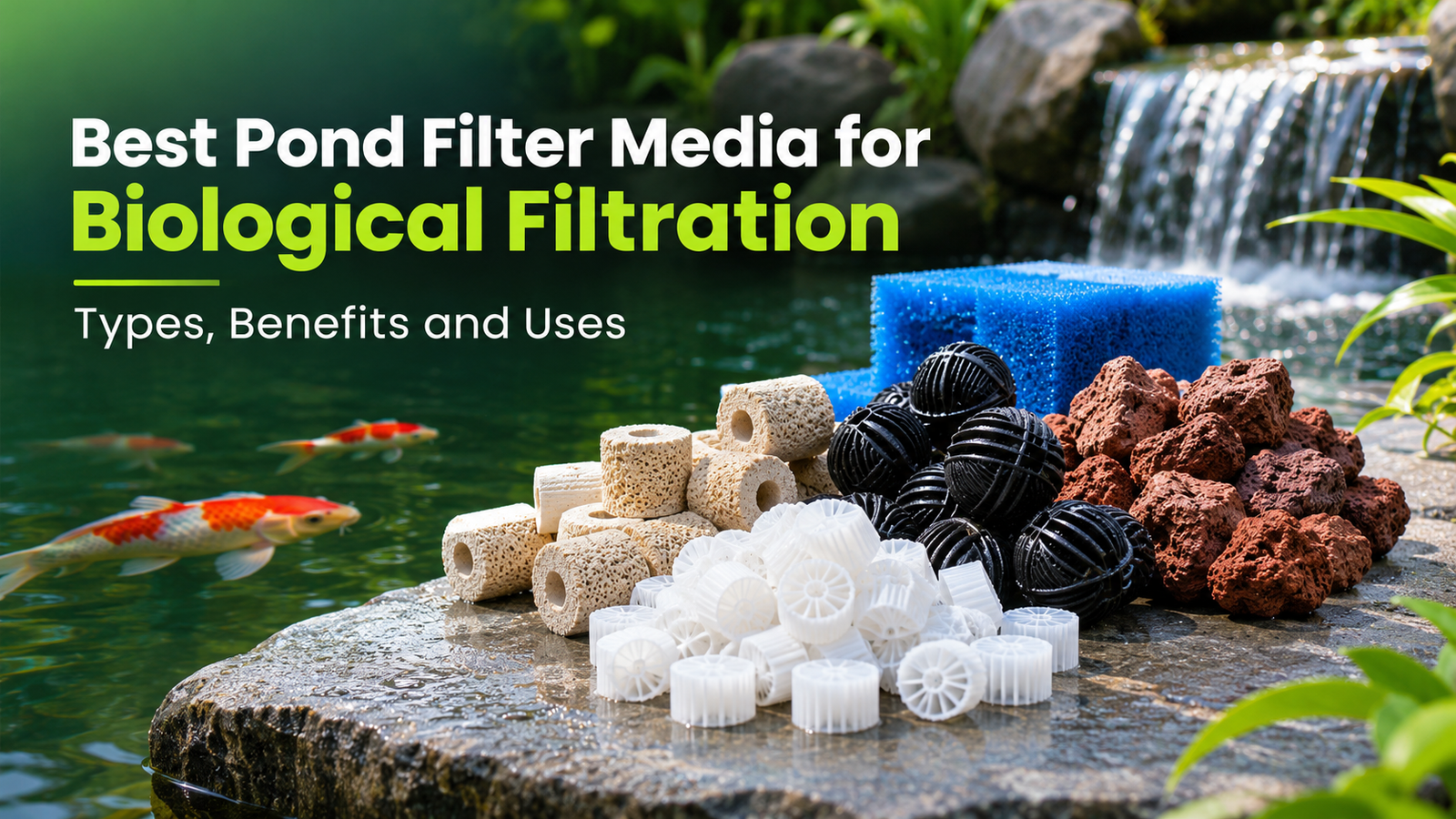
Maintaining clean and healthy pond water is essential for the growth and well-being of koi fish and other pond fish. While mechanical filtration removes visible dirt and debris, biological filtration plays a major role in maintaining water quality by supporting beneficial bacteria that break down harmful fish waste.
Choosing the right biological filter media is one of the most important steps in designing an effective pond filtration system. Different types of filter media offer different surface areas, water flow characteristics and maintenance requirements.
Whether you have a small garden pond or a large koi pond, understanding the different types of biological filter media can help you build an efficient filtration system.
In this guide, we will explore the best pond filter media for biological filtration, their benefits, differences and how to choose the right media for your pond.
1. What Is Biological Filter Media?
Biological filter media is a material used inside pond filtration systems to provide a surface where beneficial bacteria can grow.
These bacteria help convert toxic ammonia produced by fish waste, uneaten food and decaying organic matter into nitrite and then into nitrate through a process called nitrification.
The process involves two main stages:
- Ammonia to Nitrite: Ammonia-oxidising microorganisms convert ammonia into nitrite.
- Nitrite to Nitrate: Nitrite-oxidising microorganisms convert nitrite into nitrate.
Ammonia and nitrite can be harmful to fish, even at relatively low concentrations. Biological filtration helps maintain safer water conditions when properly established and maintained.
Biological filter media does not directly remove all dirt or debris. Instead, it supports the microorganisms responsible for processing nitrogenous fish waste.
2. Why Is Biological Filter Media Important for Koi Ponds?
Koi fish produce a considerable amount of waste, especially in heavily stocked ponds where fish receive frequent feeding.
Without sufficient biological filtration, ammonia and nitrite can accumulate and negatively affect fish health.
Here are the major benefits of using suitable biological filter media.
Supports Beneficial Bacteria Growth
Biological media provides surfaces where beneficial bacteria can attach, colonise and multiply.
Helps Control Ammonia and Nitrite
A properly established biological filter helps convert toxic ammonia and nitrite into less harmful nitrate.
Improves Pond Water Quality
An effective biological filtration system helps maintain stable water conditions and supports a healthier pond environment.
Supports Higher Fish Stocking Levels
A properly sized biological filtration system can help manage the waste produced by koi fish. However, filtration capacity must match the actual fish load and feeding rate.
Reduces Maintenance Pressure
With proper mechanical pre-filtration, biological media can operate efficiently without frequent cleaning or replacement.
3. Best Types of Biological Filter Media for Ponds
Different biological filter media are available for koi ponds and outdoor pond filtration systems. The best choice depends on your filter design, water flow, maintenance requirements and available space.
1. Japanese Filter Mat
Japanese filter mat is one of the commonly used materials in multi-chamber pond filtration systems.
It provides a structured surface for beneficial bacteria while allowing water to flow through the material.
Benefits:
- Provides surfaces for bacterial colonisation.
- Suitable for multi-chamber filtration systems.
- Easy to install and arrange in filter chambers.
- Can provide mechanical filtration alongside biological filtration.
- Reusable when maintained correctly.
Best use: Gravity-fed and multi-chamber koi pond filtration systems.
2. Bio Balls
Bio balls are plastic filter media designed with a structured shape that allows water to flow around their surfaces.
They provide surfaces for beneficial bacteria to colonise.
Benefits:
- Lightweight and reusable.
- Allow good water circulation.
- Easy to handle and clean.
- Suitable for different pond filter designs.
- Can be used in trickle filters and suitable filter chambers.
Best use: Wet/dry filters, trickle filters and selected biological filter chambers.
3. K1 Moving Bed Media
K1-style moving bed media is specially designed for moving bed biological filtration systems.
These plastic media pieces move continuously inside an aerated filter chamber, helping maintain oxygen availability and reducing the accumulation of excessive debris on the media.
Benefits:
- Designed for moving bed filtration.
- Provides protected surfaces for beneficial bacteria.
- Continuous movement helps reduce clogging.
- Suitable for high-performance koi pond filtration.
- Can support efficient biological filtration when correctly designed.
Best use: Moving bed filters and advanced koi pond filtration systems.
4. Ceramic Rings
Ceramic rings are porous or structured ceramic materials used in biological filtration.
They provide surfaces for beneficial bacteria and are commonly used in smaller filtration systems.
Benefits:
- Provide surfaces for bacterial colonisation.
- Easy to place inside filter bags or baskets.
- Suitable for compact filtration setups.
- Can be used in certain pond and aquarium filters.
Best use: Small pond filters and compact biological filtration chambers.
5. Sintered Glass Media
Sintered glass media is manufactured from processed glass materials with a porous internal structure.
Depending on the product, it can provide a high surface area for bacterial colonisation.
Benefits:
- Porous structure.
- High potential surface area.
- Compact media design.
- Useful in specialised biological filtration applications.
Best use: Compact filters and selected high-performance filtration systems.
6. Lava Rock
Lava rock is a naturally porous volcanic material that can be used as biological filter media.
Its irregular surface provides areas for beneficial bacteria to grow.
Benefits:
- Naturally porous.
- Reusable when properly maintained.
- Can be used in large filter chambers.
- Relatively economical in some markets.
Best use: Large biological filter chambers with suitable water flow and mechanical pre-filtration.
7. Hel-X Media
Hel-X is a type of structured plastic biological filter media available in different shapes and sizes.
Some variants are designed for moving bed filtration, while others can be used in static applications.
Benefits:
- Designed for bacterial colonisation.
- Available in different configurations.
- Suitable for specialised biological filters.
- Can be used in moving bed systems when the media and chamber are compatible.
Best use: Advanced pond filtration systems.
4. Comparison of Different Pond Filter Media
Choosing the correct biological media depends on the filtration system you are using.
| Filter Media | Main Advantage | Suitable Application |
|---|---|---|
| Japanese Mat | Structured bacterial surface | Multi-chamber filters |
| Bio Balls | Good water circulation | Trickle filters |
| K1 Media | Moving bed filtration | Aerated biofilters |
| Ceramic Rings | Compact media format | Small filters |
| Sintered Glass | Porous structure | Compact biofilters |
| Lava Rock | Natural porous material | Large filter chambers |
| Hel-X Media | Structured plastic media | Advanced biofilters |
There is no single best biological filter media for every pond. The right choice depends on filter design, water flow, oxygen availability, fish load and maintenance requirements.
5. Moving Bed Filter Media vs Static Filter Media
Biological filter media can be used in two major arrangements: moving bed filtration and static filtration.
Moving Bed Filter Media
Moving bed media moves continuously inside a filter chamber with the help of aeration.
Advantages:
- Continuous movement helps prevent excessive debris accumulation.
- Good oxygen availability.
- Suitable for demanding koi pond applications.
- Can provide effective biological filtration.
Static Filter Media
Static media remains stationary inside the filter chamber while water flows through it.
Advantages:
- Simple installation.
- Suitable for multi-chamber filters.
- Different types of media can be arranged in separate chambers.
- Easy to incorporate into existing filtration systems.
Which Is Better?
Moving bed media is an excellent option for dedicated aerated biological chambers, while static media can work very effectively in traditional multi-chamber filters.
Many advanced koi pond filtration systems combine different filtration methods to achieve better overall performance.
6. How Much Biological Filter Media Does Your Pond Need?
The quantity of biological filter media depends on several factors:
- Total pond water volume.
- Number and size of fish.
- Daily feeding quantity.
- Filter chamber volume.
- Type of filter media.
- Water flow and oxygen supply.
A large koi pond with heavy feeding requirements needs more biological filtration capacity than a lightly stocked ornamental pond.
There is no universal media quantity based only on pond litres. Follow the filter and media manufacturer’s recommendations and consider the actual fish waste load.
Example: Biological Filter Media Selection
For a pond filtration system, consider the following components:
- Mechanical filtration chamber to remove solid waste.
- Biological filtration chamber containing suitable media.
- Moving bed chamber with aeration, if required.
- Proper water circulation through the entire system.
Remember that biological media should not be packed so tightly that water cannot flow through it.
7. How to Install Biological Filter Media in a Pond Filter
Correct installation is important for effective biological filtration.
Follow these steps:
Step 1: Install Mechanical Filtration First
Remove larger waste particles using brushes, filter mats or other suitable mechanical filtration materials before water reaches sensitive biological media.
Step 2: Select the Right Biological Media
Choose Japanese mat, K1 media, bio balls or another suitable material according to the filter chamber design.
Step 3: Arrange the Media Properly
Place static media in suitable baskets or chambers. For moving bed media, use a properly designed chamber with aeration and media retention screens.
Step 4: Ensure Proper Water Flow
Make sure water flows evenly through the biological filtration chamber without excessive bypass.
Step 5: Provide Sufficient Oxygen
Beneficial nitrifying bacteria need oxygen. Ensure the filter has adequate aeration and water movement.
Step 6: Allow Bacteria to Develop
New biological filter media requires time to establish beneficial bacteria. During the cycling period, monitor ammonia and nitrite regularly.
Avoid adding too many fish to a newly established filter.
8. How to Maintain Biological Filter Media
Regular maintenance helps preserve the performance of your biological filtration system.
Follow these important practices:
- Clean mechanical filtration media regularly to prevent clogging.
- Avoid unnecessarily cleaning biological media.
- If cleaning is required, use removed pond water rather than untreated chlorinated tap water.
- Do not replace all biological media at the same time.
- Maintain proper water circulation.
- Ensure sufficient oxygen supply.
- Monitor ammonia and nitrite levels.
- Remove accumulated sludge from filter chambers.
Biological media should not be sterilised or cleaned aggressively because this can damage beneficial bacterial colonies.
9. Common Mistakes to Avoid When Using Biological Filter Media
Avoid these common filtration mistakes:
- Selecting media without considering the fish load.
- Using biological media without mechanical pre-filtration.
- Blocking water circulation by overpacking the filter chamber.
- Cleaning all biological media at once.
- Using untreated chlorinated water to clean established media.
- Installing moving bed media without sufficient aeration.
- Replacing all media in an established filter unnecessarily.
- Ignoring ammonia and nitrite testing.
A properly designed pond filtration system should combine mechanical filtration, biological filtration and adequate aeration.
10. How to Choose the Best Biological Filter Media for Your Pond
Before purchasing biological filter media, consider the following factors:
For Small Garden Ponds: Ceramic rings, bio balls and suitable static media can be practical choices.
For Medium-Sized Koi Ponds: Japanese filter mats and bio balls can be incorporated into multi-chamber filtration systems.
For Large Koi Ponds: Consider dedicated biological filtration chambers with suitable moving bed media or other high-capacity media.
For Advanced Filtration Systems: K1-style media and Hel-X media can be useful options when matched with a properly designed moving bed filter.
Always consider the actual filtration requirements instead of selecting media based only on its advertised surface area.
11. Frequently Asked Questions (FAQs)
1. Which is the best biological filter media for koi ponds?
Japanese filter mats, K1 moving bed media, bio balls and Hel-X media are commonly used options. The best choice depends on your filtration system and fish load.
2. Is K1 media better than Japanese mat?
K1 media is designed for moving bed filtration, whereas Japanese mat is commonly used in static multi-chamber systems. Both can provide effective biological filtration when installed correctly.
3. Can I use bio balls in a koi pond filter?
Yes. Bio balls can be used in suitable pond filtration systems, particularly trickle filters and biological filter chambers.
4. How often should biological filter media be cleaned?
Biological media does not require frequent cleaning. Clean it only when necessary to restore water flow, using removed pond water to protect beneficial bacteria.
5. Does biological filter media remove ammonia?
Biological filter media supports beneficial bacteria that convert ammonia into nitrite and subsequently nitrate. It does not remove ammonia instantly.
6. Can I mix different types of biological filter media?
Yes. Different media types can be used in separate chambers of a multi-stage filtration system, provided the water flow and chamber design are suitable.
7. How long does biological filter media last?
Many plastic and ceramic biological media products can last for several years with proper maintenance. Replace media if it becomes damaged or unsuitable for use.
8. Does more biological filter media always mean better filtration?
Not necessarily. Effective filtration also depends on oxygen, water flow, bacterial colonisation, fish load and feeding quantity.
Conclusion
Choosing the best pond filter media for biological filtration is essential for maintaining healthy water conditions and supporting koi fish growth.
Japanese filter mats, bio balls, K1 moving bed media, ceramic rings, sintered glass and Hel-X media all offer different benefits. The ideal choice depends on your pond size, fish population, feeding rate and filtration design.
For the best results, combine proper mechanical filtration, biological filtration and aeration. Regular water testing and filter maintenance will help maintain a stable pond environment.
At Greenfin The Pond Studio, we offer pond filtration equipment, filter media, pond pumps and aeration solutions to help pond owners build efficient filtration systems.
Explore pond filtration products at Greenfinindia.com and choose the right equipment for your pond.
Build a healthier pond with the right biological filtration system!