

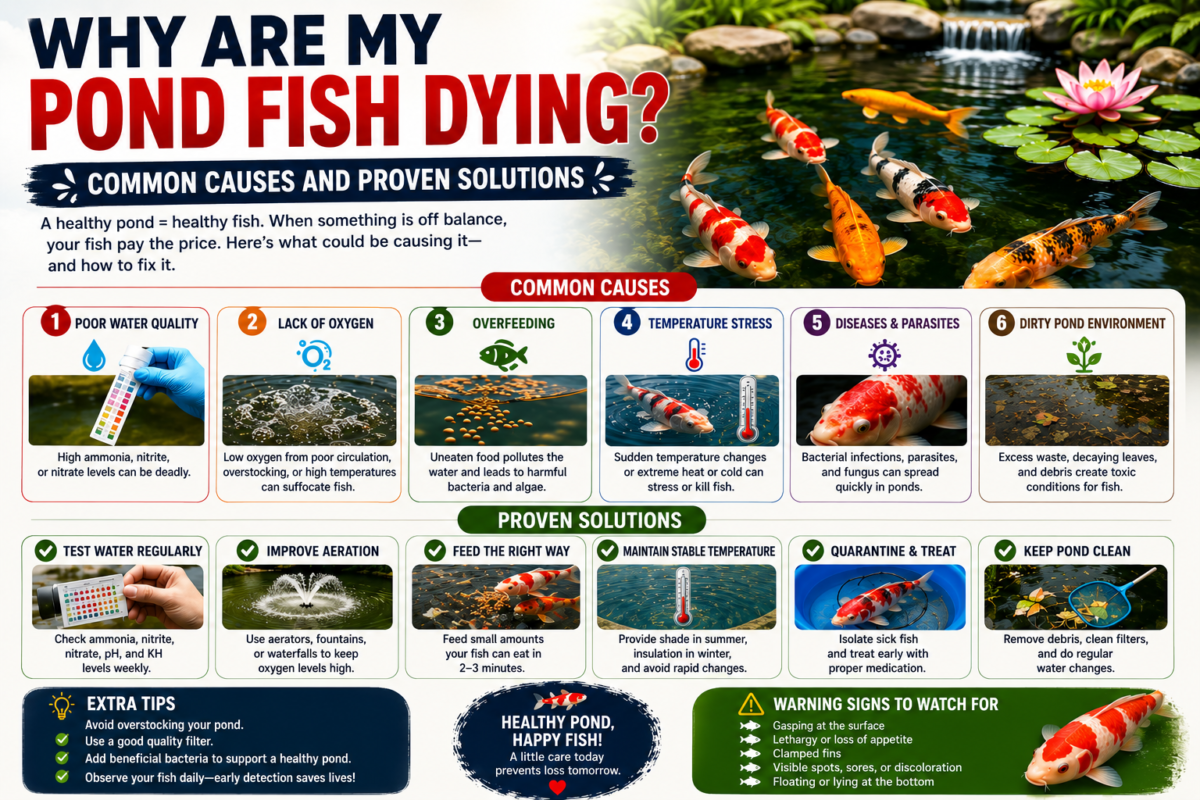
Pond fish are often the centerpiece of a beautiful garden pond, bringing movement, color, and life to your outdoor space. However, discovering sick or dead fish can be distressing for any pond owner. If you’ve been wondering, “Why are my pond fish dying?”, you’re not alone. In fact, why are my pond fish dying is one of the most common questions asked by pond owners experiencing sudden fish losses.
There are many possible answers to the question “Why are my pond fish dying?”, including poor water quality, low oxygen levels, disease outbreaks, overfeeding, overcrowding, and inadequate filtration. When pond fish begin showing signs of stress or dying unexpectedly, it usually indicates that something in the pond ecosystem is out of balance and requires immediate attention.
The good news is that most causes behind why pond fish are dying can be identified and corrected before they lead to further losses. By understanding why are my pond fish dying, pond owners can take the right steps to improve water conditions, protect fish health, and restore a thriving aquatic environment.
In this guide, we’ll explore the most common reasons behind why are my pond fish dying, the warning signs to watch for, and practical solutions to help keep your pond fish healthy, active, and thriving throughout the year.
Understanding the Warning Signs Before Fish Die
Fish often show signs of distress before they die. Recognizing these symptoms early can help prevent further losses.
Fish Gasping at the Surface
When fish repeatedly come to the surface and appear to gasp for air, low oxygen levels are often the cause. This is especially common during hot weather or when ponds have inadequate aeration.
Loss of Appetite
Healthy pond fish are usually eager to feed. A sudden refusal to eat may indicate poor water quality, disease, stress, or temperature-related issues.
Unusual Swimming Behavior
Watch for signs such as:
- Swimming erratically
- Staying near the bottom
- Isolating from other fish
- Rubbing against pond surfaces
These behaviors often indicate health problems.
Physical Symptoms
Visible symptoms may include:
- White spots
- Red streaks
- Damaged fins
- Open wounds
- Excess mucus production
Poor Water Quality: The Leading Cause of Pond Fish Deaths
One of the most common answers to the question “Why are my pond fish dying?” is poor water quality.
Fish constantly produce waste, and uneaten food decomposes in the pond. Without proper filtration and maintenance, harmful substances accumulate.
High Ammonia Levels
Ammonia is highly toxic to fish and is produced from fish waste and decaying organic matter.
Symptoms include:
- Gasping at the surface
- Red or inflamed gills
- Lethargy
- Sudden fish deaths
Nitrite and Nitrate Imbalances
An established biological filtration system converts ammonia into nitrite and then nitrate. When this process is disrupted, toxic levels can develop quickly.
Incorrect pH Levels
Most pond fish thrive in a stable pH range between 6.8 and 8.2.
Rapid fluctuations can stress fish and weaken their immune systems.
How to Test Pond Water
Regular testing should include:
- Ammonia
- Nitrite
- Nitrate
- pH
- Temperature
Testing water weekly can help identify problems before they become deadly.
Low Oxygen Levels in the Pond
Low oxygen is another major reason pond fish die unexpectedly.
Signs of Oxygen Deprivation
Common signs include:
- Fish gathering near waterfalls
- Surface gasping
- Reduced activity
- Sudden deaths during warm weather
Causes of Low Oxygen
Several factors can reduce oxygen levels:
Excessive Fish Stocking
Too many fish increase oxygen demand.
Hot Summer Temperatures
Warm water holds less dissolved oxygen than cooler water.
Algae Blooms
While algae produce oxygen during daylight, they consume oxygen at night, creating dangerous fluctuations.
Poor Water Circulation
Stagnant water areas often have lower oxygen levels.
Solutions
To improve oxygen levels:
- Install a pond aerator
- Add waterfalls or fountains
- Remove excess organic waste
- Avoid overcrowding
Proper aeration is one of the most effective ways to keep pond fish healthy.
Pond Fish Diseases and Parasites
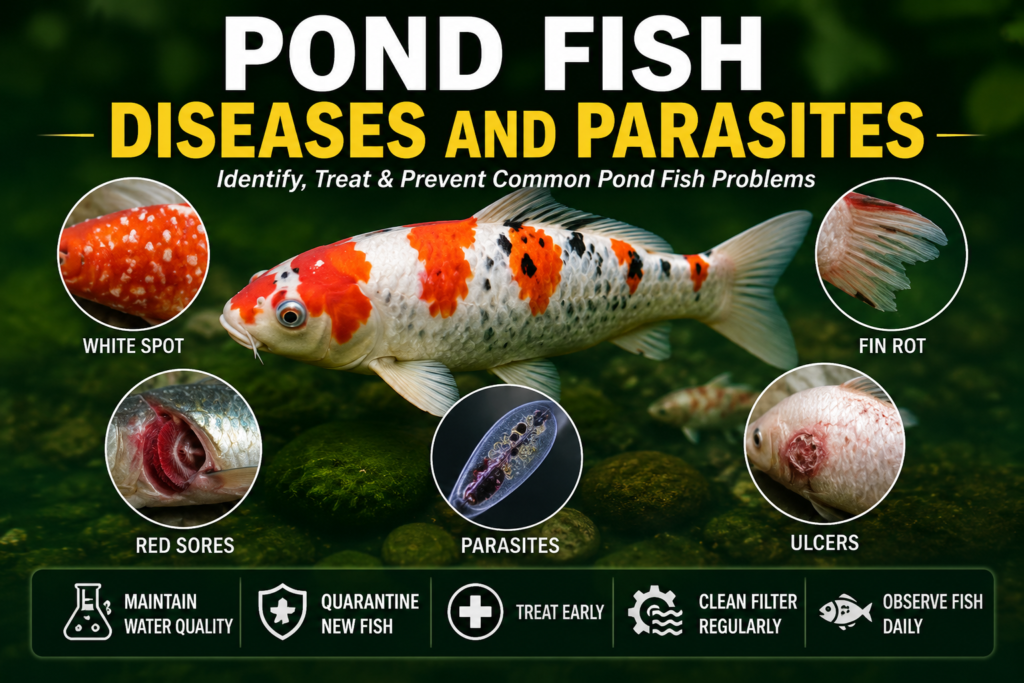
If water quality is good but fish continue to die, disease may be the culprit.
White Spot Disease (Ich)
This common parasitic disease appears as tiny white spots across the fish’s body and fins.
Symptoms include:
- Flashing against surfaces
- Rapid breathing
- Reduced appetite
Bacterial Infections
Bacterial infections often occur when fish are stressed by poor water conditions.
Signs include:
- Red sores
- Fin rot
- Ulcers
- Swelling
Fungal Infections
Fungal growth appears as cotton-like patches on the fish’s body.
External Parasites
Common pond parasites include:
- Fish lice
- Anchor worms
- Gill flukes
Regular observation helps catch these problems early.
Temperature Stress and Seasonal Changes
Many pond owners asking “Why are my pond fish dying?” overlook the impact of temperature fluctuations.
Summer Stress
High temperatures can:
- Reduce oxygen levels
- Increase fish metabolism
- Encourage harmful bacteria growth
Winter Stress
In colder climates, ice-covered ponds may prevent gas exchange.
Without proper ventilation, toxic gases can accumulate beneath the ice.
Maintaining Stable Conditions
Helpful strategies include:
- Providing shade during summer
- Using pond aerators year-round
- Monitoring seasonal temperature changes
Overfeeding and Poor Feeding Practices
Feeding fish incorrectly can cause both direct and indirect health problems.
The Risks of Overfeeding
Uneaten food quickly decomposes, causing:
- Increased ammonia
- Cloudy water
- Algae growth
- Reduced oxygen levels
Choosing Quality Fish Food
High-quality fish food supports:
- Strong immune systems
- Better growth
- Improved coloration
At Greenfin Pond Studio, we often recommend selecting fish food based on species, water temperature, and seasonal feeding requirements.
Proper Feeding Schedule
Feed only what fish can consume within a few minutes.
Remove excess food whenever possible.
Inadequate Filtration and Pond Maintenance
A properly functioning filtration system is essential for fish survival.
Why Filtration Matters
A pond filter performs two important tasks:
Mechanical Filtration
Removes debris and suspended particles.
Biological Filtration
Supports beneficial bacteria that convert harmful ammonia into safer compounds.
Signs of Filtration Problems
Common warning signs include:
- Cloudy water
- Excess sludge
- Strong odors
- Rising ammonia levels
Routine Maintenance Tips
- Clean filter media regularly
- Remove fallen leaves
- Check pump performance
- Inspect plumbing for blockages
A reliable filtration system helps maintain stable water quality and prevents many fish health issues.
Predators and Physical Injuries
Not all fish deaths are caused by water quality problems.
Common Pond Predators
Potential threats include:
- Herons
- Kingfishers
- Cats
- Snakes
- Raccoons (in some regions)
How to Protect Pond Fish
Consider adding:
- Pond netting
- Fish caves
- Deeper pond zones
- Floating plants
Physical injuries can become infected and lead to secondary health problems.
Toxic Chemicals and Environmental Contaminants
Even small amounts of contaminants can be dangerous for pond fish.
Common Sources of Toxicity
Garden Chemicals
- Fertilizers
- Herbicides
- Pesticides
Household Chemicals
- Cleaning products
- Paint residues
- Fuel spills
Prevention Measures
- Keep chemicals away from the pond area
- Avoid runoff entering the pond
- Use fish-safe pond treatments only
Overcrowding and Stocking Problems
Overcrowding creates numerous challenges that can lead to fish deaths.
Effects of Overstocking
Too many fish can cause:
- Increased waste production
- Oxygen depletion
- Disease outbreaks
- Stress-related illnesses
Recommended Stocking Levels
The ideal number of fish depends on:
- Pond size
- Filtration capacity
- Aeration levels
- Fish species
Always plan for future fish growth rather than current size.
Emergency Steps to Take When Pond Fish Start Dying
If multiple fish begin showing signs of distress, immediate action is critical.
Test Water Parameters
Check:
- Ammonia
- Nitrite
- pH
- Temperature
Perform a Partial Water Change
Replace 20–30% of pond water using dechlorinated water.
Increase Aeration
Add temporary air stones or increase waterfall flow.
Remove Dead Fish
Dead fish quickly pollute the water and can worsen conditions.
Inspect Equipment
Check pumps, filters, UV clarifiers, and aerators for proper operation.
How to Prevent Pond Fish Deaths in the Future
Prevention is always easier than treatment.
Maintain Excellent Water Quality
Regular testing helps detect issues early.
Invest in Proper Filtration
Choose a filtration system sized appropriately for your pond.
Improve Aeration
Consistent oxygen levels support healthier fish.
Feed Responsibly
Avoid overfeeding and choose quality fish food.
Monitor Fish Daily
Early detection of unusual behavior allows for faster intervention.
Follow a Maintenance Schedule
Routine maintenance helps create a stable and healthy ecosystem.
Frequently Asked Questions
Why are my pond fish dying suddenly?
Sudden fish deaths are often caused by ammonia spikes, low oxygen levels, disease outbreaks, or contamination.
Can low oxygen kill pond fish?
Yes. Oxygen deprivation is one of the most common causes of fish deaths, particularly during hot weather.
How often should pond water be tested?
Weekly testing is recommended, especially during summer and after adding new fish.
What should I do if several fish die overnight?
Test water parameters immediately, increase aeration, remove dead fish, and inspect filtration equipment.
Can a pond filter prevent fish deaths?
A properly sized pond filter plays a critical role in maintaining water quality and reducing many common causes of fish mortality.
Conclusion
If you’ve been wondering “Why are my pond fish dying?”, the answer usually lies in water quality, oxygen levels, disease, filtration issues, or environmental stress. Most fish deaths can be prevented through regular monitoring, proper feeding, effective filtration, and adequate aeration.
A healthy pond ecosystem depends on balance. By testing water regularly, maintaining your filtration system, ensuring proper oxygen levels, and observing fish behavior closely, you can significantly reduce the risk of fish losses. At Greenfin Pond Studio, we believe that proactive pond care is the key to keeping koi and pond fish healthy, vibrant, and thriving throughout the year.