

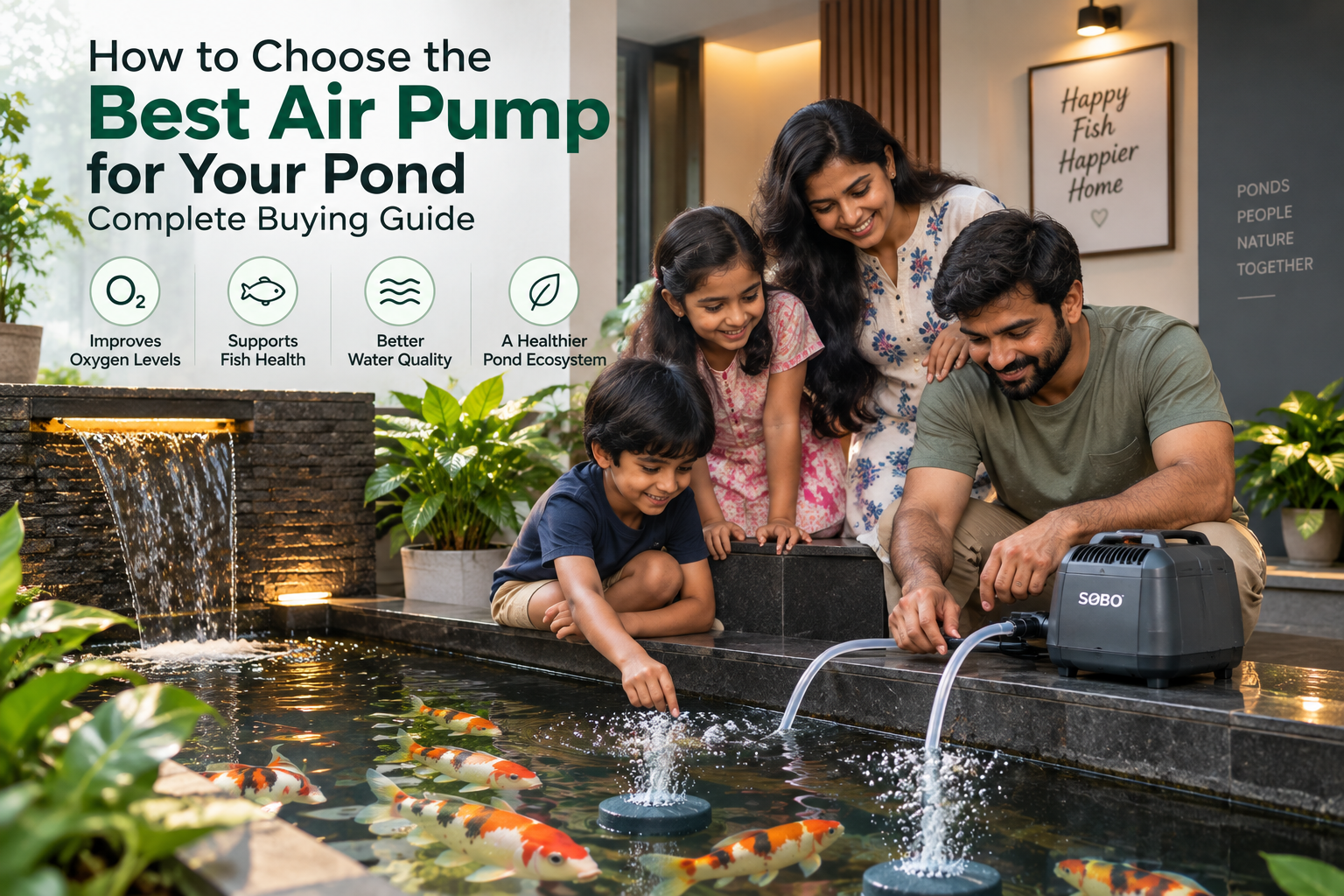
Air Pump: Complete Guide to Choosing the Right Air Pump for Your Pond
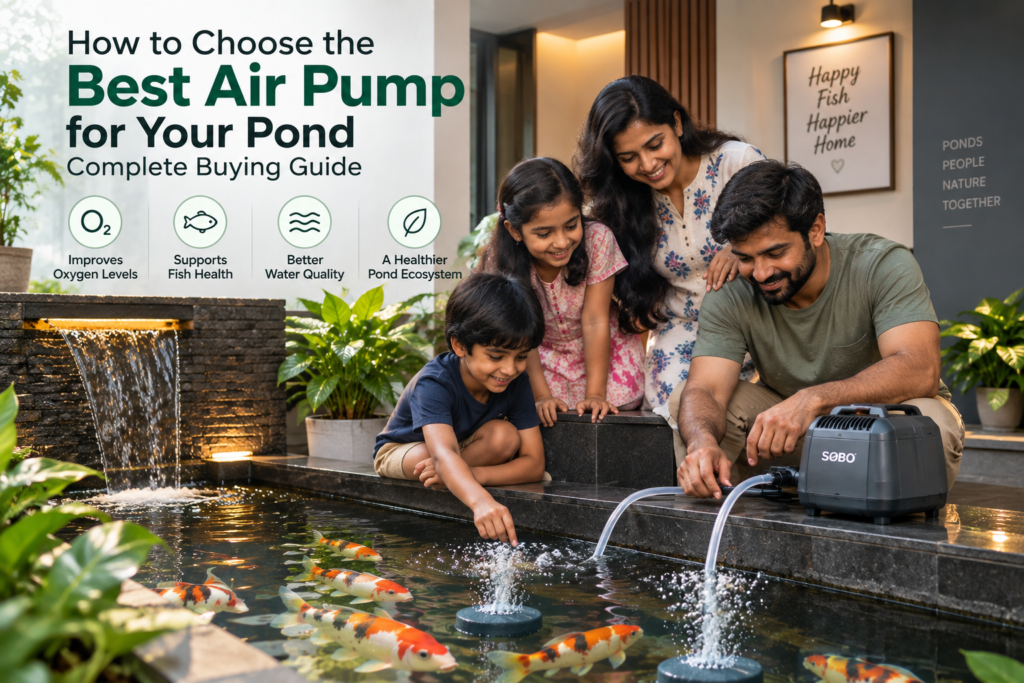
An air pump is an important part of many pond and aquarium systems. It helps increase oxygen levels, improves water circulation at the surface, supports beneficial bacteria, and creates a healthier environment for fish.
For ponds containing koi, goldfish, or other fish, maintaining sufficient dissolved oxygen is especially important. During hot weather, rainy periods, or when the pond has a high fish population, oxygen levels can change significantly. A properly selected air pump can provide continuous aeration and help maintain a healthier pond environment.
But how do you choose the right air pump for your pond? What size do you need? How many air stones should you use? And what is the difference between an air pump and a water pump?
This complete guide explains everything you need to know before choosing an air pump for your pond.
What Is an Air Pump?
An air pump is a device that pushes atmospheric air through an airline tube into water. The air is usually released through an air stone, diffuser, or aeration disc, producing bubbles in the pond.
The bubbles themselves are not the only benefit. As they rise toward the surface, they create water movement and help improve gas exchange between the water and atmosphere.
A typical pond aeration system consists of:
Air Pump → Airline Tube → Air Stone / Diffuser → Pond
The air pump remains outside the water while the air stone or diffuser is placed inside the pond.
Why Is an Air Pump Important for a Pond?
Fish require oxygen to survive, and beneficial bacteria in biological filtration systems also depend on oxygen.
A good air pump helps support the pond ecosystem by continuously introducing air and encouraging surface movement.
1. Increases Oxygen Availability
Aeration helps improve oxygen exchange at the water surface. This is particularly useful in ponds with fish and biological filtration.
2. Supports Fish Health
Fish require adequate dissolved oxygen for normal respiration and activity. Proper aeration can be especially valuable in heavily stocked ponds.
3. Helps Beneficial Bacteria
Beneficial bacteria play an important role in biological filtration by helping process fish waste and other organic matter. These microorganisms require oxygen-rich conditions.
4. Improves Water Movement
Air bubbles rising through the pond create gentle vertical circulation. This can help move water between different areas of the pond.
5. Helps During Hot Weather
Warm water generally holds less dissolved oxygen than cooler water. During periods of high temperature, additional aeration can therefore be useful.
How Does an Air Pump Work?
An air pump uses a motor and an internal diaphragm or similar mechanism to draw air from the surrounding environment and push it through an outlet.
The air travels through an airline tube and reaches an air stone or diffuser positioned underwater.
When the air is released, bubbles rise through the water column.
This creates two useful effects:
Air injection + water movement = improved aeration
The effectiveness of an aeration system depends on the pump’s air output, pond depth, diffuser type, airline size, and overall pond design.
Air Pump vs Water Pump: What’s the Difference?
An air pump and water pump perform different jobs.
| Feature | Air Pump | Water Pump |
|---|---|---|
| Main purpose | Adds air and supports aeration | Moves water |
| Output | Air | Water |
| Common use | Aeration and oxygenation | Filtration, waterfalls and circulation |
| Installation | Pump outside water | Can be submerged or external |
| Typical accessory | Air stone/diffuser | Pipe/hose |
| Suitable for | Oxygenation | Water movement |
A pond may use both an air pump and a water pump because they perform different functions.
For example:
Water Pump → Filter → Waterfall → Pond
and
Air Pump → Diffuser → Pond
Together, these systems can provide both water circulation and aeration.
How to Choose the Right Air Pump for Your Pond
Selecting an air pump should be based on your pond’s size, depth, fish population, and aeration requirements.
1. Consider Pond Size
The first factor is the amount of water in your pond.
A small decorative pond may require a smaller air pump, while a large koi pond generally needs a higher-output aeration system.
Calculate your approximate pond volume using:
Length × Width × Average Depth = Volume
If the measurements are in metres:
Volume in litres = Length × Width × Depth × 1,000
For irregular ponds, use the average depth to obtain a more practical estimate.
2. Consider Pond Depth
Depth is particularly important because the air pump needs to push air down through the water.
As depth increases, the pressure required to deliver air through the diffuser also increases.
Therefore, don’t select an air pump based only on its litres-per-minute rating. Check whether the pump can provide the required air output at your pond’s operating depth.
3. Consider Fish Stocking
The number and type of fish in your pond also affect aeration requirements.
A pond with only a few fish may require less aeration than a heavily stocked koi pond.
More fish means greater oxygen demand, especially when fish are actively feeding and growing.
4. Consider Filtration
Biological filtration systems also require oxygen.
If your pond has a large biological filter, moving-bed filter, or other oxygen-dependent filtration stage, additional aeration may be useful.
5. Choose the Correct Diffuser
The air pump is only one part of the system.
Air stones and diffuser discs determine how air is distributed throughout the pond.
A larger pond may benefit from multiple diffusers placed at suitable locations rather than using one diffuser in a single area.
How Many Air Stones Do You Need?
There is no single number that works for every pond.
The number of air stones depends on:
- Pond size
- Pond depth
- Air pump capacity
- Fish population
- Diffuser size
- Pond shape
- Desired aeration level
For a small pond, one diffuser may be sufficient. Larger ponds can require multiple diffusers connected through an air manifold.
Instead of simply adding more air stones, make sure the air pump has enough capacity to supply all connected diffusers effectively.
Where Should You Place an Air Diffuser?
The position of the diffuser can affect pond circulation.
For many ponds, diffusers are positioned toward deeper areas to encourage vertical water movement.
However, placement should also consider:
- Pond shape
- Fish behaviour
- Water circulation pattern
- Bottom drains
- Filtration system
- Pond depth
Avoid positioning diffusers in a way that creates excessive disturbance for fish.
For larger ponds, multiple diffusers can help distribute aeration more evenly.
Air Pump for Koi Ponds
Koi ponds typically benefit greatly from reliable aeration.
Koi consume oxygen, while beneficial bacteria in the filtration system also need oxygen to function effectively.
An air pump for a koi pond can help maintain oxygen-rich conditions, particularly when the pond is heavily stocked.
Aeration can be particularly important during:
- Hot summer weather
- Night-time periods
- Heavy rainfall
- Power interruptions affecting water circulation
- High fish stocking
- Treatment periods
- Filter cycling
A properly designed koi pond should consider aeration as part of the overall filtration and circulation system.
Air Pump for Aquariums
Air pumps are not limited to ponds.
An aquarium air pump can also be used for smaller aquatic systems. It can operate air stones, sponge filters, undergravel filtration systems, and other aeration equipment.
Aquarium aeration can help improve surface movement and provide oxygen exchange.
For planted aquariums, however, aeration needs to be considered alongside CO₂ injection because excessive surface agitation can increase CO₂ loss.
Therefore, the appropriate aeration method depends on the type of aquarium setup.
Choosing Between a Single and Multiple Air Pumps
For a larger pond, you may consider using either one high-capacity air pump or multiple smaller pumps.
Single Air Pump
Advantages:
- Simple installation
- One power connection
- Easy centralised control
- Suitable for many medium-sized systems
Multiple Air Pumps
Advantages:
- Separate aeration zones
- Backup if one pump stops
- Flexible diffuser placement
- Useful for large or divided ponds
The best option depends on pond design and the required aeration capacity.
What to Look for in a Good Air Pump
Before purchasing an air pump, check the following specifications:
Air Output
Air output is commonly measured in LPM or similar units. Higher output can support more diffusers, but the actual output should be considered at the operating depth.
Operating Depth
Check the manufacturer’s recommended maximum operating depth.
Power Consumption
If the pump will operate continuously, wattage is an important consideration. A more efficient pump can help reduce long-term operating costs.
Noise Level
For residential ponds, low-noise operation can be an important feature, especially when the pump is installed close to a house or seating area.
Continuous Operation
Choose a pump designed for the intended operating schedule, particularly if you plan to run it continuously.
Build Quality
Outdoor pond equipment should be protected from weather and installed according to the manufacturer’s instructions.
Common Air Pump Mistakes to Avoid
Choosing Only by Airflow Rating
A pump’s maximum airflow does not tell the entire story. Air output can change with depth and back pressure.
Ignoring Pond Depth
A pump that performs well in a shallow pond may not provide the same performance at greater depth.
Using Too Many Diffusers
Connecting too many diffusers can reduce the airflow delivered to each diffuser if the pump does not have sufficient capacity.
Poor Airline Installation
Very long airline runs, narrow tubing, or unnecessary bends can increase resistance.
Placing the Pump in a Wet Location
The air pump should normally remain outside the pond in a dry, well-ventilated location and be protected according to the manufacturer’s instructions.
Air Pump Maintenance Tips
Regular maintenance can help keep your aeration system working efficiently.
Clean the Air Filter
Many air pumps have an air intake filter. Dust and debris can restrict airflow, so inspect and clean it as recommended by the manufacturer.
Check Airline Tubing
Inspect tubes for cracks, leaks, kinks, or blockages.
Clean Air Stones
Air stones can gradually become clogged with algae and mineral deposits. Cleaning or replacing them can restore proper airflow.
Check Connections
Make sure airline connections are secure and there are no leaks.
Keep the Pump Dry
Protect the air pump from rain, splashing water, and excessive moisture.
Is an Air Pump Necessary for Every Pond?
Not every pond has exactly the same aeration requirements.
A pond with low fish stocking, natural circulation, waterfalls, and sufficient surface movement may have different oxygen requirements from a heavily stocked koi pond.
However, additional aeration can provide an important safety margin, particularly when oxygen demand increases.
For fish ponds, koi ponds, and systems with significant biological filtration, it is worth evaluating aeration as part of the complete pond design.
Air Pump During Power Cuts
Power interruptions can affect pond oxygen levels if the main water circulation and aeration systems stop.
This is particularly important for heavily stocked ponds.
A backup aeration solution, such as a battery-powered or AC/DC air pump, can provide additional protection during temporary power failures.
Having backup aeration can be especially useful when the pond contains valuable koi or a large number of fish.
Final Thoughts
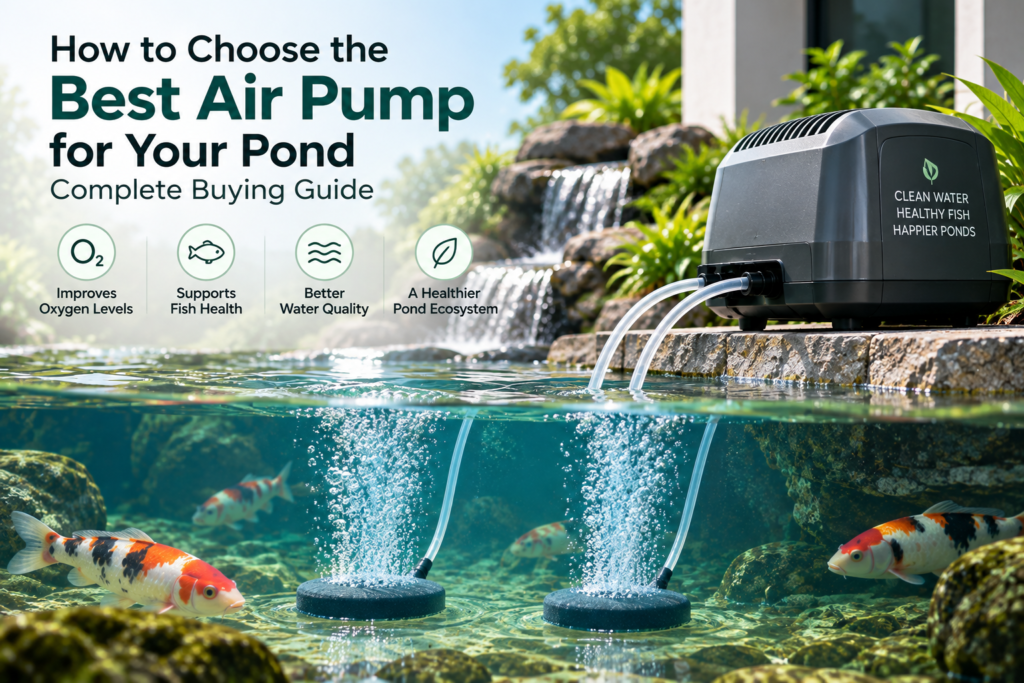
An air pump is a simple but valuable component of a pond or aquarium system. By supplying air and encouraging water movement, it can support fish, beneficial bacteria, and overall pond health.
When choosing an air pump, consider more than just the advertised airflow. Look at pond size, water depth, fish population, diffuser requirements, operating pressure, energy consumption, and continuous-duty capability.
For a healthy pond system, aeration should work together with proper filtration, water circulation, water quality management, and regular maintenance.
If you are unsure which air pump for your pond is suitable, share your pond dimensions, depth, fish type and quantity, filtration setup, and pond photos. These details can help determine the appropriate aeration solution for your setup.
Frequently Asked Questions About Air Pumps
What does an air pump do in a pond?
An air pump supplies air through an underwater diffuser, helping improve aeration, surface gas exchange, and water movement.
Is an air pump good for koi ponds?
Yes. Proper aeration can be particularly useful in koi ponds because fish and beneficial filtration bacteria require oxygen.
Can an air pump replace a pond water pump?
No. An air pump and water pump perform different functions. An air pump supplies air, while a water pump moves water for filtration, waterfalls, and circulation.
Should a pond air pump run continuously?
Many pond aeration systems are designed to operate continuously, but the appropriate schedule depends on the pond design, fish load, equipment, and manufacturer’s recommendations.
How do I choose the right air pump?
Consider pond volume, depth, fish stocking, diffuser requirements, required airflow, operating pressure, and power consumption before selecting an air pump.
Does a deeper pond need a stronger air pump?
Generally, yes. Greater depth creates more pressure against the diffuser, so the pump must be capable of delivering adequate airflow at the required depth.