

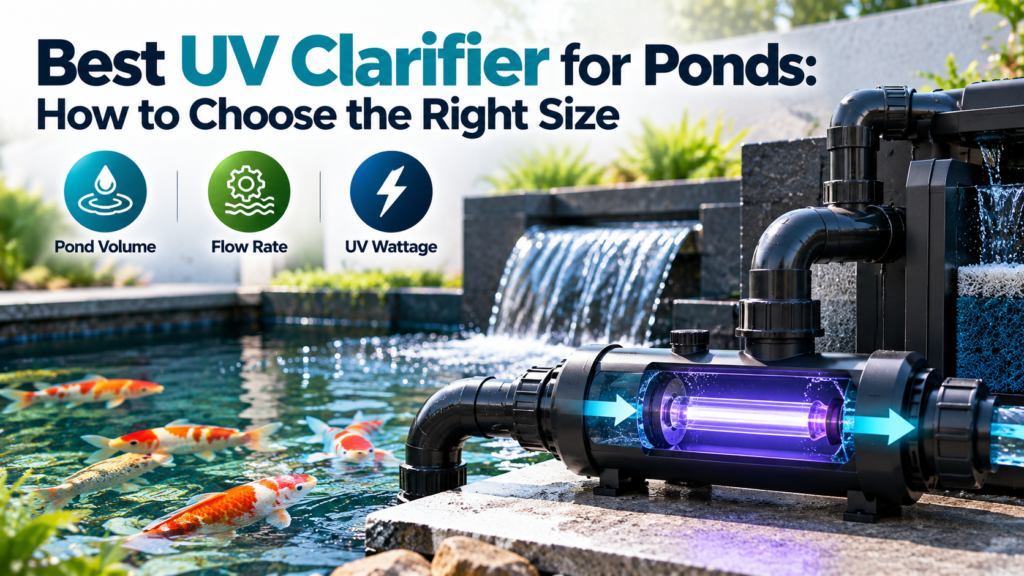
Green pond water is a common problem for koi ponds, ornamental ponds, and outdoor fish ponds. Even when a pond has a pump and filter, suspended algae can make the water appear green and reduce visibility.
A UV clarifier for ponds can help solve this problem by exposing water to ultraviolet light as it passes through the unit. When correctly sized and installed, a UV clarifier helps control suspended green-water algae, making it easier for the pond’s filtration system to remove the affected algae from the water.
However, choosing the right UV clarifier requires more than selecting the highest wattage. Pond volume, water flow, algae levels, sunlight exposure, fish stocking, and filtration capacity all influence the results.
In this guide, we will explain how a pond UV clarifier works, how to choose the right size, and what to consider before purchasing one.
What Is a UV Clarifier for Ponds?
A UV clarifier is a pond water-treatment device that uses ultraviolet radiation to control certain microorganisms suspended in the water.
Water passes through a chamber containing a UV lamp. As suspended algae pass through the unit, exposure to UV light disrupts their ability to reproduce. The affected algae can then be captured by the pond’s mechanical filtration system.
UV clarifiers are commonly used in:
- Koi ponds
- Ornamental fish ponds
- Garden ponds
- Outdoor water features with fish
- Ponds experiencing persistent green water
A UV clarifier is not a complete filtration system. It does not replace mechanical filtration, biological filtration, or regular pond maintenance.
How Does a Pond UV Clarifier Work?
A pond UV clarifier works as part of the pond’s water circulation system.
1. Pond Water Enters the Unit
A pond pump moves water through the plumbing and into the UV clarifier. The water flow must remain within the manufacturer’s recommended operating range.
2. Water Passes the UV Lamp
Inside the unit, water flows through a chamber where it receives ultraviolet exposure from the lamp.
The effectiveness of the treatment depends on factors such as lamp output, water clarity, exposure time, and the unit’s design.
3. Suspended Algae Are Affected
Appropriate UV exposure damages susceptible suspended algae, reducing their ability to reproduce. This process helps control the green-water appearance associated with these algae.
A UV clarifier is primarily intended for algae suspended in the water. It does not directly eliminate algae attached to pond walls, rocks, or other surfaces.
4. The Pond Filter Removes the Algae
After treatment, the affected algae remain in the water until they are captured or otherwise removed. A properly maintained mechanical filter helps collect this material.
This is why a UV clarifier works best alongside suitable pond filtration rather than as a standalone solution.
Benefits of Using the Best UV Clarifier for Ponds
1. Helps Control Green Pond Water
Suspended algae are a major cause of green water in outdoor ponds. A correctly sized UV clarifier can help reduce this problem when used with effective filtration.
2. Improves Water Clarity
As suspended algae levels decrease and the filtration system removes the affected material, the water may become clearer and fish may become easier to see.
Results depend on the pond’s condition, circulation, and maintenance.
3. Supports Koi Pond Maintenance
Clear water can make it easier to observe fish behaviour and monitor the pond. A UV clarifier is a useful addition to many koi pond filtration systems, although it does not replace water-quality testing.
4. Works With Existing Pond Equipment
Many UV clarifiers can be integrated into an existing pond circulation system, provided the pump flow, pipe connections, and installation arrangement are compatible.
5. Can Reduce Persistent Suspended Algae Problems
When appropriately sized and maintained, a UV clarifier can help manage recurring green-water problems. Controlling excess nutrients and maintaining the filter are still important for long-term results.
How to Choose the Best UV Clarifier for Ponds
Selecting the right unit involves several important considerations.
1. Check Your Pond Water Volume
Start by calculating your pond’s approximate water volume.
For a rectangular pond:
Pond volume in litres = Length (m) × Width (m) × Average water depth (m) × 1,000
For example, a pond measuring 4 metres long, 3 metres wide, and 1 metre deep has a nominal volume of 12,000 litres.
Choose a UV clarifier whose manufacturer-rated pond capacity is appropriate for your water volume and conditions.
Remember that irregular shapes, varying depths, fish stocking, and exposure to sunlight can influence the equipment required.
2. Choose the Appropriate UV Wattage
UV clarifiers are available in different wattage ratings. However, a higher wattage does not automatically mean better results for every pond.
When comparing models, consider:
- Recommended pond volume
- Intended use, such as ornamental ponds or heavily stocked koi ponds
- Manufacturer-specified flow rate
- UV lamp output and chamber design
- Sunlight exposure and algae severity
Use the manufacturer’s sizing recommendations rather than relying on wattage alone.
3. Check the Recommended Water Flow Rate
Water must pass through the UV chamber at a suitable rate to receive effective treatment.
If water flows too quickly, the exposure time may be insufficient. If flow is too low, circulation and overall system performance may be affected.
Check the manufacturer’s recommended flow range and ensure the pump can deliver suitable flow after accounting for pipe resistance and elevation.
4. Consider Your Fish Stocking Level
A lightly stocked ornamental pond may have different filtration requirements from a heavily stocked koi pond.
More fish and heavier feeding can increase waste and nutrient levels, contributing to algae growth. A UV clarifier should therefore be selected as part of a complete filtration system suited to the pond’s biological load.
5. Check Installation and Maintenance Requirements
Before purchasing, check:
- Inlet and outlet connection sizes
- Whether the unit is designed for the intended plumbing arrangement
- Lamp replacement requirements
- Access for cleaning the quartz sleeve, if fitted
- Electrical protection and installation instructions
- Warranty and spare-part availability
A unit that is straightforward to inspect and maintain can make long-term pond care easier.
What Size UV Clarifier Do You Need for Your Pond?
The correct size depends on the manufacturer’s rating, pond volume, fish stocking, sunlight, water flow, and the severity of the algae problem.
Use the following table as a general planning guide, not as a substitute for the model-specific manufacturer’s recommendations.
| Pond Type | What to Consider |
|---|---|
| Small ornamental pond | Compact UV clarifier rated for the actual pond volume |
| Medium garden pond | Suitable UV output and compatible pump flow |
| Koi pond | Capacity appropriate for fish stocking, feeding, and algae load |
| Large outdoor pond | Manufacturer-rated capacity, circulation and filtration performance |
| Heavily stocked pond | UV sizing alongside adequate mechanical and biological filtration |
For a heavily stocked koi pond, do not select equipment based only on the number of litres. Fish load and feeding rate can significantly affect the system’s requirements.
UV Clarifier vs Pond Filter: What’s the Difference?
Although these products work together, they perform different functions.
| Feature | UV Clarifier | Pond Filter |
|---|---|---|
| Main purpose | Controls susceptible suspended algae | Removes waste and supports biological treatment |
| Uses a UV lamp | Yes | Not necessarily |
| Captures solid waste | No, not by itself | Mechanical media can capture solids |
| Supports beneficial bacteria | Not its primary function | Biological media provides surfaces for beneficial bacteria |
| Helps control green water | Yes, when correctly sized | May help indirectly, but may not remove suspended algae effectively on its own |
For many fish ponds, the best solution is a correctly sized pump, suitable mechanical and biological filtration, and a UV clarifier when suspended algae are a problem.
Common Reasons a UV Clarifier Is Not Working
If your pond remains green after installing a UV clarifier, investigate the following possibilities.
The UV Lamp Needs Replacement
UV lamps can continue to produce visible light even when their useful UV output has declined. Replace the lamp according to the manufacturer’s recommended service interval.
The Water Flow Is Too High
Excessive flow through the unit may reduce the effective UV exposure. Check the recommended flow range and adjust the system if necessary.
The Pond Filter Is Not Removing the Algae
A UV clarifier affects suspended algae, but the resulting material must still be removed from the water. Inspect and clean the mechanical filtration stage as required.
The UV Unit Is Undersized
A clarifier designed for a smaller or less demanding pond may struggle to control algae in a large or heavily stocked pond. Recheck the manufacturer’s capacity recommendations.
Excess Nutrients Are Encouraging Algae Growth
Uneaten food, fish waste, decomposing leaves, and other organic material can increase nutrient availability.
Reduce unnecessary feeding, remove debris, maintain the filter, and manage nutrient sources as part of your pond maintenance routine.
How to Maintain a Pond UV Clarifier
Regular maintenance helps keep the unit operating as intended.
- Inspect the unit according to the manufacturer’s maintenance schedule.
- Replace the UV lamp at the recommended interval.
- Clean the quartz sleeve, if fitted, following the manufacturer’s instructions.
- Check water flow and inspect the plumbing for restrictions.
- Inspect electrical connections and seals for damage.
- Maintain the pond’s mechanical and biological filtration system.
- Monitor water clarity and water-quality parameters.
Safety note: Never look directly at an operating UV-C lamp. Ultraviolet radiation can damage eyes and skin. Switch off and isolate the equipment before opening or servicing it, and follow all manufacturer safety instructions.
Frequently Asked Questions
1. What is the best UV clarifier for ponds?
The best UV clarifier is one that is correctly rated for your pond’s volume, fish load, algae problem, and pump flow. Check the manufacturer’s specifications before choosing a model.
2. How long does a pond UV clarifier take to clear green water?
The time required varies with pond size, algae concentration, lamp condition, water flow, and filtration performance. Some ponds improve within several days, while others may take longer. Persistent green water requires checking the entire system rather than simply waiting.
3. Can a UV clarifier replace a pond filter?
No. A UV clarifier helps control susceptible suspended algae, while mechanical and biological filtration perform other essential functions, including removing waste particles and supporting the nitrogen cycle.
4. Should a pond UV clarifier run continuously?
Follow the manufacturer’s operating recommendations. Many pond systems operate their UV clarifiers during normal filtration cycles, but the appropriate schedule depends on the equipment and pond conditions.
5. Does a UV clarifier kill beneficial bacteria in a pond?
A properly installed UV clarifier primarily treats organisms passing through its UV chamber. Beneficial bacteria attached to biological filter media are not directly exposed to the lamp under normal operation.
6. Is a UV clarifier useful for koi ponds?
Yes. It can be particularly useful in koi ponds that experience suspended green-water algae. It should be combined with suitable mechanical and biological filtration, appropriate feeding, and routine water-quality monitoring.
Conclusion
Choosing the best UV clarifier for ponds involves more than comparing wattage or price. Pond volume, fish stocking, pump flow, algae severity, sunlight exposure, and filtration performance all affect the results.
A correctly sized UV clarifier can help control suspended green-water algae and improve water clarity when used as part of a properly maintained pond filtration system.
At GreenfinIndia, explore pond UV clarifiers, pumps, filtration systems, and accessories to find equipment suited to your pond. Check product specifications carefully and match the UV unit to your pond’s actual requirements for reliable performance.