

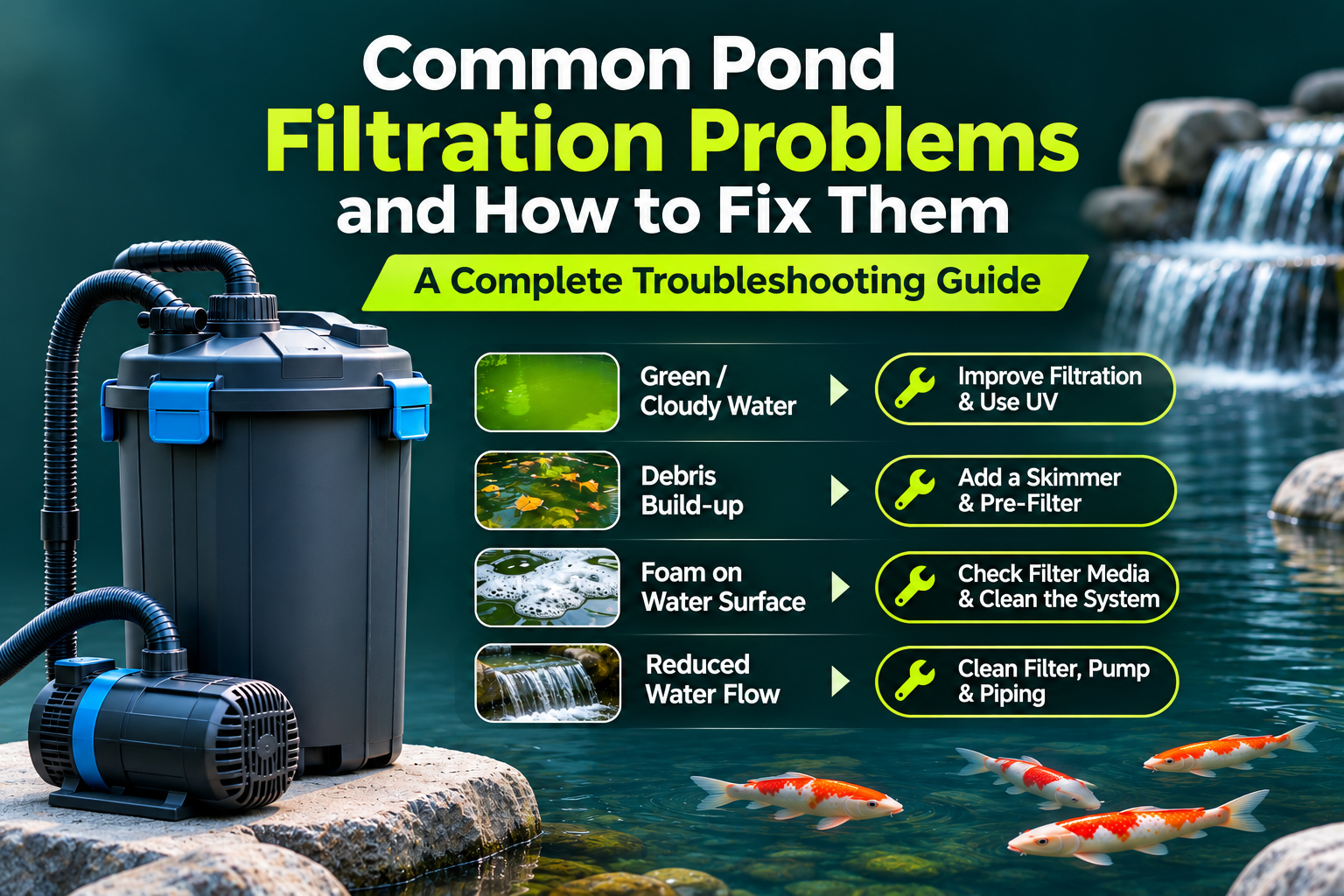
A properly functioning pond filtration system is essential for maintaining clean, clear, and healthy water. Whether you have a small garden pond or a large koi pond, an efficient filtration system helps remove fish waste, control harmful substances, and maintain a healthy environment for aquatic life.
However, pond filtration systems can sometimes develop problems that affect water quality and fish health. Reduced water flow, clogged filter media, green water, unpleasant smells, and excessive waste accumulation are some of the common issues pond owners experience.
Understanding these problems and knowing how to fix them can help you maintain your pond filtration system efficiently.
In this guide, we will discuss the most common pond filtration problems, their causes, and practical solutions to keep your fish pond healthy.
1. Poor Water Flow from the Pond Filter
One of the most common pond filtration problems is reduced water flow. When water circulation becomes weak, the filter cannot process pond water effectively.
Common causes:
- Clogged filter media.
- Blocked pump inlet.
- Dirty pump impeller.
- Undersized pond pump.
- Blocked or narrow plumbing pipes.
- Excessive head height.
How to fix it:
- Check the pond pump inlet for leaves and debris.
- Inspect the pump impeller and remove accumulated dirt.
- Check the filter media for excessive waste buildup.
- Inspect inlet and outlet pipes for blockages.
- Confirm that the pump is suitable for the filter’s required flow rate.
- Check whether plumbing restrictions are reducing water circulation.
Prevention tip: Inspect your pond pump and filter regularly to maintain consistent water flow.
2. Pond Water Turning Green
Green pond water is commonly caused by suspended microscopic algae. It is especially common in outdoor ponds exposed to direct sunlight and excess nutrients.
When algae multiply rapidly, pond water can become green and cloudy, making it difficult to see fish.
Common causes:
- Excess sunlight.
- High nutrient levels.
- Excessive fish feeding.
- Poor mechanical filtration.
- Inadequate biological filtration.
- Insufficient water treatment.
How to fix it:
- Install a properly sized UV clarifier.
- Maintain an efficient biological filtration system.
- Avoid overfeeding fish.
- Remove accumulated organic waste.
- Perform appropriate partial water changes.
- Reduce excessive direct sunlight where practical.
A UV clarifier helps control suspended algae by exposing water to ultraviolet light as it passes through the unit.
Recommended equipment: SunSun UV clarifiers and CPF UV pond filtration systems.
3. Pond Filter Getting Clogged Frequently
If your pond filter becomes clogged frequently, it may indicate excessive solid waste accumulation or insufficient mechanical filtration.
Clogged filter media restricts water flow and reduces filtration efficiency.
Common causes:
- Too many fish in the pond.
- Excessive fish feeding.
- Accumulation of leaves and organic debris.
- Insufficient mechanical filter media.
- Lack of pre-filtration.
How to fix it:
- Remove accumulated solid waste from the filter.
- Clean mechanical filter media when necessary.
- Install filter brushes or suitable mechanical filtration mats.
- Consider adding a pre-filter or settlement chamber.
- Remove leaves and debris from the pond regularly.
- Review the pond’s fish stocking and feeding levels.
For heavily stocked koi ponds, a suitable mechanical filtration system can significantly reduce the cleaning workload.
4. Unpleasant Smell Coming from Pond Water
A healthy pond should not have a strong unpleasant smell. If your pond produces a foul odour, it may indicate accumulated organic waste, poor circulation, or oxygen deficiency.
Common causes:
- Accumulated fish waste.
- Decaying leaves and organic materials.
- Dead fish or plants.
- Poor water circulation.
- Low dissolved oxygen.
- Anaerobic conditions in accumulated sludge.
How to fix it:
- Remove decaying leaves and organic debris.
- Clean accumulated waste from the pond bottom.
- Check the filtration system.
- Improve water circulation.
- Provide sufficient aeration.
- Test ammonia, nitrite, and other important water parameters.
Avoid adding chemicals without identifying the underlying cause of the smell.
5. High Ammonia Levels in Pond Water
Ammonia is produced through fish waste, uneaten food, and the decomposition of organic materials.
High ammonia concentrations are dangerous for fish and can damage their gills and other tissues.
Common causes:
- Insufficient biological filtration.
- New or immature filter systems.
- Overfeeding.
- Overstocking.
- Dead organic materials.
- Damaged beneficial bacteria populations.
How to fix it:
- Test ammonia levels using a reliable pond water test kit.
- Stop or reduce feeding temporarily if ammonia is elevated.
- Check whether the biological filter is functioning properly.
- Perform an appropriate partial water change using dechlorinated water.
- Increase aeration.
- Avoid cleaning all biological filter media at once.
- Monitor ammonia and nitrite until they return to safe levels.
Ammonia and nitrite should ideally remain at 0 ppm in a healthy, established fish pond.
6. Filter Producing Cloudy Pond Water
Cloudy pond water can occur due to suspended particles, disturbed bottom waste, bacterial blooms, or insufficient filtration.
The first step is identifying the type of cloudiness.
Common causes:
- Fine suspended debris.
- Excessive organic waste.
- New pond biological cycling.
- Disturbed pond sediment.
- Inadequate mechanical filtration.
How to fix it:
- Use suitable mechanical filter media.
- Install filter floss or fine polishing media where appropriate.
- Improve water circulation.
- Remove accumulated sludge.
- Check biological filtration performance.
- Avoid unnecessary large water changes.
If the pond is newly established, cloudy water may be associated with the development of beneficial bacteria. Monitor water parameters before deciding on treatment.
7. Pond Filter Making Unusual Noise
A pond pump or filtration system that suddenly becomes noisy may indicate a mechanical problem.
Common causes:
- Air trapped inside the pump.
- Blocked impeller.
- Damaged pump components.
- Insufficient water supply.
- Loose plumbing connections.
- Pump vibration against a hard surface.
How to fix it:
- Switch off the pump before inspection.
- Check the pump inlet for obstructions.
- Inspect and clean the impeller according to the manufacturer’s instructions.
- Check for trapped air where applicable.
- Inspect plumbing connections.
- Ensure the pump is properly positioned.
If the noise continues, inspect the pump for mechanical damage or consult a qualified technician.
8. Biological Filter Not Working Properly
Biological filtration is essential for converting toxic ammonia and nitrite into nitrate through beneficial bacterial activity.
If biological filtration is insufficient, ammonia and nitrite can accumulate and affect fish health.
Common causes:
- Insufficient biological filter media.
- Newly installed filtration systems.
- Cleaning media with untreated chlorinated water.
- Poor oxygen supply.
- Excessive waste loading.
- Water bypassing the biological media.
How to fix it:
- Provide sufficient biological filter media.
- Maintain continuous water circulation.
- Ensure adequate oxygen supply.
- Avoid replacing all biological media at once.
- Clean biological media gently using pond water or appropriately dechlorinated water.
- Allow sufficient time for beneficial bacteria to establish.
Popular biological filter media include:
- Bio balls.
- Ceramic rings.
- Japanese filter mats.
- Moving bed media.
- Sintered glass media.
For larger koi ponds, moving bed biological filtration can provide a high surface area for beneficial bacterial growth.
9. UV Clarifier Not Working Effectively
A UV clarifier is commonly used to control suspended algae responsible for green pond water.
However, sometimes the UV system does not produce the expected results.
Common causes:
- UV lamp reaching the end of its service life.
- Dirty quartz sleeve.
- Incorrect water flow rate.
- Incorrect UV wattage for the pond.
- Water bypassing the UV chamber.
- Electrical or ballast problems.
How to fix it:
- Check whether the UV unit is receiving power.
- Inspect the lamp according to the manufacturer’s safety instructions.
- Clean the quartz sleeve if required.
- Check the recommended flow rate.
- Confirm that the UV unit is suitable for your pond.
- Replace the UV lamp according to the manufacturer’s recommended schedule.
Important: Never look directly at an operating UV-C lamp. Switch off and disconnect the power before opening or servicing the unit.
10. Excessive Sludge Accumulation at the Pond Bottom
Sludge is formed from fish waste, uneaten food, fallen leaves, and other organic materials.
Excessive sludge accumulation can reduce water quality and increase the organic load on your filtration system.
Common causes:
- Poor bottom waste collection.
- Lack of a bottom drain.
- Insufficient water circulation.
- Overfeeding.
- Inadequate mechanical filtration.
How to fix it:
- Remove accumulated sludge using a suitable pond vacuum.
- Install a bottom drain where practical.
- Improve circulation to move waste towards the collection point.
- Remove uneaten food.
- Maintain appropriate mechanical filtration.
For new pond construction projects, incorporating a bottom drain and suitable plumbing system can make future pond maintenance easier.
11. Pond Filter Overflowing or Leaking
Filter leakage and overflowing can cause water loss and damage surrounding areas.
Common causes:
- Blocked filter outlet.
- Incorrect pipe installation.
- Damaged seals or O-rings.
- Excessive pump flow.
- Loose plumbing connections.
- Incorrect filter installation.
How to fix it:
- Switch off the pond pump.
- Inspect the filter inlet and outlet.
- Check all pipe connections.
- Inspect seals and O-rings.
- Remove blockages.
- Confirm the pump flow is within the filter manufacturer’s recommended range.
- Restart the system and check for leaks.
Never operate a filter with a damaged pressure vessel or compromised fittings.
12. Fish Showing Signs of Stress Despite Having a Filter
Installing a pond filter does not automatically guarantee healthy fish.
Fish may still experience stress if water parameters are unsuitable or filtration is insufficient for the fish population.
Common warning signs:
- Fish frequently gathering near the water surface.
- Rapid gill movement.
- Loss of appetite.
- Unusual swimming behaviour.
- Lethargy.
- Fish rubbing against pond surfaces.
How to fix it:
- Test ammonia and nitrite immediately.
- Check dissolved oxygen levels.
- Inspect pump and filter operation.
- Review fish stocking levels.
- Check water temperature and pH.
- Observe fish for signs of disease.
If fish are gasping at the surface, increase aeration immediately and investigate water quality. Do not assume filtration alone will resolve the problem.
13. How to Prevent Pond Filtration Problems
Regular maintenance is the best way to prevent most pond filtration issues.
Follow this simple maintenance schedule:
| Frequency | Maintenance Activity |
|---|---|
| Daily | Check pump operation and fish behaviour |
| Daily | Check for unusual water changes or equipment problems |
| Weekly | Inspect filter flow and remove accumulated debris |
| Weekly | Check water parameters as needed |
| Monthly | Inspect pump impeller and plumbing |
| Monthly | Inspect biological and mechanical filter condition |
| As required | Clean filter media and remove pond sludge |
| As recommended | Inspect and replace UV lamps |
The maintenance schedule may vary depending on pond size, fish population, feeding quantity, and filtration design.
14. Choosing the Right Pond Filtration Equipment
Choosing suitable equipment can prevent many common filtration problems.
Here are some important components to consider when designing a pond filtration system.
| Equipment | Main Purpose |
|---|---|
| Pond Pump | Circulates water through the filtration system |
| Mechanical Filter | Removes solid waste and suspended particles |
| Biological Filter | Supports beneficial bacteria |
| UV Clarifier | Helps control suspended algae |
| Air Pump | Improves oxygen supply |
| Bottom Drain | Helps collect waste from the pond floor |
| Pond Skimmer | Collects floating leaves and surface debris |
For small ornamental ponds, a suitable pressurized pond filter may be sufficient.
For medium and large koi ponds, multi-chamber filtration systems provide greater media capacity.
For advanced koi pond installations, a Rotary Drum Filter combined with biological filtration can help automate mechanical waste removal.
The correct equipment should always be selected according to actual pond conditions and manufacturer specifications.
15. Frequently Asked Questions About Pond Filtration Problems
1. Why is my pond filter not cleaning the water?
Your pond filter may not be cleaning effectively because of clogged media, insufficient biological filtration, an undersized pump, or excessive fish waste. Inspect the system and check water parameters.
2. How often should I clean my pond filter?
Mechanical filter media should be cleaned when waste accumulation restricts water flow. Biological media generally requires less frequent and gentler cleaning to preserve beneficial bacteria.
3. Why does my pond water turn green even with a filter?
Green water is commonly caused by suspended algae. Your filtration system may not include an appropriately sized UV clarifier or may have excess nutrient accumulation.
4. Can a UV clarifier remove all pond algae?
No. UV clarifiers primarily target suspended algae that pass through the UV chamber. They do not remove attached blanketweed or string algae from pond surfaces.
5. What is the best filter for a koi pond?
The best filter depends on pond volume, fish population, feeding levels, and maintenance requirements. Multi-chamber filters and drum filter systems are commonly used for koi ponds.
6. Why is my pond pump running but there is no water flow?
Possible reasons include a blocked pump inlet, clogged impeller, trapped air, closed valves, or blocked plumbing. Switch off the pump and inspect the system before restarting.
7. Is biological filtration necessary for a fish pond?
Yes. Biological filtration supports beneficial bacteria that convert toxic ammonia and nitrite into nitrate, helping maintain healthy water conditions.
Conclusion
Pond filtration problems can affect water clarity, fish health, and the overall performance of your pond system. Issues such as poor water flow, clogged filter media, green water, high ammonia, and excessive sludge should be identified and corrected as early as possible.
Regular maintenance, proper pump selection, sufficient biological filtration, and suitable UV clarification can help prevent many common pond filtration problems.
Remember that every pond has different filtration requirements. A filtration system designed according to pond volume, fish population, and feeding habits will provide better long-term performance.
At Greenfin The Pond Studio, we provide pond pumps, UV clarifiers, pond filters, filter media, and complete pond filtration solutions to help maintain healthy and beautiful fish ponds.
Explore our pond filtration products and solutions at GreenfinIndia.com.
For pond construction, filtration installation, and product enquiries, contact Greenfin The Pond Studio.
SEO Details for GreenfinIndia.com
Focus Keyword
Pond Filtration Problems
Copy
SEO Title
Common Pond Filtration Problems and How to Fix Them
52 characters
Meta Description
Discover common pond filtration problems and how to fix them, including clogged filters, green water, poor flow, high ammonia and pump issues.
143 characters
URL Handle
common-pond-filtration-problems-and-solutions
Secondary Keywords
- Pond filter problems
- Pond filtration troubleshooting
- How to fix pond filter problems
- Pond pump not working
- Green pond water solution
- Pond filter maintenance
- Koi pond filtration problems
- Pond water quality problems
- Biological pond filter problems
- UV clarifier not working
Suggested Blog Tags
Pond Filtration, Pond Maintenance, Koi Pond, Pond Filter Problems, Pond Pump, UV Clarifier, Pond Water Quality