

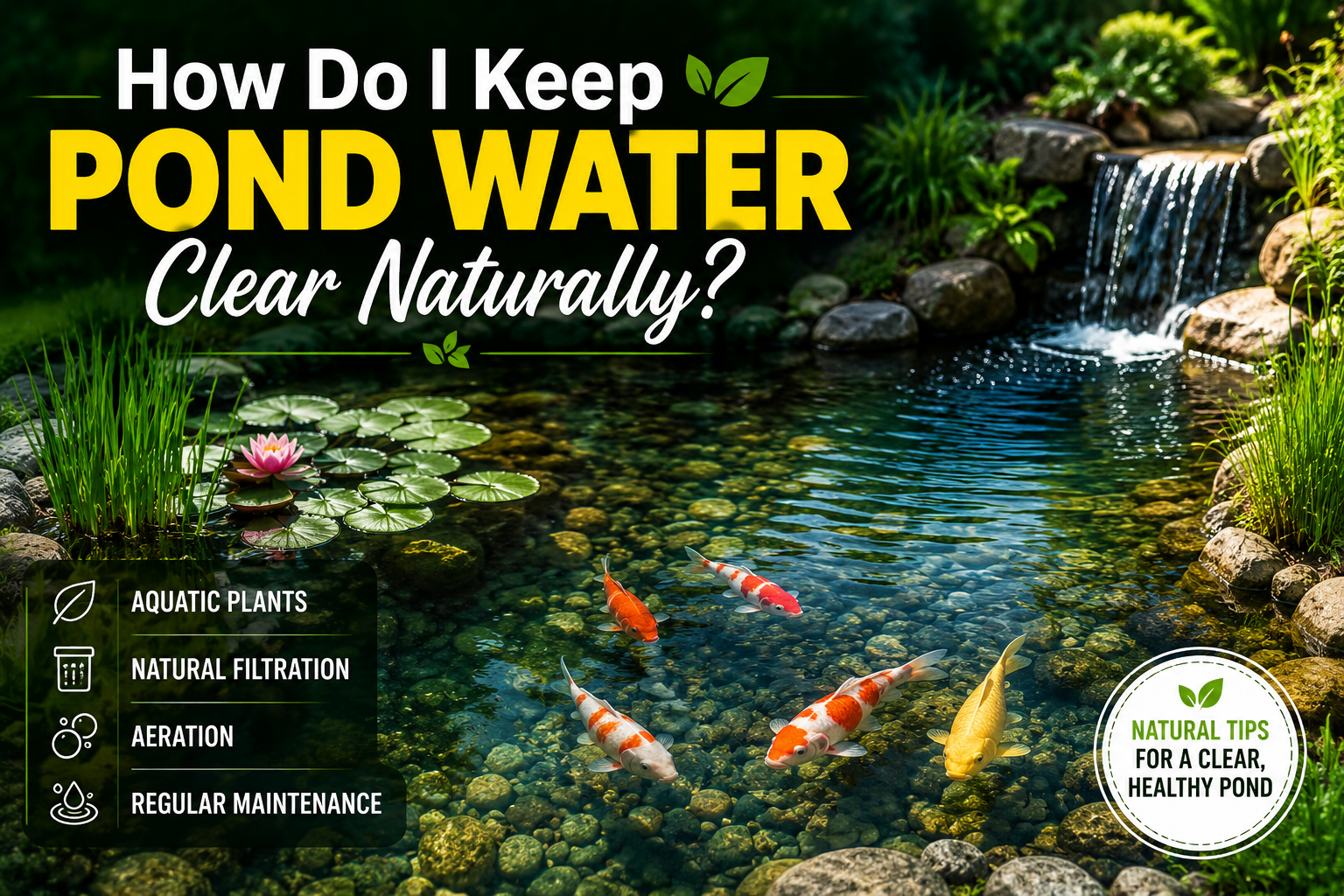
How Do I Keep Pond Water Clear Naturally?
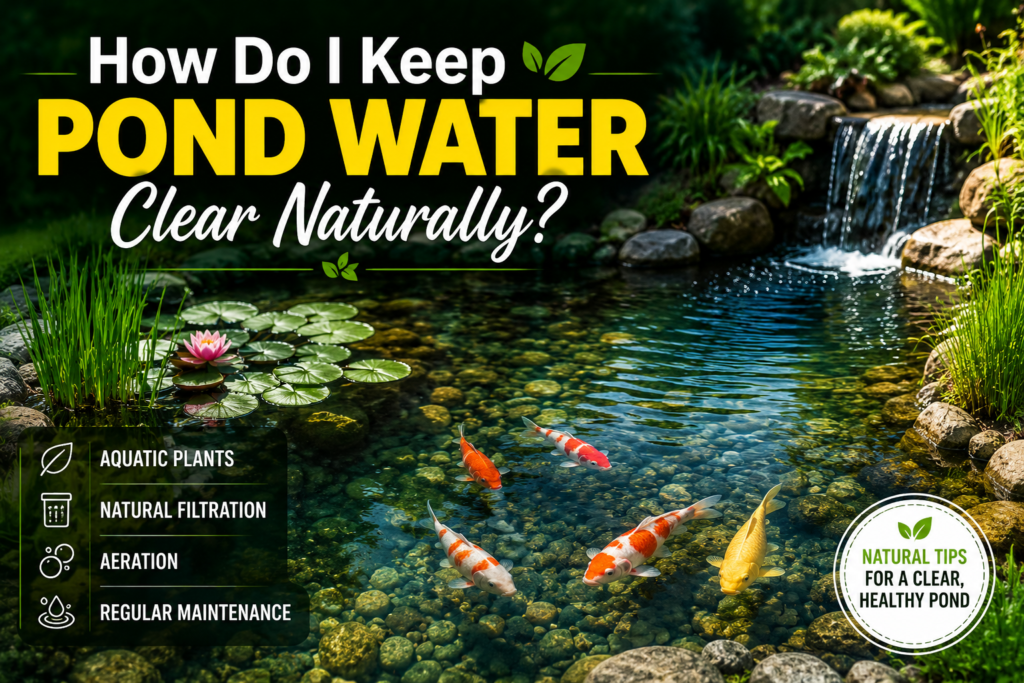
Keeping pond water clear naturally is one of the most common challenges faced by pond owners. Whether you maintain a small garden pond, a decorative water feature, a wildlife pond, or a large koi pond, maintaining clean and clear water is essential for both the appearance and overall health of the pond ecosystem. Cloudy water, excessive algae growth, floating debris, and sludge buildup can quickly turn a beautiful pond into an unattractive and unhealthy environment for fish and aquatic plants.
Many pond owners assume that achieving crystal-clear water requires frequent chemical treatments or constant maintenance. However, nature provides effective solutions for maintaining water quality when a pond is properly balanced. A healthy pond ecosystem relies on the right combination of aquatic plants, beneficial bacteria, proper filtration, aeration, and regular maintenance practices. When these elements work together, they naturally control excess nutrients, reduce algae growth, and improve water clarity without the need for excessive chemical intervention.
Understanding the root causes of poor water quality is the first step toward creating a naturally clear pond. Factors such as overfeeding fish, overcrowding, decaying organic matter, inadequate filtration, and excessive sunlight can contribute to green or cloudy water. By addressing these issues and implementing natural pond management techniques, you can create a self-sustaining ecosystem that remains healthy throughout the year.
If you’re wondering, “How do I keep pond water clear naturally?”, you’re not alone. In this guide, we’ll explore proven methods to improve water clarity, prevent common pond problems, and maintain a beautiful, balanced pond ecosystem. From choosing the right aquatic plants and filtration systems to controlling algae naturally, these practical tips will help you enjoy crystal-clear pond water while supporting the health of your fish and aquatic life.
Why Does Pond Water Become Cloudy?
Before fixing the problem, it’s important to understand what causes poor water clarity.
Common reasons include:
- Excess fish waste
- Uneaten fish food
- Decaying leaves and debris
- Overgrowth of algae
- Poor filtration
- Insufficient oxygen levels
- Excess nutrients in the water
- Lack of beneficial bacteria
When these factors combine, they create an imbalance that results in cloudy or green pond water.
Use Aquatic Plants for Natural Filtration
Aquatic plants are one of the most effective ways to keep pond water clear naturally.
Plants absorb excess nutrients such as nitrates and phosphates that would otherwise feed algae growth.
Best Pond Plants for Clear Water
Floating Plants
- Water Lettuce
- Water Hyacinth
- Duckweed
Marginal Plants
- Iris
- Pickerel Weed
- Cattails
Oxygenating Plants
- Hornwort
- Anacharis
- Vallisneria
These plants help maintain water quality while providing shelter for fish and beneficial microorganisms.
Avoid Overfeeding Pond Fish
Overfeeding is a major cause of poor water quality.
When fish consume more food than they need, uneaten food settles at the bottom and decomposes, releasing nutrients that promote algae growth.
Feeding Tips
- Feed only what fish can eat within 3–5 minutes.
- Remove leftover food promptly.
- Reduce feeding during colder months.
- Choose high-quality fish food with minimal waste.
Proper feeding practices can significantly improve water clarity.
Install a Proper Pond Filtration System
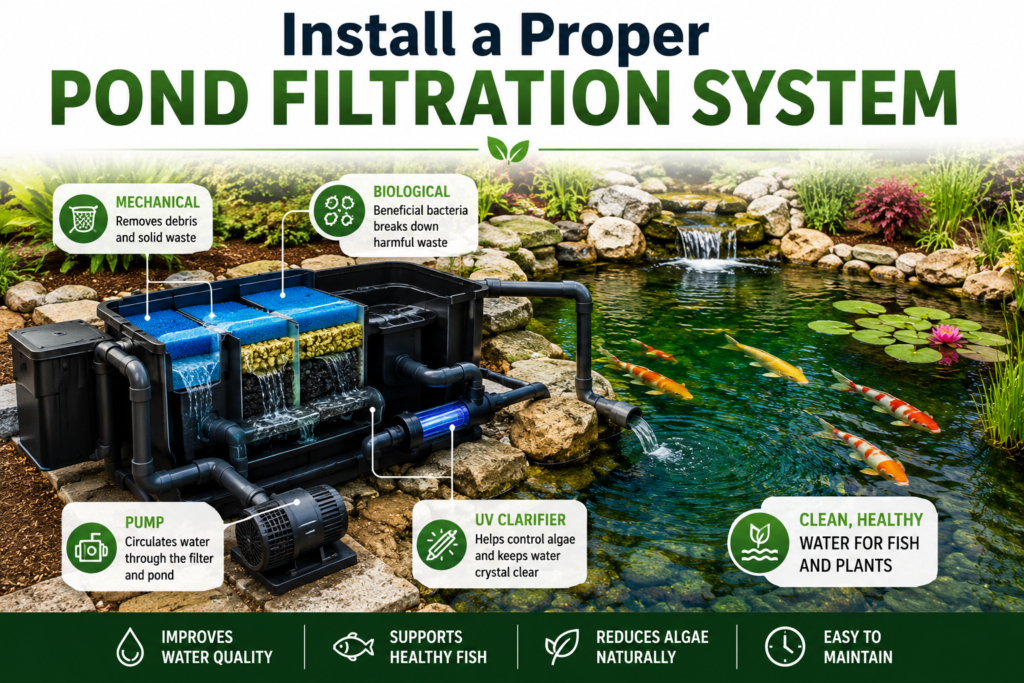
Even natural ponds benefit from effective filtration.
A good pond filter removes suspended particles and supports beneficial bacteria that break down waste.
Types of Pond Filtration
Mechanical Filtration
Removes:
- Leaves
- Fish waste
- Debris
- Sediment
Biological Filtration
Supports beneficial bacteria that convert harmful ammonia into less toxic compounds.
Combining both filtration methods creates a healthier and clearer pond environment.
Add Beneficial Bacteria
Beneficial bacteria are nature’s cleanup crew.
They help break down:
- Fish waste
- Organic sludge
- Decaying plant matter
- Excess nutrients
Regular bacterial treatments can reduce sludge buildup and improve overall water clarity.
Benefits of Beneficial Bacteria
- Cleaner water
- Reduced odors
- Less algae growth
- Healthier pond ecosystem
Control Algae Naturally
Algae are often responsible for green pond water.
While some algae are normal, excessive growth can quickly turn water murky.
Natural Algae Control Methods
Increase Plant Coverage
Aim for approximately 50–70% surface coverage with aquatic plants.
Plants compete with algae for nutrients and sunlight.
Reduce Direct Sunlight
Too much sunlight accelerates algae growth.
Consider:
- Floating plants
- Water lilies
- Shade sails
- Strategic landscaping
Maintain Proper Water Circulation
Good circulation prevents stagnant zones where algae thrive.
Remove Debris Regularly
Organic debris decomposes and releases nutrients into the water.
Common debris includes:
- Fallen leaves
- Dead plants
- Fish waste
- Grass clippings
Routine Maintenance Tasks
- Skim floating debris weekly.
- Trim dead plant material.
- Vacuum pond sludge when needed.
- Clean skimmer baskets regularly.
Consistent maintenance helps prevent nutrient accumulation.
Maintain Proper Fish Stocking Levels
Overcrowding increases waste production and reduces water quality.
General Stocking Guideline
For ornamental ponds:
- Approximately 25 cm of fish per 1,000 liters of water
Avoid introducing too many fish at once.
A balanced fish population supports healthier water conditions.
Improve Pond Aeration
Oxygen plays a vital role in maintaining water quality.
Aeration helps beneficial bacteria function efficiently and prevents stagnant conditions.
Natural Aeration Methods
- Waterfalls
- Streams
- Fountains
- Air pumps
- Aeration discs
Well-oxygenated water is clearer and healthier for fish.
Perform Partial Water Changes
Although natural ponds require less intervention, occasional water changes can improve clarity.
Recommended Practice
Replace:
- 10–15% of pond water every few weeks
Avoid large water changes that can disrupt the pond’s biological balance.
Always use dechlorinated water if using municipal water supplies.
Monitor Water Quality
Testing pond water regularly helps identify issues before they become serious.
Important Parameters
- pH
- Ammonia
- Nitrite
- Nitrate
- Dissolved oxygen
Maintaining stable water parameters promotes a healthy ecosystem and clearer water.
Common Mistakes That Cause Cloudy Pond Water
Avoid these common pond maintenance errors:
Overfeeding Fish
Excess food increases nutrient levels.
Overcrowding
Too many fish produce excessive waste.
Lack of Plants
Fewer plants mean less natural nutrient absorption.
Poor Filtration
Insufficient filtration allows waste to accumulate.
Infrequent Cleaning
Organic matter decomposes and fuels algae growth.
Correcting these issues can dramatically improve water clarity.
Frequently Asked Questions
How long does it take for pond water to clear naturally?
Depending on the cause, pond water may begin clearing within a few days to several weeks after implementing proper maintenance and filtration practices.
Do aquatic plants really help keep pond water clear?
Yes. Aquatic plants absorb excess nutrients, reduce algae growth, and contribute to a balanced pond ecosystem.
Can I keep a pond clear without chemicals?
Absolutely. Proper filtration, beneficial bacteria, aquatic plants, aeration, and regular maintenance can maintain clear water naturally.
What is the best natural way to stop algae in a pond?
Increasing plant coverage, reducing excess nutrients, improving circulation, and maintaining a healthy biological balance are among the most effective natural algae-control methods.
Product Buying Guide: Choosing the Right Pond Filter
Selecting the right pond filter is essential for maintaining clear water and a healthy pond environment. Start by considering your pond’s size, fish population, and filtration requirements. For small decorative ponds, a compact box or pressure filter may be sufficient, while koi ponds typically require larger biological filtration systems with UV clarification. Always choose a filter rated for at least your pond’s total water volume, and opt for a higher-capacity model if your pond has a heavy fish load. Look for features such as mechanical and biological filtration, UV clarifiers, easy maintenance, energy efficiency, and durable construction. Investing in a quality pond filter helps reduce algae growth, improve water clarity, and create a healthier ecosystem for fish and aquatic plants. For a wide range of pond filters, pumps, UV clarifiers, and pond maintenance equipment, visit Greenfin India or explore premium aquatic solutions at Greenfin Aqua. Greenfin offers pond equipment, filtration systems, and expert guidance to help pond owners maintain healthy, crystal-clear water.
Conclusion
If you’ve been asking yourself, “How do I keep pond water clear naturally?”, the solution is simpler than many pond owners realize. Clear and healthy pond water is not achieved through constant chemical treatments but through creating a balanced ecosystem that can naturally regulate itself. By combining aquatic plants, effective filtration, beneficial bacteria, proper aeration, regular maintenance, and responsible fish stocking practices, you can significantly improve water clarity while supporting the long-term health of your pond.
A naturally balanced pond not only looks beautiful but also provides a healthier environment for fish, aquatic plants, and beneficial microorganisms. When nutrients are properly managed and waste is efficiently removed, common issues such as algae blooms, cloudy water, unpleasant odors, and sludge buildup become much easier to control. Consistent maintenance and proactive pond care can prevent many water quality problems before they occur.
Remember that every pond is unique, and achieving crystal-clear water may take time as your pond ecosystem stabilizes. Regular monitoring, seasonal maintenance, and investing in quality pond equipment will help ensure lasting results. Small improvements, such as adding more aquatic plants, improving circulation, or upgrading your filtration system, can make a significant difference in overall water quality.
By following the natural pond care methods outlined in this guide, you can enjoy a clean, vibrant, and thriving pond throughout the year. Whether you own a koi pond, garden pond, or ornamental water feature, maintaining a healthy ecosystem is the key to naturally clear water and happy aquatic life.
For high-quality pond filters, pumps, aeration systems, UV clarifiers, beneficial bacteria, and other essential pond care products, explore the pond solutions available from Greenfin Pond Studio. With the right equipment and expert guidance, you can create and maintain a beautiful pond that stays clean, clear, and healthy for years to come.