

A pond waterfall adds beauty, movement and a relaxing atmosphere to any outdoor pond. Besides improving the appearance of your pond, a waterfall can also help increase water movement and support oxygen exchange at the water surface.
However, choosing and installing the right pond waterfall pump is essential for achieving consistent water flow and efficient operation.
Whether you are building a new koi pond, upgrading an existing pond or installing a decorative waterfall, understanding the correct pump selection, plumbing connections and installation process will help you achieve the desired results.
In this guide, we will explain how to install a pond waterfall pump, how to select the right pump capacity and how to maintain the system for long-term performance.
1. Understand How a Pond Waterfall Pump Works
A pond waterfall pump moves water from the pond or a collection chamber to the top of the waterfall. Water then flows down the waterfall structure and returns to the pond.
The basic installation consists of:
- Pond waterfall pump
- Pump intake or pre-filter
- Water delivery pipe
- Hose connectors and fittings
- Waterfall outlet
- Electrical power supply
- Optional mechanical or biological filtration system
The pump must provide sufficient water flow to reach the waterfall at the required height.
For example, a pump installed in a pond with a waterfall height of 1.5 metres must overcome the vertical lift as well as resistance from pipes, bends and fittings.
2. Choose the Right Pond Waterfall Pump
Selecting the correct pump is the first and most important step.
A pump that is too small may produce weak water flow, while an oversized pump can consume unnecessary electricity and create excessive water movement.
Consider these factors before purchasing a pond pump.
A. Pond Water Volume
Calculate your pond’s approximate water volume before selecting a pump.
For a rectangular pond:
Water Volume = Length × Width × Average Depth
If all measurements are in metres, multiply the result by 1,000 to convert cubic metres into litres.
Example:
- Length: 3 metres
- Width: 2 metres
- Average depth: 1 metre
Water volume:
3 × 2 × 1 = 6 cubic metres
6 × 1,000 = 6,000 litres
B. Waterfall Height
Waterfall height refers to the vertical distance between the pump and the waterfall outlet.
The higher the waterfall, the more pumping pressure is required.
Always check the pump’s performance chart to understand how much water it can deliver at the required head height.
C. Desired Waterfall Width
The width of the waterfall also affects the required flow rate.
A wider waterfall generally requires more water to create a consistent sheet of flowing water.
As a rough starting point, a broad sheet waterfall may require approximately 100–150 litres per hour per centimetre of waterfall width. Actual requirements vary with the waterfall design, lip shape and desired visual effect.
D. Pipe Diameter
Pipe diameter has a major impact on water flow.
- Narrow pipes create greater flow resistance.
- Wider pipes generally reduce friction losses.
- Longer pipes require additional consideration.
- Too many bends and connectors can reduce pump performance.
Follow the manufacturer’s recommended pipe diameter wherever possible.
3. Calculate the Required Pump Flow Rate
Before installing the pump, estimate the water flow required for your waterfall.
For example, consider a waterfall with:
- Waterfall width: 30 cm
- Desired flow: 100 litres/hour per cm
Required flow:
30 × 100 = 3,000 litres per hour
This is an approximate starting requirement at the waterfall outlet, not necessarily the pump’s advertised maximum flow rate.
You must account for vertical lift, pipe friction and fittings when selecting the actual pump.
Important: A pump advertised at 5,000 LPH may deliver significantly less than 5,000 LPH when installed at a particular head height. Always refer to its flow-versus-head performance chart.
4. Select a Suitable Installation Location
The location of your pump affects its efficiency and maintenance requirements.
Before installation, identify a suitable position inside the pond or pump chamber.
Follow these guidelines:
- Place the pump in an area with sufficient water depth.
- Keep the pump away from excessive accumulated sludge.
- Ensure easy access for cleaning and servicing.
- Avoid placing the pump directly on soft mud.
- Use a stable, level base.
- Keep the pump fully submerged if it is a submersible model.
A pump stand or stable platform can help prevent the intake from collecting excessive bottom debris.
5. Prepare the Plumbing Connections
Proper plumbing is important for maintaining consistent waterfall flow.
Before connecting the pump, prepare the required pipes and fittings.
Common plumbing components include:
- PVC pressure pipes
- Flexible pond hoses
- Hose connectors
- Elbows and bends
- Union connectors
- Valves
- Hose clamps
Plumbing Installation Tips
- Select the pipe diameter recommended by the pump manufacturer.
- Avoid unnecessary pipe bends.
- Keep pipe routes as short as practical.
- Use suitable pressure-rated fittings.
- Secure all connections properly.
- Install an accessible union or connector for easier pump removal.
For permanent pond installations, suitable PVC pressure piping can provide a durable plumbing arrangement.
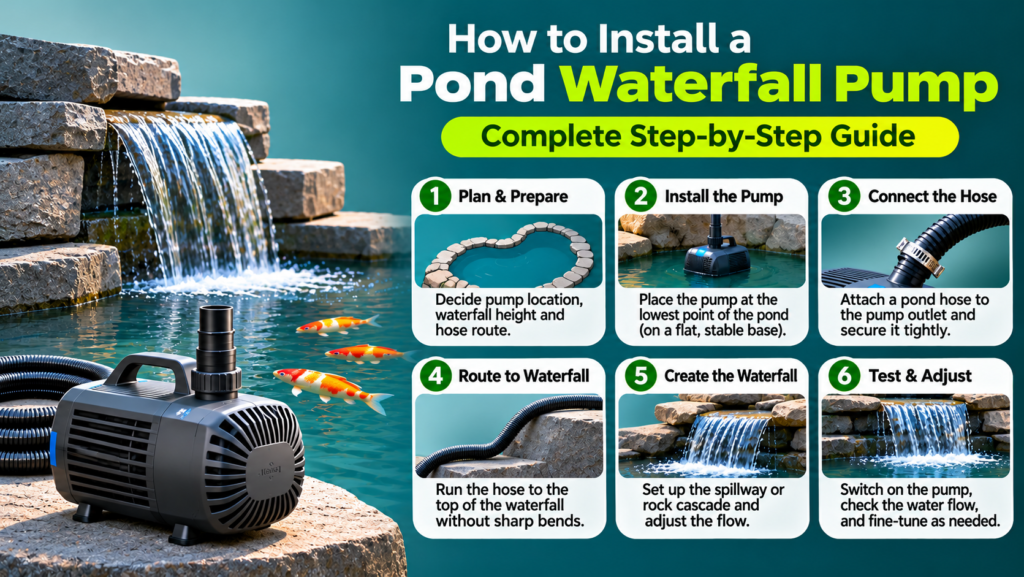
6. Install the Pond Waterfall Pump
Once the pump location and plumbing are ready, proceed with installation.
Step 1: Prepare the Pump Base
Place the pump on a stable platform or suitable support.
Ensure that it is not sitting directly on accumulated sludge or loose debris.
Step 2: Connect the Water Outlet
Attach the appropriate hose connector or pipe fitting to the pump outlet.
Check that the connection is compatible with the pump model.
Step 3: Connect the Delivery Pipe
Connect the delivery pipe from the pump to the waterfall inlet.
Secure the joints properly to minimise leakage.
Step 4: Position the Pump
Carefully place the pump in the selected location.
Ensure that the pump has adequate water around it and that the intake is not obstructed.
Step 5: Check the Pipe Connections
Inspect the entire pipe route, including joints, valves and connectors.
Correct any loose or poorly fitted connections before switching on the system.
Step 6: Connect the Electrical Supply
Use a properly protected electrical supply suitable for the pump’s voltage and power requirements.
For outdoor ponds, electrical installation should include:
- Appropriate RCD/ELCB protection.
- Proper earthing where required.
- Weather-resistant electrical enclosures.
- Suitable outdoor-rated cables and connectors.
- A protected power socket away from water exposure.
Have a qualified electrician complete or inspect the electrical installation. Never handle electrical connections with wet hands.
Step 7: Start the Pump and Test Water Flow
Once all connections have been checked, start the pump according to the manufacturer’s instructions.
Observe the waterfall and check:
- Water flow consistency.
- Leakage around pipe joints.
- Pump noise and vibration.
- Water return to the pond.
- Any unusual heating or operating conditions.
Adjust the flow using a suitable valve if the system allows it. Avoid restricting the pump outlet below the manufacturer’s permitted operating conditions.
7. How to Improve Pond Waterfall Flow
Sometimes a waterfall pump operates correctly but the water flow appears weak.
This can happen because of incorrect pump sizing, excessive pipe resistance or installation problems.
Try the following solutions:
1. Check the pump capacity
Ensure that the pump provides sufficient flow at the actual operating head.
2. Clean the pump intake
Remove leaves, algae and debris that may block the pump intake.
3. Check pipe blockages
Inspect the delivery pipe for sludge, debris and obstructions.
4. Reduce unnecessary bends
Too many elbows and sharp pipe turns can reduce water flow.
5. Check for leakage
Water escaping through pipe connections can reduce the amount reaching the waterfall.
6. Review the pipe diameter
An undersized pipe can create excessive friction losses.
8. Common Mistakes to Avoid During Installation
Avoid these common mistakes when installing a pond waterfall pump.
| Common mistake | Possible result |
|---|---|
| Choosing an undersized pump | Weak waterfall flow |
| Ignoring waterfall height | Insufficient water delivery |
| Using narrow pipes | Higher friction losses |
| Placing pump in sludge | Frequent intake blockage |
| Poor pipe connections | Water leakage |
| No pump protection | Increased debris accumulation |
| Incorrect electrical installation | Electrical safety risk |
| Ignoring pump maintenance | Reduced performance |
Correct planning and installation can help improve pump efficiency and reduce maintenance problems.
9. How to Maintain a Pond Waterfall Pump
Regular maintenance helps extend pump life and maintain consistent water flow.
Follow these maintenance practices:
- Inspect the pump regularly.
- Clean the intake screen or pre-filter.
- Remove accumulated algae and debris.
- Check the impeller for obstructions.
- Inspect pipes and hose connections.
- Check electrical cables and protective equipment.
- Monitor unusual noise or vibration.
- Follow the manufacturer’s recommended servicing schedule.
Before cleaning or servicing the pump, isolate the electrical supply safely and follow the manufacturer’s instructions.
10. Can a Pond Waterfall Pump Also Be Used for Filtration?
Yes. A suitable pond pump can supply water to a compatible pond filtration system and waterfall.
However, the plumbing arrangement should be designed according to the filtration system’s requirements.
A typical arrangement is:
Pond → Pump → Pond Filter → Waterfall → Pond
In some installations, a separate pump may be used for filtration and waterfall circulation.
For koi ponds, biological filtration should be designed according to fish stocking, feeding levels and pond volume. A waterfall alone cannot replace a properly sized filtration system.
11. Best Pond Waterfall Pump for Different Pond Sizes
The correct pump depends on pond volume, waterfall dimensions and installation head height.
The following table provides general starting points for planning, not guaranteed pump specifications.
| Pond water volume | Example pump flow range |
|---|---|
| Up to 2,000 litres | 2,000–3,000 LPH |
| 2,000–5,000 litres | 3,000–5,000 LPH |
| 5,000–10,000 litres | 5,000–8,000 LPH |
| 10,000–20,000 litres | 8,000–15,000 LPH |
| Above 20,000 litres | Calculate based on design |
These figures are illustrative. A wide or tall waterfall may require a different flow rate. For koi ponds, calculate filtration circulation requirements separately.
Frequently Asked Questions (FAQs)
1. What size pump do I need for a pond waterfall?
The required pump size depends on waterfall width, height, pipe diameter and desired water flow. Calculate the required flow at the waterfall outlet and select a pump that can deliver it at the actual operating head.
2. Can I use a normal pond pump for a waterfall?
Yes. Many pond pumps are suitable for waterfall applications, provided they can deliver the required flow at the necessary head height.
3. How high can a pond waterfall pump lift water?
The maximum lifting height depends on the pump model. Check the manufacturer’s maximum head specification and flow chart before selecting a pump.
4. Why is my pond waterfall pump producing low water flow?
Common reasons include blocked pump intake, dirty impeller, narrow pipes, excessive pipe bends, leakage or insufficient pump capacity.
5. Should a pond waterfall pump run continuously?
Many pond waterfall systems are designed for continuous operation. However, follow the pump manufacturer’s operating instructions and ensure sufficient water supply and proper maintenance.
6. Does a waterfall increase oxygen in a pond?
Water movement and splashing can improve oxygen exchange at the water surface. However, the actual oxygen increase depends on waterfall design, water flow, temperature and pond conditions.
7. Can I connect a UV filter to a waterfall pump?
Yes, if the pump flow and pressure are compatible with the UV unit’s specifications. Follow the manufacturer’s recommended installation arrangement and maximum flow rate.
8. Which is better: a submersible or external pond pump?
Submersible pumps are generally easier to install inside a pond. External pumps can be useful for larger systems and installations requiring easier servicing or higher flow capacity. The best choice depends on pond design and operating requirements.
Conclusion
Installing the right pond waterfall pump is essential for creating a beautiful waterfall and maintaining effective water circulation.
By selecting a suitable pump, calculating the required flow rate, using the correct pipe diameter and following proper installation procedures, you can achieve consistent waterfall performance.
Regular cleaning, pump inspection and plumbing maintenance will also help keep the system operating efficiently.
At Greenfin The Pond Studio, we offer pond pumps, filtration equipment, UV clarifiers and pond construction solutions to help create efficient and attractive pond systems.
Explore pond pumps and equipment at Greenfinindia.com.