

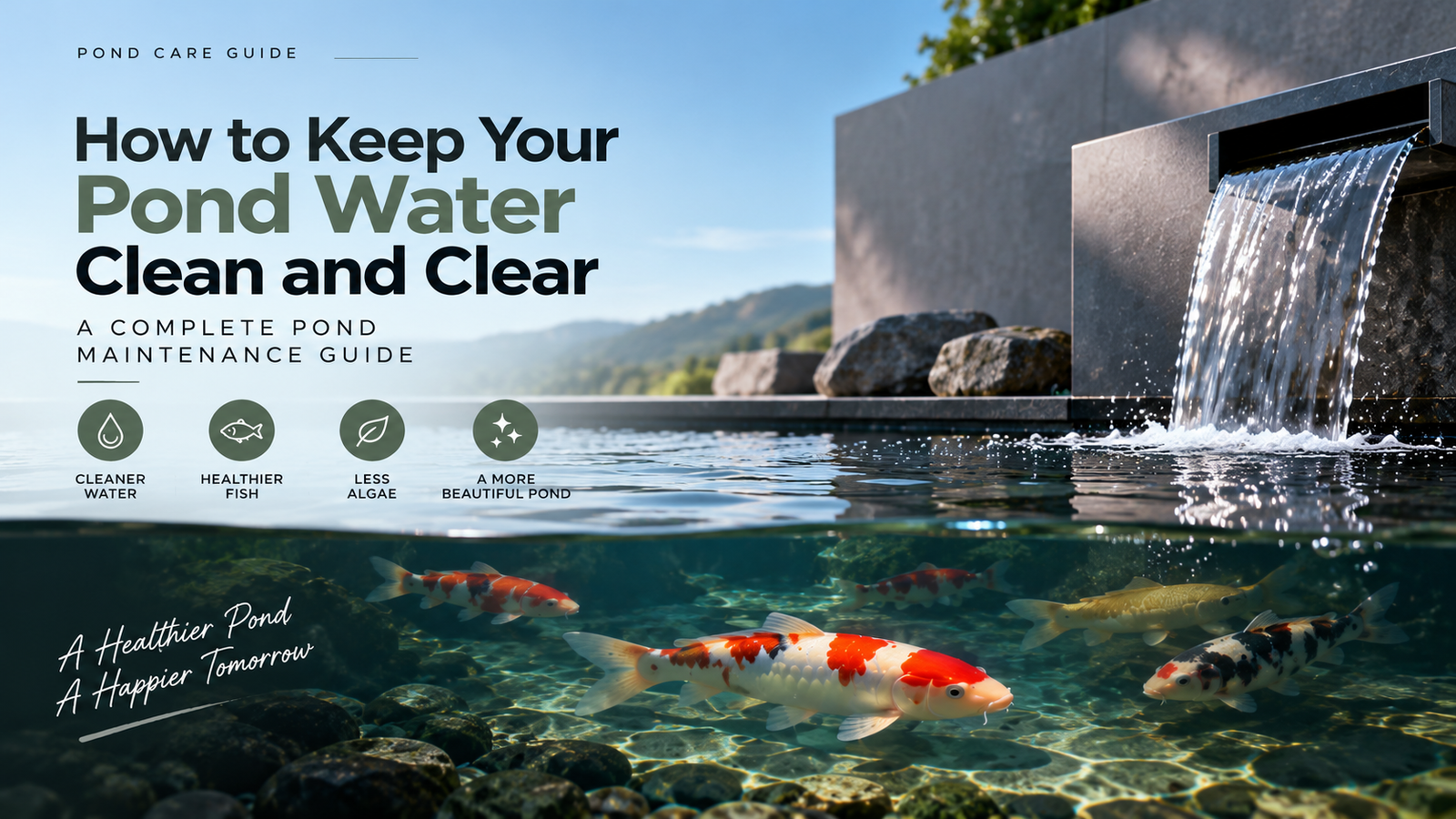
A clean and clear pond is more than just a beautiful feature for your garden or outdoor space. Healthy pond water creates a better environment for koi, goldfish, aquatic plants, and other pond life while also making your pond easier to maintain.
Over time, ponds can become cloudy or develop green water because of fish waste, excess nutrients, debris, poor circulation, algae growth, and inadequate filtration. The good news is that regular maintenance and the right pond equipment can help maintain better water quality throughout the year.
In this guide, we will explain how to keep pond water clean and clear, how pond filtration works, why circulation is important, and what you can do when your pond water becomes green or cloudy.
Why Does Pond Water Become Dirty or Cloudy?
Several factors can affect pond water quality. Understanding the cause is the first step toward solving the problem.
1. Fish Waste
Fish naturally produce waste, which adds organic matter and nutrients to the water. A pond with a high fish population can accumulate waste faster than the filtration system can process it.
Overfeeding can make the problem worse because uneaten food decomposes and releases additional nutrients into the water.
2. Excessive Algae Growth
Algae can grow rapidly when pond water contains high levels of nutrients and receives plenty of sunlight.
Green water is commonly associated with microscopic algae suspended throughout the water. String algae can also grow on pond surfaces, rocks, waterfalls, and other areas.
3. Fallen Leaves and Organic Debris
Leaves, flowers, grass, dust, and other debris can enter an outdoor pond. As organic material breaks down, it can contribute to poor water quality.
Regular removal of debris is therefore an important part of pond maintenance.
4. Insufficient Filtration
A filtration system helps remove solid waste and provides an environment for beneficial bacteria.
If the filter is too small for the pond or is not maintained correctly, it may struggle to keep the water clear.
5. Poor Water Circulation
Water circulation helps move water through the filtration system and prevents stagnant areas.
A properly selected pond pump can improve circulation and help distribute oxygen throughout the pond.
How to Keep Pond Water Clean and Clear
Maintaining clear pond water is usually a combination of good filtration, proper circulation, responsible feeding, and regular maintenance.
1. Install the Right Pond Filtration System
A suitable filtration system is one of the most important components of a healthy pond.
Pond filters generally perform two major functions:
Mechanical filtration removes physical particles such as leaves, fish waste, and suspended debris.
Biological filtration provides a surface for beneficial bacteria to colonize. These bacteria help process organic waste and support the biological balance of the pond.
Depending on pond size, fish population, available space, and maintenance requirements, different filtration solutions can be considered.
For larger koi ponds, advanced filtration options such as multi-chamber filtration systems or rotary drum filter systems may be suitable. For smaller installations, compact pressurized filters can provide a practical filtration solution.
2. Choose the Correct Pond Pump
The pond pump is responsible for moving water through the filtration system, waterfall, fountain, or other water features.
Choosing a pump should not be based only on the maximum flow rate printed on the pump. Plumbing length, pipe diameter, bends, elevation, filters, UV clarifiers, and other components can affect actual water flow.
A properly selected pond pump should provide sufficient circulation for the pond and filtration system.
For waterfall installations, pump selection is particularly important because the required flow depends on the width and desired appearance of the waterfall as well as the height the water needs to be lifted.
3. Use a UV Clarifier for Green Water
If your pond water has turned green even though the pond has a functioning filter, suspended algae may be the reason.
A UV clarifier passes pond water around a UV-C light source. The UV treatment can help control suspended algae and improve water clarity when used as part of a properly sized pond filtration system.
The correct UV clarifier should be selected according to the pond volume, flow rate, and application.
UV equipment does not replace mechanical and biological filtration. Instead, it works alongside the filtration system.
4. Avoid Overfeeding Your Fish
Feeding your fish correctly is an important part of maintaining pond water quality.
Only provide an amount of food that your fish can consume within a reasonable period. Uneaten food can break down and increase the nutrient load in the pond.
During warmer periods, fish may be more active and feeding requirements can change. Observe your fish and adjust feeding accordingly rather than automatically increasing the quantity.
5. Remove Leaves and Debris Regularly
Outdoor ponds are constantly exposed to the surrounding environment.
Use a pond net or skimmer to remove:
- Fallen leaves
- Dead insects
- Floating debris
- Excess plant material
- Uneaten food
- Other organic matter
Removing debris before it decomposes can reduce the amount of organic waste entering the pond.
6. Maintain Your Pond Filter
Even a good filtration system requires regular maintenance.
Mechanical filter media can collect solid waste over time. If the filter becomes heavily blocked, water flow may decrease and filtration performance can be affected.
Follow the manufacturer’s maintenance instructions for cleaning the filter and media.
Avoid unnecessarily cleaning biological media with untreated tap water, as this can affect beneficial bacterial populations.
7. Maintain Good Water Circulation
Stagnant areas can create problems with water quality.
Proper circulation helps move water toward the filtration system and can improve oxygen distribution.
Waterfalls, streams, fountains, air pumps, and properly positioned return outlets can all contribute to circulation and aeration depending on the pond design.
For koi ponds and heavily stocked ponds, maintaining adequate oxygen levels is especially important.
8. Control Excessive Sunlight and Algae
Sunlight is one of the factors that can encourage algae growth.
Where appropriate, aquatic plants can provide shade and compete with algae for nutrients. However, plants should also be managed carefully because excessive dead plant material can add organic matter to the pond.
A balanced combination of filtration, circulation, UV clarification, and appropriate planting can help maintain clearer pond water.
9. Perform Partial Water Changes When Necessary
Water changes can help dilute accumulated nutrients and unwanted substances.
However, water changes should be performed carefully, particularly in ponds containing fish.
When adding new water, consider water temperature and water quality. If tap water contains chlorine or chloramine, appropriate water treatment may be necessary before it is introduced into a pond with fish.
Large, unnecessary water changes should generally be avoided unless there is a specific reason for doing so.
10. Monitor Your Pond Regularly
Regular observation can help you identify problems before they become serious.
Keep an eye on:
- Water clarity
- Fish behaviour
- Water level
- Pump performance
- Filter flow
- Algae growth
- Debris accumulation
- Unusual smells
- Surface activity
Testing important water parameters can also help you understand changes in pond water quality.
How to Deal With Green Pond Water
Green pond water is one of the most common problems faced by pond owners.
A practical approach is to identify the underlying cause rather than simply treating the appearance of the water.
Check the following:
- Is the filtration system correctly sized?
- Is the pond pump providing adequate circulation?
- Is the mechanical filter blocked?
- Is the pond receiving excessive sunlight?
- Is there excessive fish waste?
- Are fish being overfed?
- Is a suitable UV clarifier installed?
- Is there excessive organic debris in the pond?
Addressing these factors together can provide a more sustainable approach to improving water clarity.
Pond Maintenance Checklist
A simple maintenance routine can make pond care much easier.
Daily or Regular Checks
- Observe fish behaviour
- Check pump operation
- Check water level
- Remove visible floating debris
- Feed fish appropriately
Weekly Maintenance
- Inspect filter flow
- Remove accumulated debris
- Check for excessive algae
- Inspect pumps and plumbing
- Observe water clarity
Monthly or Periodic Maintenance
- Inspect filtration media
- Check UV clarifier operation
- Inspect pump and pipe connections
- Test important water parameters
- Review fish stocking and feeding practices
The exact maintenance frequency depends on pond size, fish population, filtration system, season, and environmental conditions.
Choosing a Pond Filtration System
There is no single filtration system that is suitable for every pond.
The correct system depends on factors such as:
- Pond volume
- Number and size of fish
- Pond depth
- Water feature requirements
- Available installation space
- Pump flow rate
- Maintenance requirements
- Budget
- Desired water clarity
For a koi pond, filtration requirements can be significantly different from those of a decorative garden pond with a small number of fish.
If you are planning a new pond or upgrading an existing filtration system, calculating the pond volume and considering the complete circulation system can help you select appropriate equipment.
Build a Healthier and More Beautiful Pond
Clear pond water is the result of balance rather than a single piece of equipment.
A properly designed filtration system, correctly sized pond pump, good circulation, regular debris removal, controlled feeding, and appropriate algae management all work together to create a healthier pond environment.
Whether you are maintaining a small ornamental pond or a large koi pond, investing in the right pond equipment and following a consistent maintenance routine can make pond care easier while keeping your water looking clean and attractive.
At Greenfin The Pond Studio, you can explore pond pumps, filtration systems, UV clarifiers, pond equipment, and solutions for pond construction and filtration upgrades. For larger or more complex ponds, professional planning can also help ensure that the filtration and circulation system is designed according to the pond’s requirements.
Frequently Asked Questions
How can I make my pond water clear naturally?
Start by reducing excess nutrients, removing organic debris, avoiding overfeeding, maintaining proper filtration, and improving water circulation. Aquatic plants can also help absorb nutrients when used appropriately.
Why is my pond water green?
Green pond water is often caused by suspended algae. Excess nutrients, sunlight, inadequate filtration, and poor circulation can contribute to algae growth.
Do I need a UV clarifier for my pond?
A UV clarifier can be useful when suspended algae is causing green water. It should be used alongside appropriate mechanical and biological filtration.
How often should a pond filter be cleaned?
The required cleaning frequency depends on the filter type, pond size, fish population, and amount of debris. Inspect the filter regularly and follow the manufacturer’s maintenance recommendations.
What is the best filtration system for a koi pond?
The appropriate filtration system depends on pond volume, fish load, available space, and maintenance requirements. Larger koi ponds may require more advanced mechanical and biological filtration.
Can a pond pump improve water quality?
A pond pump supports water circulation and moves water through the filtration system. Proper circulation can contribute to better overall pond water management.
Final Thoughts
Maintaining clean and clear pond water requires a balanced approach. Instead of relying on one solution, combine effective filtration, proper pumping, regular maintenance, responsible fish feeding, debris removal, and algae control.
With the right pond equipment and a consistent maintenance routine, you can create a cleaner, healthier, and more attractive pond for your fish and outdoor space.
Explore pond equipment and filtration solutions at Greenfin The Pond Studio.