

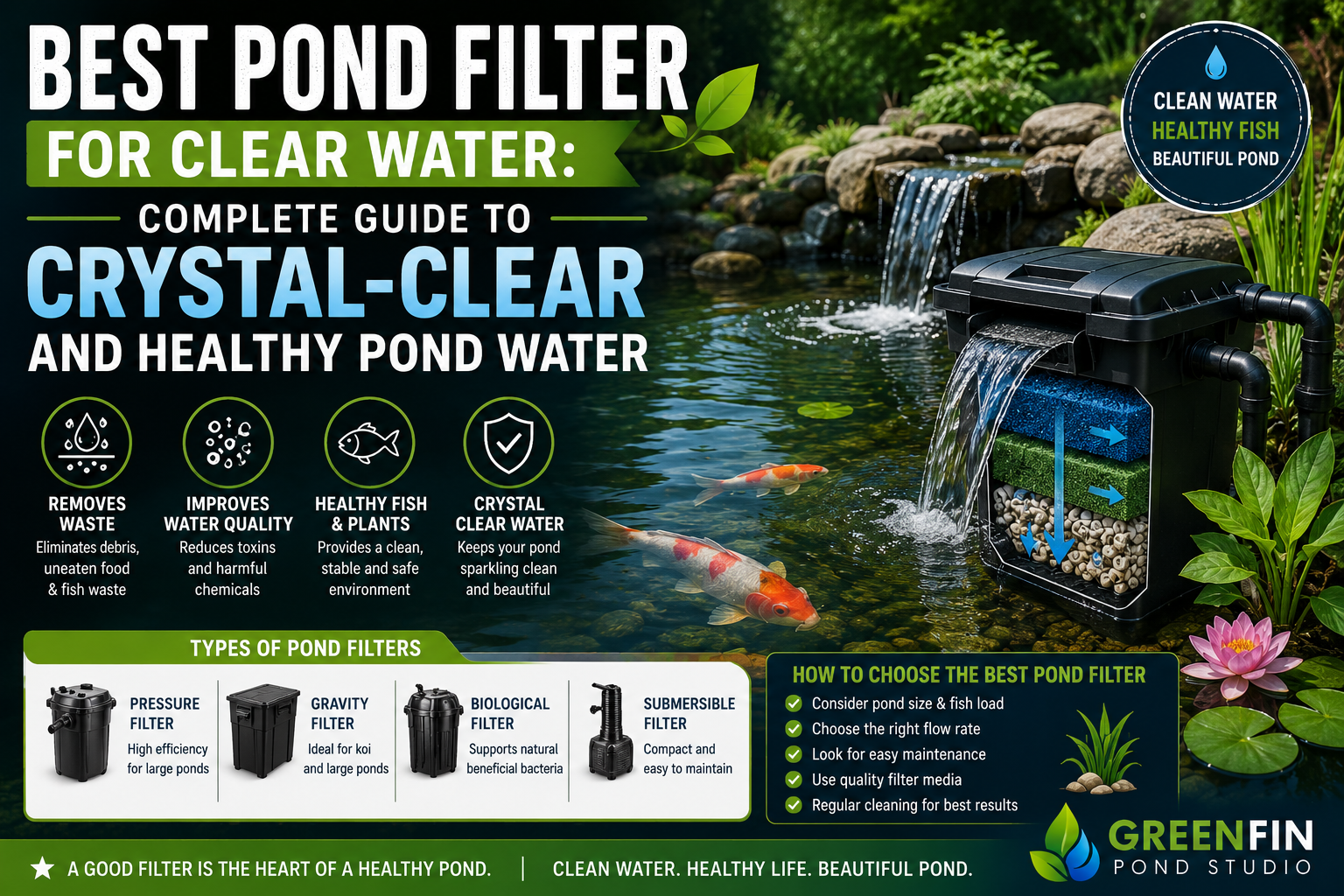
Maintaining crystal-clear pond water is one of the biggest goals for pond owners. Whether you have a decorative garden pond, a koi pond, or a wildlife pond, water clarity directly impacts the beauty of your outdoor space and the health of your fish. Choosing the best pond filter for clear water is one of the most effective ways to create a balanced aquatic ecosystem, reduce maintenance, and ensure long-term water quality.
However, achieving consistently clear pond water requires more than just installing a filter. Factors such as pond size, fish population, algae growth, and water circulation all play a crucial role in determining the effectiveness of your filtration system. That’s why selecting the right pond equipment and receiving expert guidance can make a significant difference.
At Greenfin Pond Studio, we specialize in providing premium pond products and professional pond solutions designed to help pond owners maintain healthy and visually stunning water features. From high-performance pond filters, pumps, UV clarifiers, and filtration accessories to expert pond design, installation, maintenance, and water quality consultation services, our team helps customers find the ideal solutions for their specific
Why Does Pond Water Become Cloudy or Green?
Many pond owners struggle with cloudy or green water despite regular maintenance. Understanding the root causes can help you choose the right filtration system.
Common Causes of Poor Water Clarity
Several factors contribute to poor water quality:
- Excess fish waste
- Uneaten fish food
- Decaying leaves and organic matter
- Suspended dirt particles
- Algae blooms caused by sunlight and excess nutrients
- Inadequate filtration
When these contaminants accumulate, water clarity decreases, creating an unhealthy environment for aquatic life.
Signs Your Pond Needs Better Filtration
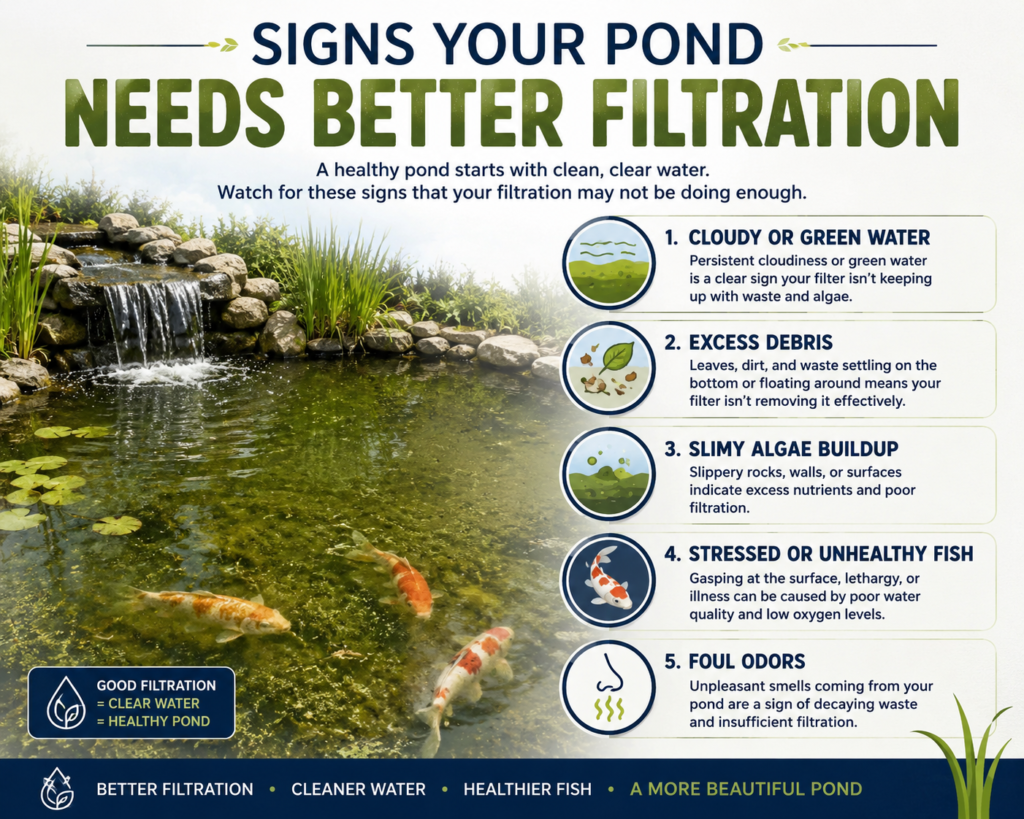
Your pond may require an upgraded filtration system if you notice:
- Green or murky water
- Excessive algae growth
- Unpleasant odors
- Fish gasping near the surface
- Visible debris floating in the water
These symptoms often indicate that your current filtration system is not keeping up with the pond’s biological load.
What Is a Pond Filter and How Does It Work?
A pond filter is designed to remove debris, process waste, and maintain healthy water conditions. The best pond filter for clear water combines multiple filtration methods to keep the pond clean and balanced.
Mechanical Filtration
Mechanical filtration captures physical debris such as leaves, fish waste, and dirt particles before they break down and pollute the water.
Common mechanical filter media include:
- Filter sponges
- Foam pads
- Brushes
- Fine filter mats
Biological Filtration
Biological filtration is essential for fish health. Beneficial bacteria colonize filter media and convert harmful ammonia and nitrites into less toxic nitrates.
Without biological filtration, fish waste can quickly create dangerous water conditions.
UV Clarification
A UV clarifier uses ultraviolet light to destroy free-floating algae cells that cause green water. While UV clarifiers do not replace filtration, they significantly improve water clarity when paired with a quality pond filter.
Types of Pond Filters for Clear Water
Different ponds require different filtration systems. Understanding your options can help you choose the best pond filter for clear water.
Pressure Pond Filters
Pressure filters are compact, sealed units that force water through filter media under pressure.
Benefits include:
- Easy installation
- Suitable for small to medium ponds
- Can be hidden underground
- Often include built-in UV clarifiers
These filters are popular among homeowners seeking a simple and effective filtration solution.
Gravity-Fed Pond Filters
Gravity-fed systems use gravity rather than pressure to move water through the filtration process.
Advantages include:
- Excellent biological filtration
- Higher filtration capacity
- Ideal for large ponds and koi ponds
- Lower energy consumption
Many professional pond builders prefer gravity-fed systems for larger installations.
Box Filters
Box filters are among the most affordable filtration options available.
They offer:
- Simple operation
- Good mechanical and biological filtration
- Easy maintenance
- Cost-effective performance
These systems work well for small garden ponds.
Drum Filters
Drum filters are advanced mechanical filtration systems commonly used in premium koi ponds.
Benefits include:
- Automatic cleaning
- Exceptional water clarity
- Reduced maintenance
- High flow capacity
Although more expensive, drum filters provide superior filtration performance.
All-in-One Pond Filters
These compact units combine:
- Pump
- Filter media
- UV clarifier
They are ideal for:
- Small decorative ponds
- Beginner pond owners
- Limited installation space
Best Pond Filter for Clear Water: Key Features to Consider
Not every filter is suitable for every pond. Before purchasing a filtration system, consider these essential factors.
Pond Size Compatibility
The filter should be rated for a pond larger than your actual pond size.
For example:
- A 5,000-liter pond should ideally use a filter rated for 7,000–10,000 liters.
Oversizing helps maintain excellent water quality and reduces maintenance frequency.
Fish Load
The number of fish significantly impacts filtration requirements.
Koi ponds generally require larger filtration systems because koi produce more waste than ornamental fish.
Filtration Stages
The best pond filter for clear water should include:
- Mechanical filtration
- Biological filtration
- UV clarification
This three-stage approach ensures maximum water clarity and fish health.
Ease of Maintenance
Choose a filter with:
- Easy-clean mechanisms
- Backwash systems
- Accessible filter media
Regular maintenance becomes much simpler with user-friendly designs.
Energy Efficiency
Energy-efficient filtration systems can significantly reduce operating costs over time while providing continuous filtration.
How to Choose the Best Pond Filter for Your Pond
Selecting the right filter depends on the size, fish population, and purpose of your pond.
Small Garden Ponds
Small ponds benefit from compact pressure filters or all-in-one systems that combine filtration and UV clarification.
Medium-Sized Fish Ponds
Medium ponds often require larger pressure filters or box filters capable of handling increased waste production.
Large Koi Ponds
Koi ponds perform best with:
- Gravity-fed filtration systems
- Drum filters
- Large biological filtration chambers
These systems provide the high filtration capacity needed for koi health.
Decorative Water Features
Decorative ponds with few fish can use simple filtration systems focused primarily on maintaining water clarity.
Benefits of Using the Best Pond Filter for Clear Water
Investing in a quality filtration system offers several long-term advantages.
Crystal-Clear Water
The most obvious benefit is improved water visibility, allowing you to fully enjoy your fish and aquatic plants.
Healthier Fish
Proper filtration removes toxins and supports stable water parameters, reducing fish stress and disease risk.
Reduced Algae Growth
By removing excess nutrients and pairing filtration with UV clarification, algae growth becomes easier to manage.
Improved Oxygen Levels
Clean water supports better oxygen exchange, creating a healthier aquatic environment.
Less Pond Maintenance
An efficient filtration system reduces the frequency of major pond cleanouts and water quality issues.
Common Pond Filter Problems and Solutions
Even the best filtration systems occasionally experience issues.
Pond Water Still Green
Possible causes include:
- Undersized filter
- Worn UV bulb
- Excessive sunlight exposure
- High nutrient levels
Upgrading your filtration system and replacing UV bulbs often solves this problem.
Filter Clogging Frequently
Frequent clogging may result from:
- Excess debris
- Overstocked fish populations
- Inadequate pre-filtration
Installing a skimmer or pre-filter can reduce maintenance.
Reduced Water Flow
Check for:
- Blocked pipes
- Dirty filter media
- Pump issues
Regular inspections help maintain optimal performance.
Bad Odors from the Filter
Foul smells typically indicate accumulated organic waste. Cleaning filter media and improving biological filtration can eliminate odors.
Pond Filter Maintenance Tips for Year-Round Clear Water
Even the best pond filter for clear water requires routine maintenance.
Follow a Cleaning Schedule
Inspect and clean mechanical media regularly to prevent blockages and maintain water flow.
Replace Filter Media When Necessary
Some filter media gradually lose effectiveness and should be replaced according to manufacturer recommendations.
Check UV Bulbs Annually
UV bulbs lose effectiveness over time, even if they continue to emit light.
Most UV bulbs should be replaced every 12 months.
Prepare for Seasonal Changes
Adjust filtration maintenance during:
- Summer algae blooms
- Autumn leaf fall
- Winter temperature drops
Seasonal care helps maintain stable water quality throughout the year.
Pond Filter vs UV Clarifier: What’s the Difference?
Many pond owners confuse pond filters with UV clarifiers.
A pond filter removes debris and processes waste through mechanical and biological filtration.
A UV clarifier targets microscopic algae cells that cause green water.
For the best results, use both systems together. Combining a high-quality filtration system with UV clarification provides the most effective solution for achieving crystal-clear pond water.
Frequently Asked Questions About Pond Filters
What is the best pond filter for clear water?
The best pond filter for clear water combines mechanical filtration, biological filtration, and UV clarification while being properly sized for your pond.
How often should I clean my pond filter?
Mechanical filter media may require cleaning every few weeks, while biological media should only be cleaned when necessary to preserve beneficial bacteria.
Can a pond filter remove algae?
A pond filter helps reduce algae by removing nutrients, but a UV clarifier is typically needed to eliminate green water algae effectively.
Do all ponds need a filter?
Most fish ponds benefit greatly from filtration. While wildlife ponds may function naturally, filtration improves water clarity and reduces maintenance.
How do I choose the correct pond filter size?
Choose a filter rated for a pond larger than your actual pond volume, especially if you keep koi or have a heavy fish load.
Conclusion
Choosing the best pond filter for clear water is one of the most important investments you can make for the long-term health and beauty of your pond. A high-quality filtration system not only removes debris and excess waste but also supports beneficial bacteria, controls algae growth, and creates a stable environment for fish and aquatic plants to thrive.
When selecting a pond filter, it’s important to consider factors such as pond size, fish stocking levels, filtration capacity, and maintenance requirements. Combining mechanical, biological, and UV filtration provides the most effective solution for achieving crystal-clear water and maintaining excellent water quality throughout the year.
At Greenfin Pond Studio, we understand that every pond is unique. That’s why we offer a comprehensive range of premium pond filters, pumps, UV clarifiers, and water treatment solutions, along with expert consultation, installation, and maintenance services. Whether you’re building a new pond, upgrading an existing filtration system, or looking for professional guidance to solve water clarity issues, our team is dedicated to helping you create a healthy, balanced, and visually stunning aquatic environment.
With the right filtration system and ongoing expert support from Greenfin Pond Studio, you can enjoy crystal-clear pond water, healthier fish, and a beautiful outdoor feature that enhances your landscape for years to come.